Your digging level
Description
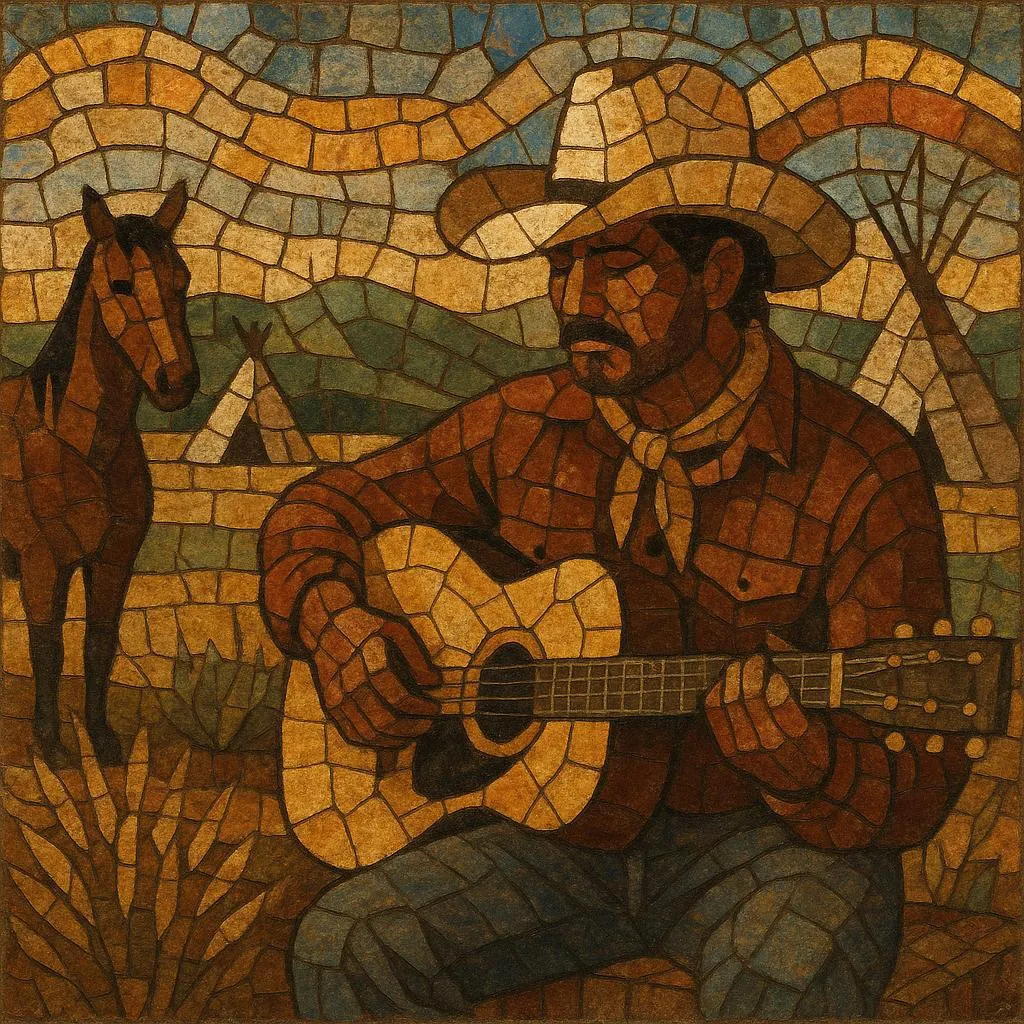
Rez country is a contemporary Indigenous North American genre that blends modern country songwriting with themes, imagery, and lived realities of reservation ("rez") life.
Musically it sits close to mainstream country and country-rock, but it often carries a distinct narrative focus: community pride, family, survival, humor, ceremony, and the social impacts of colonialism.
The sound can range from stripped acoustic singer-songwriter country to radio-ready band arrangements, and it frequently overlaps with Native Americana and related Indigenous popular styles.
History
Rez country grows from long-standing Indigenous participation in North American country music, where storytelling, ballads, and community dance music already had strong cultural resonance.
In the 2000s and into the 2010s, more Indigenous artists began releasing country music that explicitly centered reservation life and Native identity, often outside major-label systems.
Streaming platforms and social media helped Indigenous country artists reach audiences across many Nations and regions.
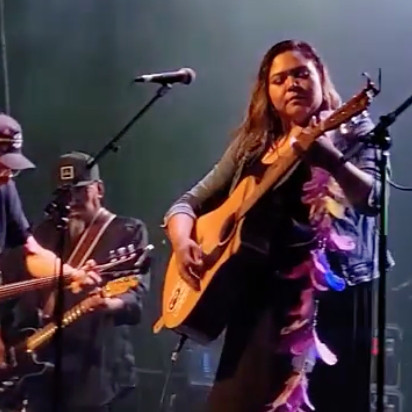
Live performance circuits—community events, rodeos, regional festivals, and Native-run venues—also strengthened the scene.
Today rez country continues to diversify sonically, pulling from modern country rock production, Americana, and singer-songwriter approaches while keeping the lyrical center on Indigenous experiences and community storytelling.
Use a standard country toolkit: acoustic guitar (rhythm strumming or fingerpicking), electric guitar (clean or lightly overdriven), electric bass, and drum kit.
Add color with pedal steel, dobro, fiddle, mandolin, or harmonica when you want a more traditional country feel.
Write in common country meters (4/4 is most typical).
Choose between:
• A straight mid-tempo groove for narrative songs. • A train beat (driving hi-hat/snare pattern) for travel, resilience, or "keep moving" themes. • A two-step feel for danceable tracks.Keep harmony simple and singable: progressions like I–V–vi–IV, I–IV–V, or I–vi–IV–V work well.
Use familiar country forms: verse–chorus–verse–chorus–bridge–chorus, or verse-heavy ballad structures where the story drives the song.
Aim for clear, conversational melodies with memorable chorus hooks.
Vocals are typically forward in the mix; use harmonies on choruses for lift and community feeling.
Center storytelling and specificity: place names, community details, family references, and everyday scenes.
Common lyrical domains include:
• Pride and belonging (home, Nation, language, elders). • Hard realities (poverty, addiction, loss, systemic injustice) balanced with resilience. • Humor and community observations. • Love songs grounded in real-life settings.Avoid clichés by using concrete images and first-person perspective.
For a modern sound, use tight drum/bass, bright acoustic guitar, and polished vocals.
For a more roots sound, record live takes, keep dynamics, and let the lyric lead.
On stage, prioritize intelligibility of the story, and consider brief spoken introductions that frame the song’s community context.