Your digging level

For this genre
0/8
🏆
Sign in, then listen to this genre to level up

Description

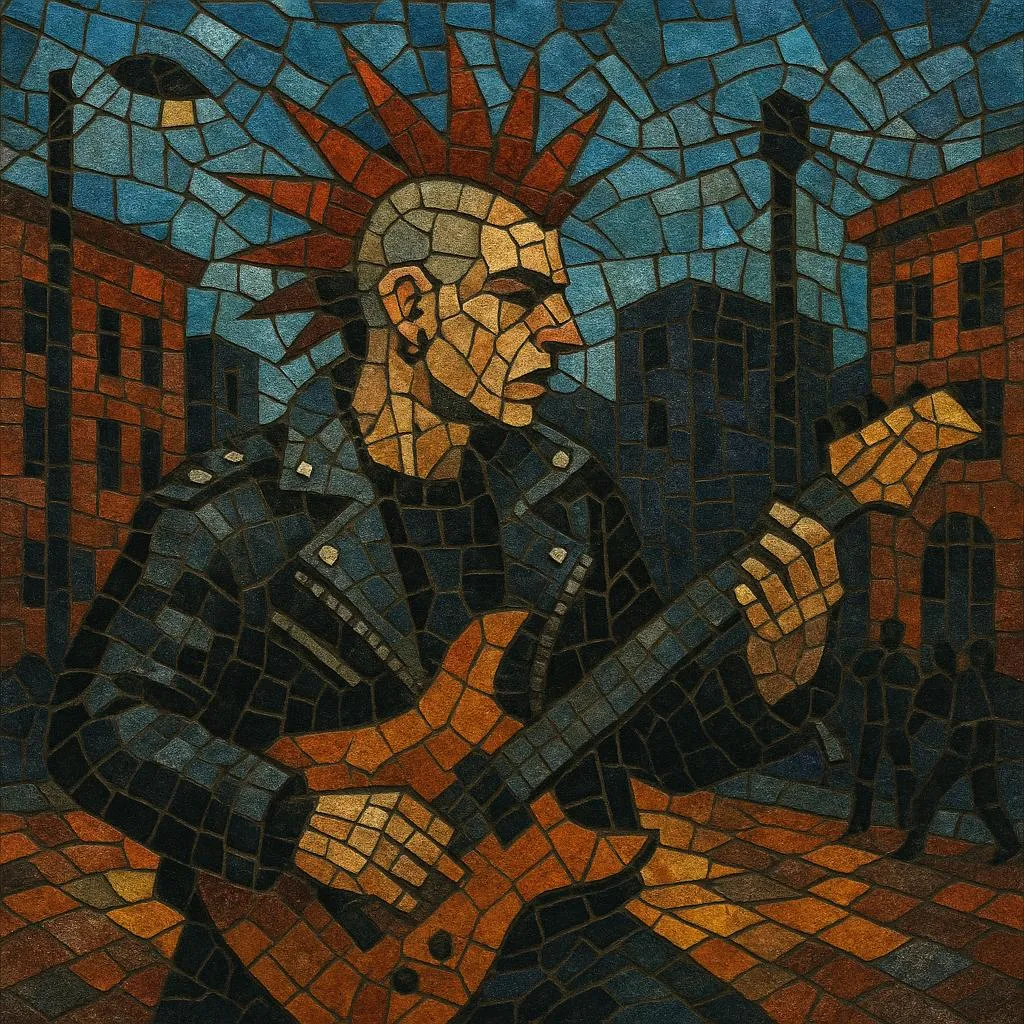
Punk urbano is a Spanish-language branch of punk that blends the speed and attitude of classic punk with the streetwise storytelling and riff-heavy drive of Spain’s “rock urbano.” It favors gritty guitars, anthemic choruses, and direct, socially-charged lyrics that speak to working-class life, nightlife, and the politics of the neighborhood.

Musically, it sits between street punk/oi! and melodic punk rock, often folding in hints of hard rock and, at times, ska rhythms. Vocals are typically raw and declamatory, with gang shouts and sing‑along refrains designed for live catharsis. The result is a style that feels both confrontational and communal—built for bars, squats, small clubs, and big festival pits alike.


Sources: Spotify, Wikipedia, Discogs, RYM, MB, user feedback and other online sources

History

Origins (late 1970s–1980s)

Punk urbano emerged in Spain as punk and street punk attitudes met the homegrown current of rock urbano—an urban, blues‑tinged hard rock tradition tied to everyday working‑class realities. In the economic and political turbulence of post‑Franco Spain, bands began to deliver sharper tempos, more abrasive guitar sounds, and lyrics that confronted unemployment, police repression, and neighborhood struggles.

Consolidation (1990s)

During the 1990s, the style solidified around high‑energy live shows and chant‑ready choruses. Independent labels, DIY venues, bar circuits, and festivals helped knit together scenes across Madrid, the Basque Country, Navarre, Valencia, Andalusia, and beyond. Many groups embraced a melodic edge without losing street grit, and some incorporated ska backbeats and brass to amplify crowd movement and political messaging.

2000s–present: Expansion and cross‑pollination

As Spain’s punk infrastructure matured, punk urbano traveled throughout the Iberian world and Latin America via touring, compilations, and digital platforms. The sound remained rooted in power‑chord urgency and socially conscious lyrics, while production values gradually became punchier. Today, the tag encompasses bands that range from raw, oi‑leaning outfits to melodic punk acts with occasional ska or hard‑rock flavor—united by a focus on urban stories, class perspective, and collective release in the pit.


How to make a track in this genre

Instrumentation and Tone
•   Core setup: two overdriven electric guitars, electric bass, drums, and a lead vocalist (often with backing shouts). •   Guitar: tight, palm‑muted power‑chords (E5/A5 shapes), occasional melodic lead hooks, and mid‑gain crunch for clarity in fast strumming. •   Drums: energetic backbeat (2 and 4), frequent d‑beat or straight 8th/16th punk patterns; tempos commonly 150–190 BPM.
Harmony, Riffs, and Form
•   Harmony: mostly diatonic minor or modal (Aeolian/Dorian) progressions (e.g., i–VI–VII, i–VII–VI), with bluesy b5/IV power‑chord moves borrowed from rock urbano. •   Riffs: short, hooky motifs that return between vocal lines; use octave riffs to lift choruses. •   Structure: verse–pre–chorus–chorus, with mid‑song breaks for gang shouts or audience call‑and‑response.
Lyrics and Delivery
•   Language and register: Spanish (including regional slang), direct and conversational; themes include precarious work, police/state criticism, nightlife camaraderie, love/disillusion, and local identity. •   Delivery: urgent, slightly ragged timbre; back‑row gang vocals to underscore slogans and rhymes in choruses.
Groove and Arranging Tips
•   Keep bass lines locked to kick drum on roots and fifths; add occasional passing tones to propel turns. •   Drop guitars to half‑time or mute for a bar before the chorus to create crowd‑lift moments. •   If adding ska flavor, switch to upstroke skanks on guitar in the verse, then slam back to straight punk for the chorus.
Production and Performance
•   Production: tight and punchy drums, present rhythm guitars panned wide, centered bass and vocal with layered shouts. •   Live: prioritize dynamics—short stops, synchronized shouts, and cues for audience participation.

Top tracks

Locked
Share your favorite track to unlock other users’ top tracks

Upcoming concerts

in this genre
Influenced by

Download our mobile app

Get the Melodigging app and start digging for new genres on the go
© 2026 Melodigging
Melodding was created as a tribute to Every Noise at Once, which inspired us to help curious minds keep digging into music's ever-evolving genres.
Buy me a coffee for Melodigging