Description
Post-internet music is a broad category for music that reflects on life in a society saturated by the internet. Rather than a single, fixed sound, it encompasses approaches ranging from experimental composition to electronic music, pop and internet rap.
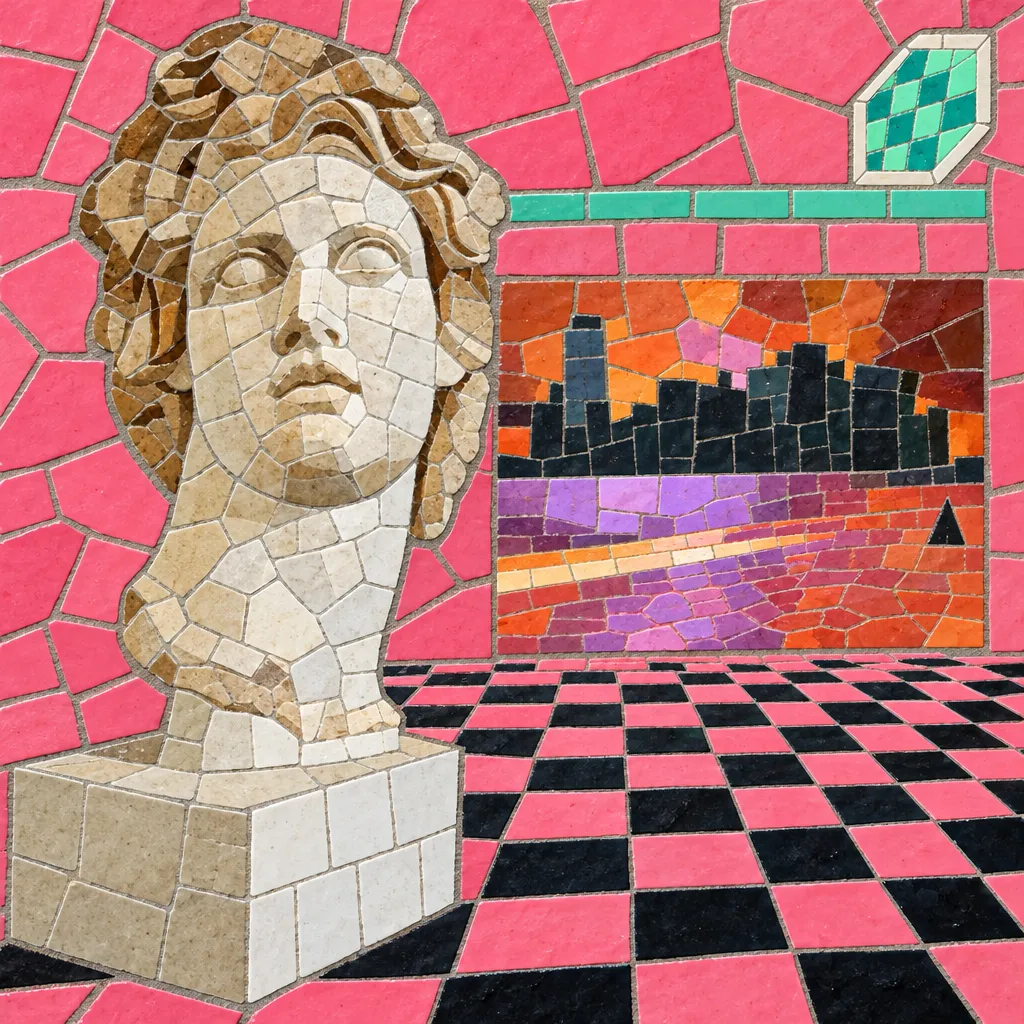
Early examples often reworked online aesthetics through irony, nostalgia and self-reference. Memes, kitsch and consumer culture could become musical or visual material, while related styles such as vaporwave and epic collage used recorded media and electronic sounds in new contexts. The music’s relationship to the internet can be a subject of the work itself, not merely a matter of how it is distributed.
Some critics have dismissed such work as conceptual and emotionally inauthentic; critic Adam Harper described this as an objection directed at music that depicts a cultural moment with artistic or ironic distance.
History
From art to music
The term “post-Internet” began in contemporary art: Marisa Olson coined it in 2006, and Gene McHughe’s 2009 blog helped develop and popularize the idea. In 2010, Grimes began using the term to describe her own work, before it was commonly discussed in mainstream music spaces.
Composition and online culture
By 2015, the phrase was being applied to the work of Holly Herndon and the London collective and label PC Music. That year, Jennifer Walshe introduced an explicit idea of post-internet music, and the London Contemporary Music Festival presented Requiem for Reality, an event exploring how ideas from post-internet art might inform composition. Its program included Walshe, James Ferraro, Felicita, Neele Hülcker and Brigitta Muntendorf.
A wider umbrella
The term later came to cover a range of music connected to online culture. Early associations included seapunk and vaporwave; PC Music and related developments also led toward bubblegum bass and hyperpop. Post-internet music has been associated both with art-school and gallery settings and with scenes that emerged primarily online.
Choose a digital subject
Start with an aspect of online life that can shape the piece: a meme, a form of consumer media, an interface or a familiar digital sound. Consider whether the music will treat that material nostalgically, ironically or self-referentially. The aim can be to make the conditions of internet culture audible, rather than simply release a track online.
Build a collage
One associated approach, epic collage, combines samples of pop and other recorded media with electronic sounds, noise and effects. You could assemble short fragments into contrasting sections, transforming or juxtaposing them so their original contexts are apparent but their relationships change.
Develop the arrangement
Borrowing from related electronic dance music is another option: build a rhythmic foundation with programmed percussion and electronic tones, then interrupt or layer it with the collected material. Alternatively, leave more space for an experimental composition or performance in which sound, text and visuals interact. There is no single required production style across the category.


Best playlists
Post-Internet by suyhnc
msht
post internet whatever (1h30 playlist mix)
dynamtic

lost2432615184 — post-internet mix
yourtracklist
Influenced by
Has influenced