Your digging level
Description
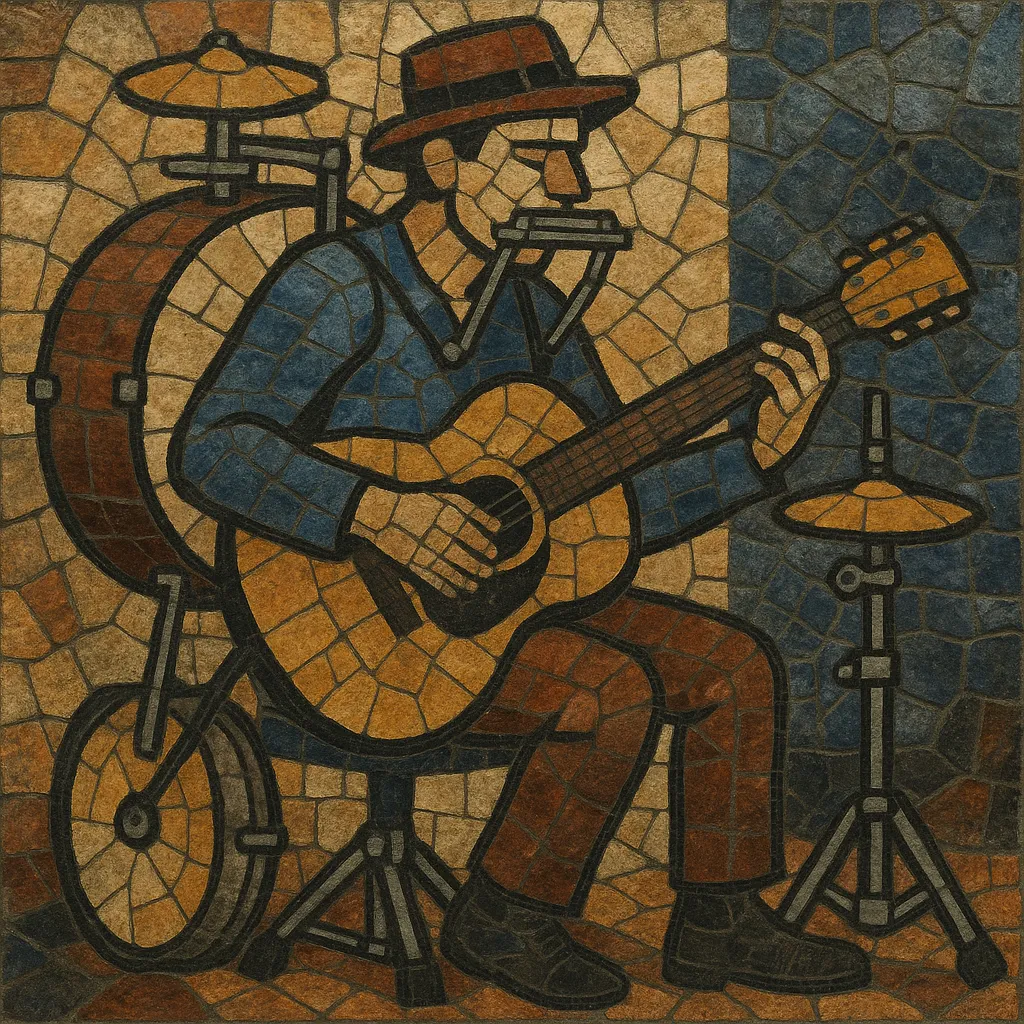
A one-person band is a performance-centered style in which a single musician plays multiple instruments simultaneously, typically combining a chordal or melodic instrument (such as guitar or banjo) with foot-operated percussion (bass drum, hi‑hat, tambourine) and often harmonica on a neck rack.
Historically rooted in street entertainment, music hall, and vaudeville, it evolved into a gritty, DIY idiom closely tied to early folk, blues, and country busking. In modern practice, the format ranges from purely mechanical foot percussion to hybrid setups that include loopers and electronics, but the core identity remains the same: one performer generating a full-band sound live.
History
The one-person band format coalesced in the late 1800s alongside busking traditions in the United States and Europe. Music hall and vaudeville stages popularized novelty acts that strapped drums, cymbals, and bells to harnesses, while street performers refined practical rigs for mobility and volume.
As rural folk, blues, and country spread through recordings and radio, solo entertainers adopted harmonica racks, suitcase drums, and stomp boards to fill space in open-air and dance settings. The approach emphasized portability, rhythmic drive, and showmanship.
Figures like Jesse Fuller (who invented the foot‑played "fotdella") demonstrated that a one-person band could be both virtuosic and musical, not just a novelty. In parallel, country‑blues performers and hillbilly buskers used foot percussion and neck‑racked harmonicas to deliver full arrangements.
Don Partridge, dubbed the "King of the Buskers" in the UK, brought one‑person band energy to pop charts. In the U.S., Hasil Adkins fused rockabilly, blues, and raw percussion into a feral one‑man attack that influenced garage and punk sensibilities.
From Dr. Ross to Bob Log III, Reverend Beat‑Man, and contemporary artists using loopers or custom instruments (e.g., That 1 Guy), the format diversified. Some remain strictly mechanical (feet/drums/harmonica), while others blend electronics, live looping, and unconventional builds. Social media and street‑performance culture have kept the style visible worldwide.