Your digging level
Description
Oldschool Deutschrap refers to the foundational era of hip hop music produced in Germany, spanning from the late 1980s to the early 2000s.
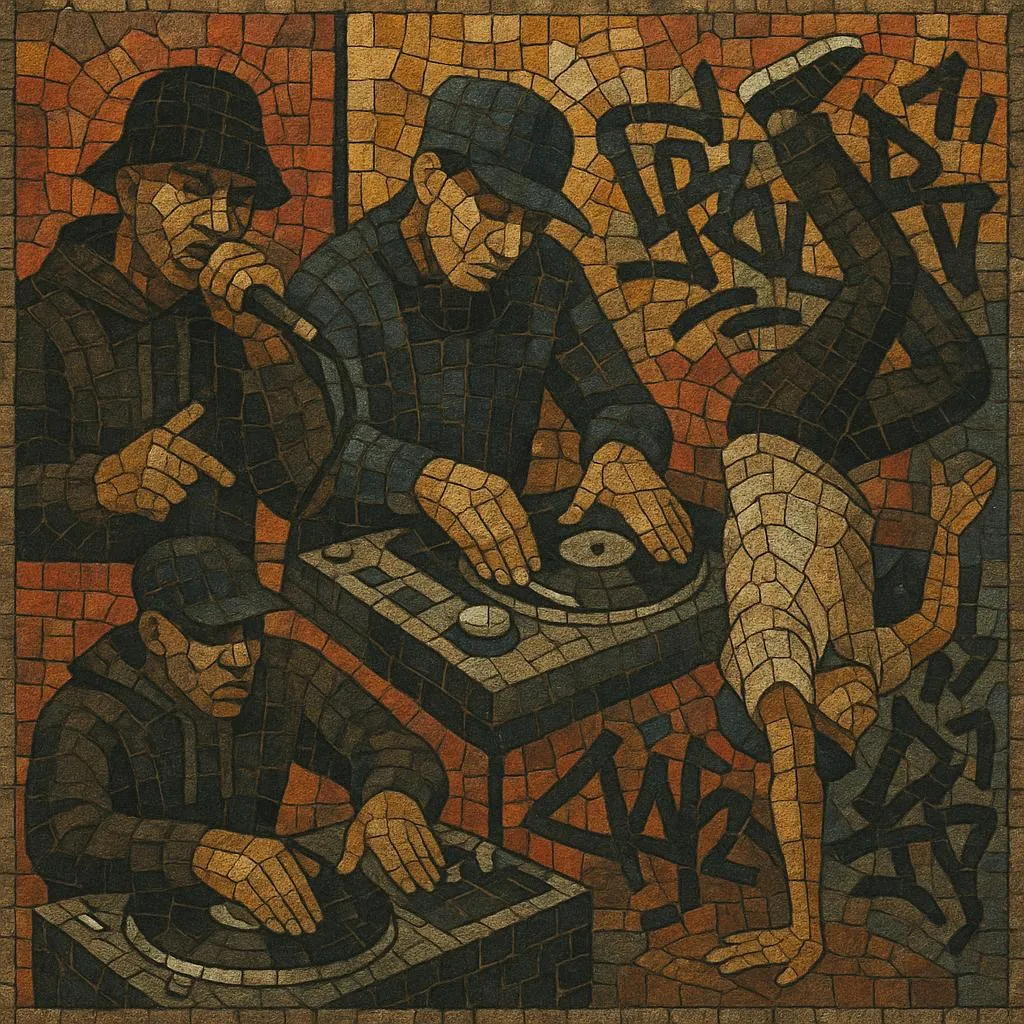
It is characterized by a strong focus on the four elements of hip hop culture: MCing (rapping), DJing, Breakdancing, and Graffiti.
Musically, it relies heavily on sample-based Boom Bap beats, often drawing from Funk, Soul, and Jazz records, with a tempo typically between 85 and 95 BPM.
Lyrically, the genre is diverse, ranging from the socially conscious and political messages of the 'Alte Schule' (Old School) to the humor-driven 'Fun Rap' that brought the genre mainstream success.
A defining feature is the emphasis on 'Realness' and authentic self-expression, often rejecting the direct imitation of American gangster rap tropes in favor of local storytelling and complex rhyme schemes (Doppelreim).

History
The roots of Oldschool Deutschrap lie in the arrival of American hip hop culture in West Germany through US soldiers and movies like 'Wild Style'.
Early experiments were often parodies or novelty songs, such as GLS United's 'Rapper's Deutsch' (1980).
By the late 80s, a serious underground scene formed, centered on jams, graffiti, and breakdancing, with English still being the dominant language for rapping.
The pivotal moment came with Advanced Chemistry's 'Fremd im eigenen Land' (1992), a track that addressed racism and identity, proving German rap could be serious and political.
Simultaneously, Die Fantastischen Vier achieved massive commercial success with 'Die da!?!', establishing a lighter, pop-oriented style known as 'Fun Rap'.
This era saw the first split between the underground 'Realness' faction and the chart-topping pop rappers.
The mid-90s to early 2000s is considered the 'Golden Era', characterized by the rise of distinct regional scenes.
Hamburg became a powerhouse with the 'Mongo Clikke' (Absolute Beginner, Fünf Sterne Deluxe), known for their witty lyrics and distinct slang.
Stuttgart emerged with the 'Kolchose' collective (Massive Töne, Freundeskreis), focusing on conscious lyrics and community.
Frankfurt offered a harder edge with Rödelheim Hartreim Projekt.
This period solidified the German language as a credible medium for complex rap flows and established the classic 'Deutschrap' sound before the aggressive 'Street Rap' wave of the mid-2000s took over.
Start with a classic Boom Bap drum pattern (kick-snare-kick-kick-snare) at around 90 BPM. Use samples of acoustic drums for a gritty, organic feel.
Dig for samples in 70s Funk, Soul, or Jazz records. Look for catchy horn stabs, piano loops, or groovy basslines.
Chop the samples on an MPC or sampler plugin to create a new rhythm that locks in with your drums.
Include scratching (turntablism) in the hook or as background texture to pay homage to the DJ element.
Write in German, focusing heavily on multi-syllabic rhymes (Doppelreim) at the end of lines. This technical skill is highly valued in this genre.
Avoid modern autotune or mumble rap styles. The delivery should be clear, rhythmic, and usually laid-back or energetic but controlled.
Topics should range from personal storytelling, social commentary, and representing your city/crew, to humorous wordplay and party vibes.
Keep it 'real'—authenticity is key. Rap about your actual life and surroundings rather than inventing a gangster persona.