Your digging level
Description
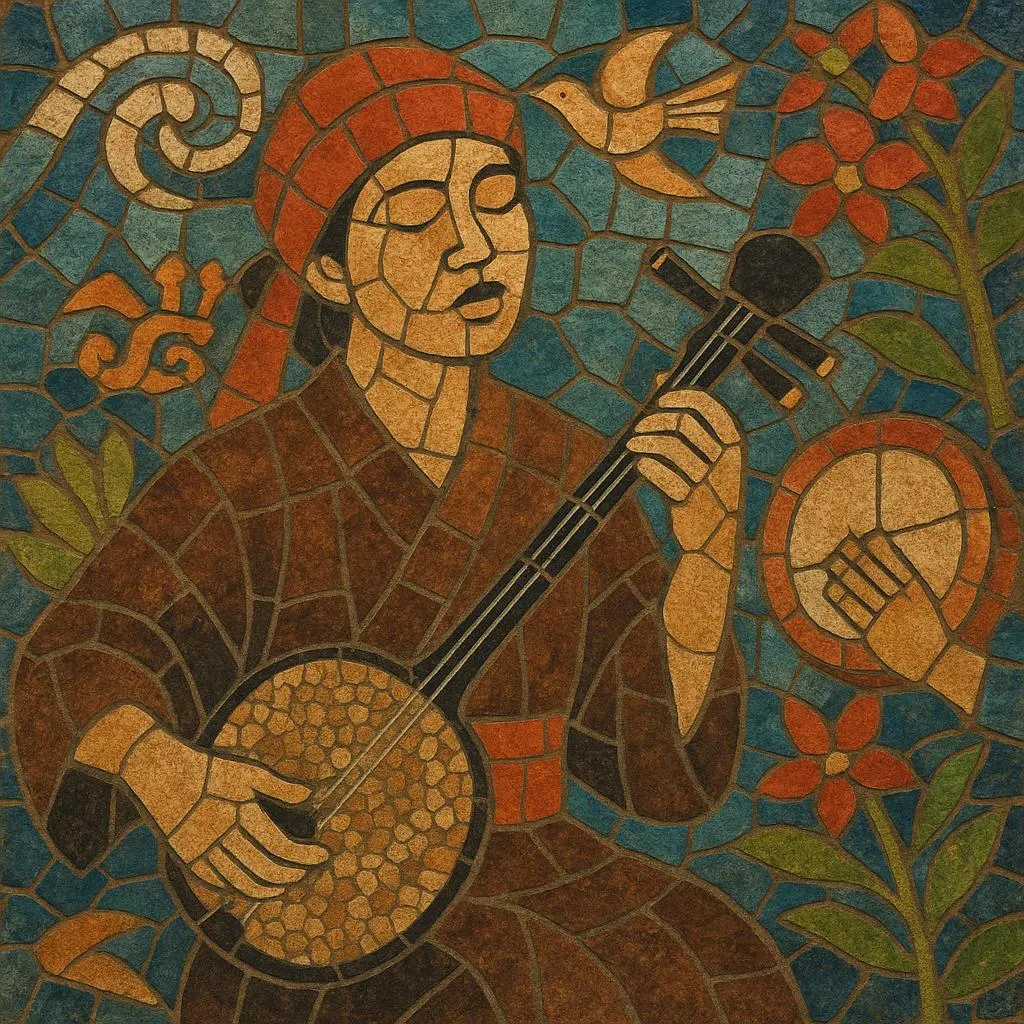
Okinawan folk refers to the traditional vocal and instrumental music of the Ryukyu Islands (today’s Okinawa Prefecture), centered on the singing traditions (shima-uta) and the three-stringed snakeskin lute known as the sanshin.
Its melodies often use the distinctive Okinawan pentatonic scale, delivered in a highly ornamented vocal style with call-and-response and communal refrains. Rhythms range from relaxed narrative songs to lively dance pieces like kachāshī and festival eisa, supported by handclaps, frame drums, and occasional fue (flute).
Songs are commonly performed in Uchinaaguchi (Okinawan) and other Ryukyuan languages as well as Japanese, carrying themes of island life, love, seafaring, seasonal rites, and communal memory. The sound is at once intimate and celebratory—rooted in local ritual and social gatherings yet resonant on modern stages.
History
Okinawan folk music took shape between the 15th and 19th centuries during the Ryukyu Kingdom, when courtly “koten” (Ryukyuan classical music) coexisted with village-based song and dance. Maritime exchange with China and Southeast Asia introduced instruments and scales that blended with indigenous chant and work song, forming a distinctive island sound. The sanshin, adapted from the Chinese sanxian, became the emblematic folk instrument.
In the late 19th and early 20th centuries, incorporation into Japan and later the devastation of World War II threatened local languages and practices. Yet folk repertories persisted in communities—sung at gatherings, obon dances, and festivals—and were documented and taught by master performers. After the war, local radio, theater troupes, and folk clubs helped revive shima-uta and dance forms across the islands.
From the 1960s onward, master singers and sanshin virtuosos standardized tunings, transmitted repertoires to students, and recorded seminal albums. Festival eisa and kachāshī gained new popularity, while contemporary ensembles brought folk into concert halls. By the 1990s–2000s, Okinawan melodies and the sanshin entered Japanese popular music and world-music circuits, inspiring collaborations that retained core island aesthetics while broadening the audience.
Okinawan folk thrives in local classrooms, community circles, and professional ensembles. Conservators uphold traditional singing styles and language, while new artists blend sanshin timbres with modern arrangements. The genre functions as a living heritage—soundtrack to ritual, remembrance, and everyday island life—while continuing to influence Japanese pop and global folk-fusion projects.