Your digging level
Description
Nueva trova chilena is a contemporary Chilean singer‑songwriter movement that renews the poetic, socially conscious spirit of the 1960s–80s nueva canción/canto nuevo traditions.
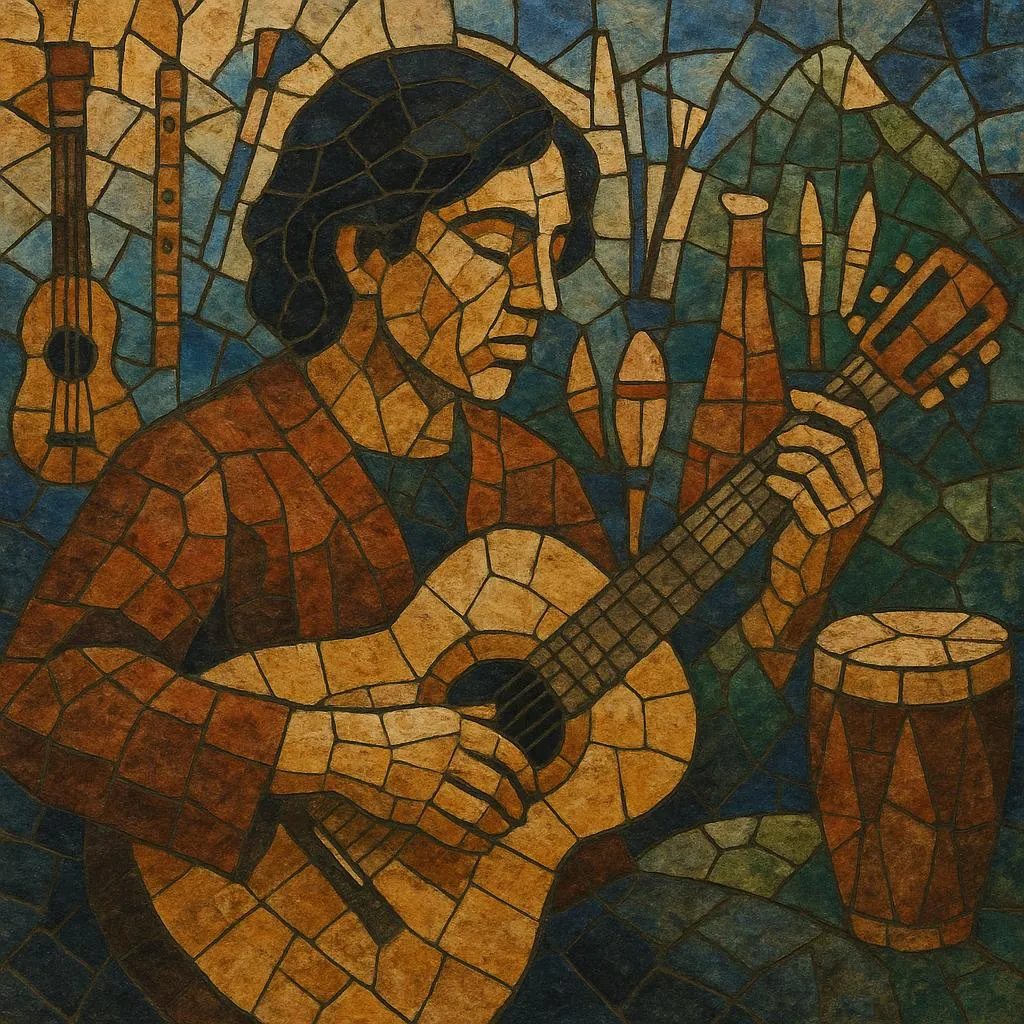
Typically centered on voice and nylon‑string guitar, it blends trova’s intimate, story‑driven performance with Chilean and Andean folk timbres (charango, quena, zampoña, bombo) and the rhythmic DNA of cueca, tonada and other regional forms. Harmony is mostly diatonic with modal color and occasional jazz‑folk extensions; arrangements range from stark solo performances to small acoustic ensembles.
Lyrically it pairs tenderness and everyday imagery with reflections on memory, identity, territory, and social justice—often engaging Indigenous (e.g., Mapuche) perspectives. The style lives in peñas, small theaters and cultural centers as much as on digital platforms, maintaining an artisanal, close‑listening ethos even as it dialogues with indie folk and alternative pop aesthetics.


History
Nueva trova chilena traces its ethics and aesthetics to the Chilean branch of the Latin American singer‑songwriter current. In the 1960s–70s, nueva canción chilena forged a vocabulary of poetic protest, folk instrumentation and collective singing. During the dictatorship (1973–1990), artists inside Chile sustained related practices under the banner of canto nuevo, often in small venues and peñas, while exiled groups kept the repertoire alive abroad. In parallel, Cuba’s nueva trova shaped the Iberian‑American notion of the concertante, literary cantautor.
With the democratic transition, a new generation of Chilean cantautores reclaimed intimate stages and independent circuits. They preserved the guitar‑led, text‑first performance of trova, but refreshed phrasing, harmony and production, and broadened themes beyond direct protest to personal, local and diasporic narratives—without abandoning social consciousness.
Digital distribution, university circuits and neighborhood cultural centers fostered a dense ecosystem. Artists mixed Chilean folk rhythms (cueca, tonada, vals) and Andean timbres (charango, quena, sikus) with chamber strings, subtle jazz harmony or indie‑folk textures. Feminist, ecological and Indigenous voices grew more audible; Mapuche musicians in particular connected songcraft to community struggles and language.
Nueva trova chilena now coexists with indie folk and alternative pop, influencing songwriting craft across scenes while retaining an emphasis on literate lyrics, careful guitar work, and small‑room intimacy. The movement functions as both a stylistic lineage and a living network of self‑managed artists, festivals and peñas that link Chile’s past and present.