Your digging level

For this genre
0/8
🏆
Sign in, then listen to this genre to level up

Description

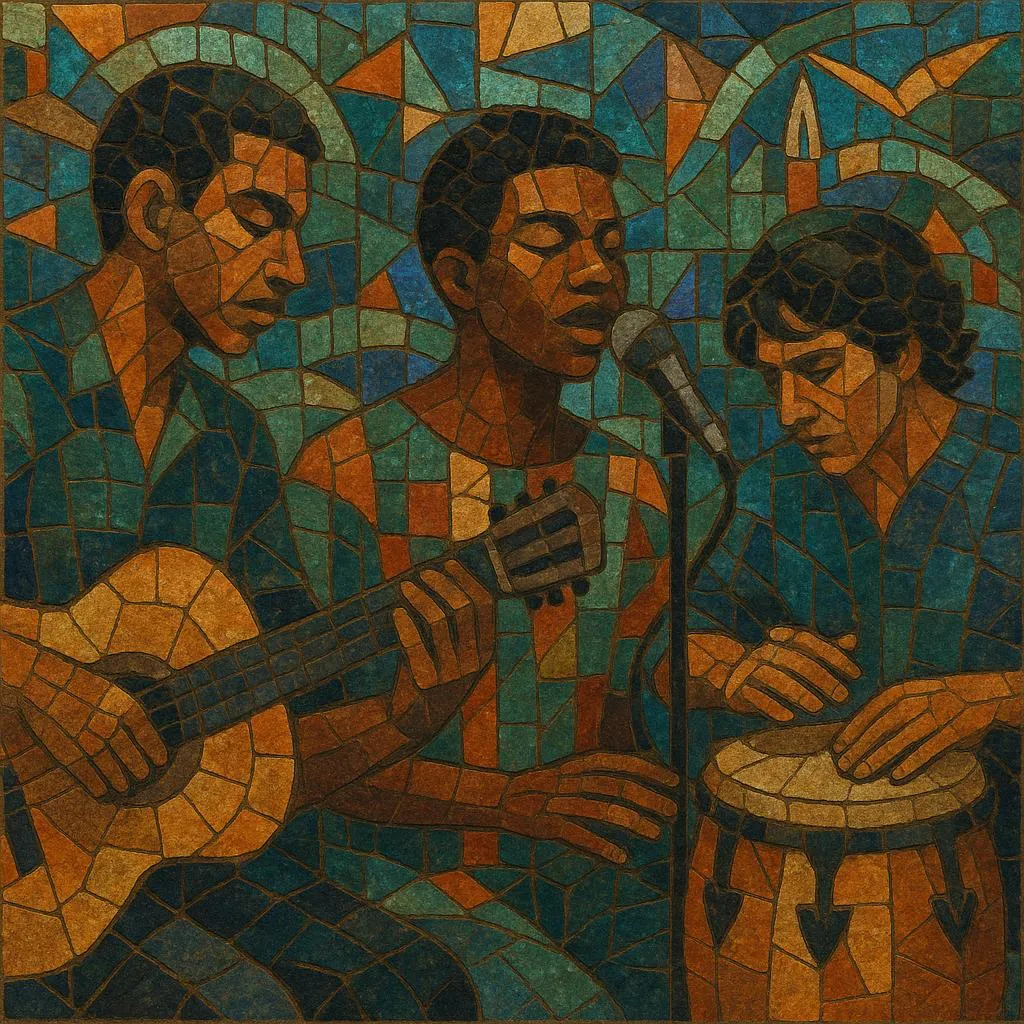
Nova Música Paulista (literally "new Paulista music") is a contemporary wave from São Paulo that renews MPB’s songwriter tradition by blending it with samba’s rhythmic DNA, indie/alternative rock timbres, jazz harmonies, and Afro‑Brazilian percussion and spirituality.

Rather than a single fixed style, it is a porous scene of composers, singers, bands, and producer‑collectives that prize experimentation, crate‑digging, and collaboration. Gently overdriven guitars, woodwinds and brass, atabaques and drum kits, electronics, and dense vocal arrangements coexist with sophisticated songwriting. The result feels unmistakably paulistano: urban, hybrid, and cosmopolitan, but grounded in Brazilian rhythmic memory and social realities.


Sources: Spotify, Wikipedia, Discogs, RYM, MB, user feedback and other online sources

History

Roots and antecedents

Nova Música Paulista grows from São Paulo’s long history of musical avant‑gardes and songwriter movements. The 1970s Tropicália legacy and the 1980s Vanguarda Paulista (which foregrounded daring harmony, irony, and urban poetics) supplied an ethos of fearless hybridization. Equally important were samba schools, candomblé terreiros, jazz circles, and independent theatre and poetry scenes that kept rhythmic and lyrical experimentation alive.

Formation in the late 2000s and bloom in the 2010s

As physical record stores waned and DIY production tools spread, a network of independent labels, cultural centers, and Sesc venues in São Paulo fostered a new generation of composers and bandleaders. They freely cross‑pollinated MPB craft with indie/alt‑rock textures, Afrobeat‑inspired horn sections, improvising rhythm sections informed by jazz, and Afro‑Brazilian grooves like ijexá and partido‑alto. Collaborative projects and rotating ensembles became common, and albums often featured large casts of local players.

Aesthetic traits

Harmonically, songs favor MPB/jazz richness (extended tertian chords, modal mixture, chromatic voice‑leading), while rhythm sections move between samba‑derived syncopations, 4/4 backbeats, and Afro‑diasporic patterns. Arrangements juxtapose nylon‑string intimacy with electric sonorities, woodwinds/brass lines, hand percussion, and subtle electronics. Lyrically, the scene reflects paulistano life—love, work, transit, neighborhood histories, spiritual syncretism, and social critique—rendered with poetic concision and experimental imagery.

Diffusion and impact

Through festivals, Sesc circuits, and an active network of studios and collectives, the scene reached national and international listeners in the 2010s. Its success helped normalize collaborations between MPB songwriters, jazz improvisers, and indie producers, and encouraged other Brazilian cities to articulate their own "nova música" waves. Today, Nova Música Paulista is less a closed label than a living shorthand for São Paulo’s contemporary, boundary‑crossing songwriting and band culture.

How to make a track in this genre

Core instrumentation and texture
•   Combine MPB’s songwriter core (voice + nylon or steel‑string guitar or piano) with a flexible band: drum kit, electric bass or acoustic bass, auxiliary percussion (pandeiro, atabaques for ijexá/candomblé colors), woodwinds/brass (sax, trumpet, flute), and occasional synths or samplers. •   Aim for an acoustic–electric blend. Let warm guitars and percussion carry the groove, while horns and keyboards add countermelodies and harmonic color.
Harmony and melody
•   Use extended harmony (maj7, min9, 11ths, altered dominants), borrowed chords, and modal mixture typical of MPB and jazz. Keep vocal melodies singable but allow chromatic approaches and suspensions. •   Explore call‑and‑response or layered backing vocals to evoke samba school and Afro‑Brazilian choral textures.
Rhythm and groove
•   Alternate between samba‑derived feels (partido‑alto, samba‑canção) and straight 4/4 backbeats. Common BPM spans mid‑tempo 80–110. •   For an ijexá‑inspired pulse in 4/4, emphasize a lilting, even eighth‑note flow with syncopated percussion (pandeiro/atabaque) interlocking with a sparse drum kit and tumbling bass. •   Let percussion and bass lead; guitars/piano comp with off‑beat accents and anticipations to create swing without rushing.
Arrangement and production
•   Embrace dynamic contrast: intimate verses (voice + minimal accompaniment) expanding to dense, horn‑ and percussion‑rich refrains. •   Production favors clarity and warmth over heavy compression. Subtle saturation, natural room ambience, and carefully placed reverb suit the aesthetic.
Lyrics and themes
•   Write about the city (neighborhoods, transport, daily work), contemporary relationships, Afro‑Brazilian spirituality, and subtle social commentary. Favor imagery, irony, and colloquial turns rather than didactic statements.
Collaboration and process
•   Treat the project as a collaborative hub: invite jazz improvisers for solos, percussionists for specific grooves, and fellow songwriters for co‑writing and vocal features. Rehearse grooves live to let rhythmic pockets emerge before tracking.

Top tracks

Locked
Share your favorite track to unlock other users’ top tracks

Upcoming concerts

in this genre
Influenced by
Has influenced
No genres found

Download our mobile app

Get the Melodigging app and start digging for new genres on the go
© 2026 Melodigging
Melodding was created as a tribute to Every Noise at Once, which inspired us to help curious minds keep digging into music's ever-evolving genres.
Buy me a coffee for Melodigging