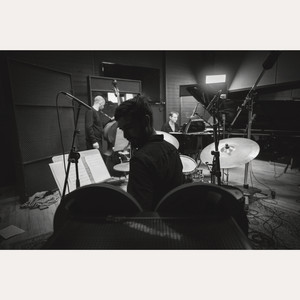
Description
Nordic jazz brings jazz improvisation together with Scandinavian folk traditions, often favoring atmosphere and melodic space over a constant, driving swing. Modal harmonies and minor-based tonality support long, sustained lines, while rhythms may move with a flexible pulse.
Silence and resonance are important parts of the sound. Natural acoustics and reverb can give recordings an airy, sometimes crystalline quality, often associated with the idea of a distinctive Nordic tone.
History
A sound takes shape
The distinctive Nordic jazz sound emerged in the 1960s across the Nordic countries. American composer George Russell influenced the developing style while living in Scandinavia from 1964 to 1969. His teaching and work with younger musicians helped connect modal ideas with a local jazz scene.
Recordings and recognition
ECM Records, established in 1969, played an important role in bringing the music to international listeners. Jan Garbarek’s Afric Pepperbird appeared on the label in 1971; its spacious, atmospheric production became part of a sound associated with ECM. In Sweden, Jan Johansson’s Jazz på svenska became a landmark recording in the meeting of jazz and local musical traditions.
Continuing approaches
Later artists have continued to explore atmospheric settings in different instrumental combinations, including guitarist Jakob Bro’s trio recordings.
Build a spacious melody
Begin with a long, singable melodic line and leave room around its phrases. Let notes sustain and allow silence to carry some of the structure. You could draw on the contours or character of a Scandinavian folk melody without crowding it with ornament.
Shape harmony and rhythm
Try a modal framework or a minor-based tonal center, and give the improvisers time to explore it. Use a flexible pulse rather than insisting on a continuous swing pattern; the rhythm section can respond to the melody as much as it marks time.
Arrange and record
Keep the texture open enough for each instrument’s resonance to be heard. Capture natural acoustics where possible, then use reverb to add depth without obscuring the players’ attacks. A common jazz approach is to let an ensemble move between a stated theme and improvisation, returning to the theme when the music needs a point of reference.