Your digging level

For this genre
0/8
🏆
Sign in, then listen to this genre to level up

Description

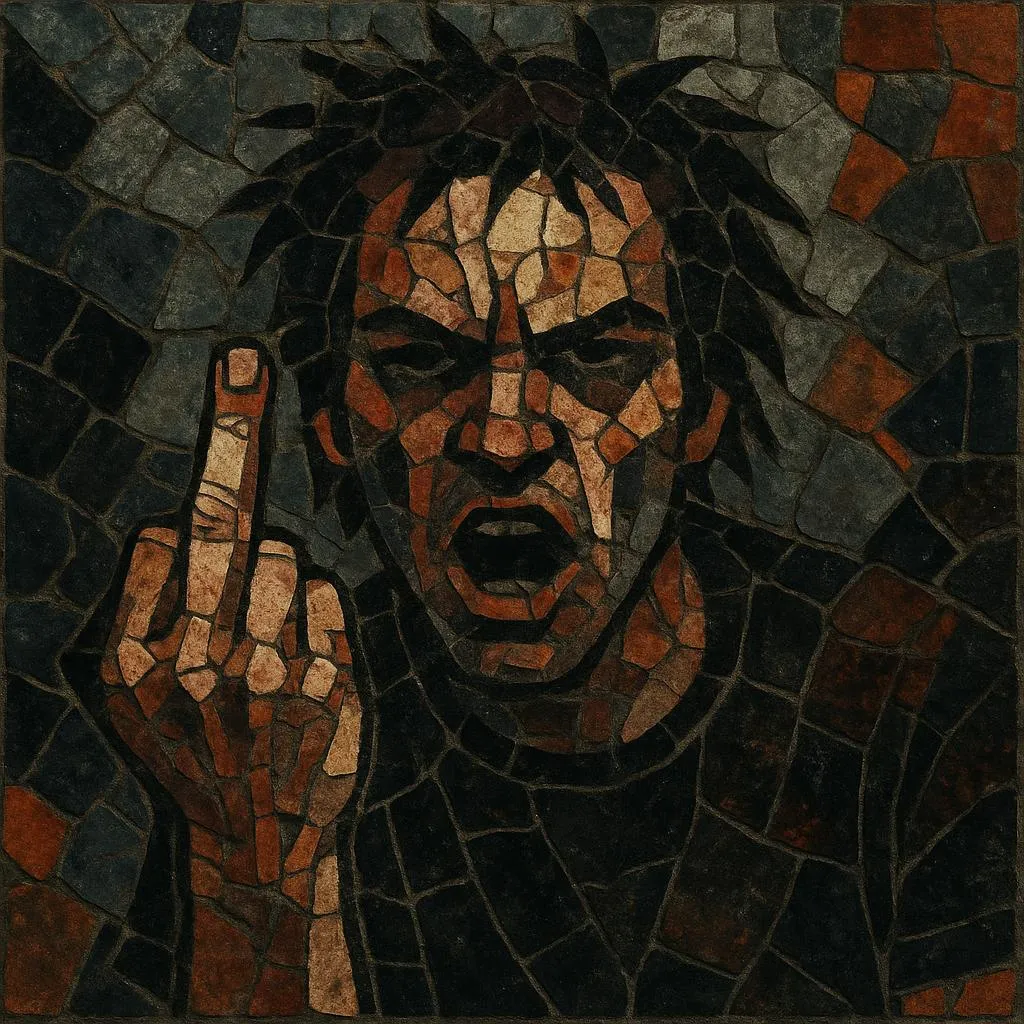
“New way of danish fuck you” appears to be a very small, loosely-defined Danish musical scene rather than a widely recognized, formally documented genre.

It is best understood as a provocative, anti-polished, DIY-leaning rock/punk-adjacent micro-scene, where the “fuck you” framing signals attitude: confrontational humor, rejection of mainstream taste, and a preference for rawness over refinement.

Because the label is niche and not standardized in musicology or major databases, boundaries and “rules” vary from artist to artist, and the sound can overlap with punk rock, garage rock, and other underground rock currents.


Sources: Spotify, Wikipedia, Discogs, Rate Your Music, MusicBrainz, and other online sources

History

Overview

The term is best treated as a local “scene tag” that groups together a small cluster of Danish underground acts and audiences around a shared posture: irreverence, abrasion, and DIY credibility.

Emergence (2000s)

The label likely emerged in the 2000s alongside internet-era micro-tagging, where small communities created names for local sounds, jokes, or social identities.

Scene Characteristics

Rather than describing a single, stable sonic template, the phrase functions as a banner for:

•   anti-commercial, anti-polish production values •   punk/garage-derived instrumentation •   confrontational performance style •   humor, sarcasm, and social antagonism as aesthetics
Later Use

If the term persists, it tends to survive as a niche descriptor, used by fans and small platforms more than by institutions, labels, or critics.

How to make a track in this genre

Core Aesthetic
•   Treat the “fuck you” element as an artistic stance: blunt, satirical, confrontational, and deliberately unrefined. •   Prefer immediacy over perfection; capture energy first, details second.
Instrumentation
•   Typical rock band setup works well: distorted electric guitar, electric bass, and acoustic drum kit. •   Optional additions: noisy synths, cheap drum machines, feedback loops, or shouted gang vocals.
Rhythm & Groove
•   Use punk-derived tempos (often fast) or stompier mid-tempo garage beats. •   Keep patterns simple and driving; emphasize downbeats and aggressive eighth-note motion.
Harmony & Melody
•   Write with short, repeating progressions (often 2–4 chords). •   Lean on power chords, modal riffs, and simple hook motifs. •   Melodies can be chant-like, spoken, or shouted; precision is less important than character.
Lyrics & Vocals
•   Use direct language, sarcasm, and local references; Danish-language lyrics can strengthen the “scene” identity. •   Themes often include refusal of norms, mockery of trends, social friction, and black humor. •   Vocal delivery should feel urgent: shouted, sneered, half-sung, or intentionally rough.
Production & Mixing
•   Aim for live-room grit: audible amp noise, drum bleed, imperfect takes. •   Use saturation, clipping, or lo-fi recording techniques to reinforce the abrasive identity. •   Avoid overly glossy tuning or quantization unless used ironically.
Performance
•   Prioritize intensity and interaction: short sets, loud dynamics, and confrontational stage presence. •   Visual identity can be minimal, messy, or intentionally “anti-brand.”

Main artists

Top tracks

Locked
Share your favorite track to unlock other users’ top tracks
Influenced by
Has influenced
No genres found
Challenges
Digger Battle
Let's see who can find the best track in this genre
© 2026 Melodigging
Melodding was created as a tribute to Every Noise at Once, which inspired us to help curious minds keep digging into music's ever-evolving genres.
Buy me a coffee for Melodigging