

Your digging level
Description
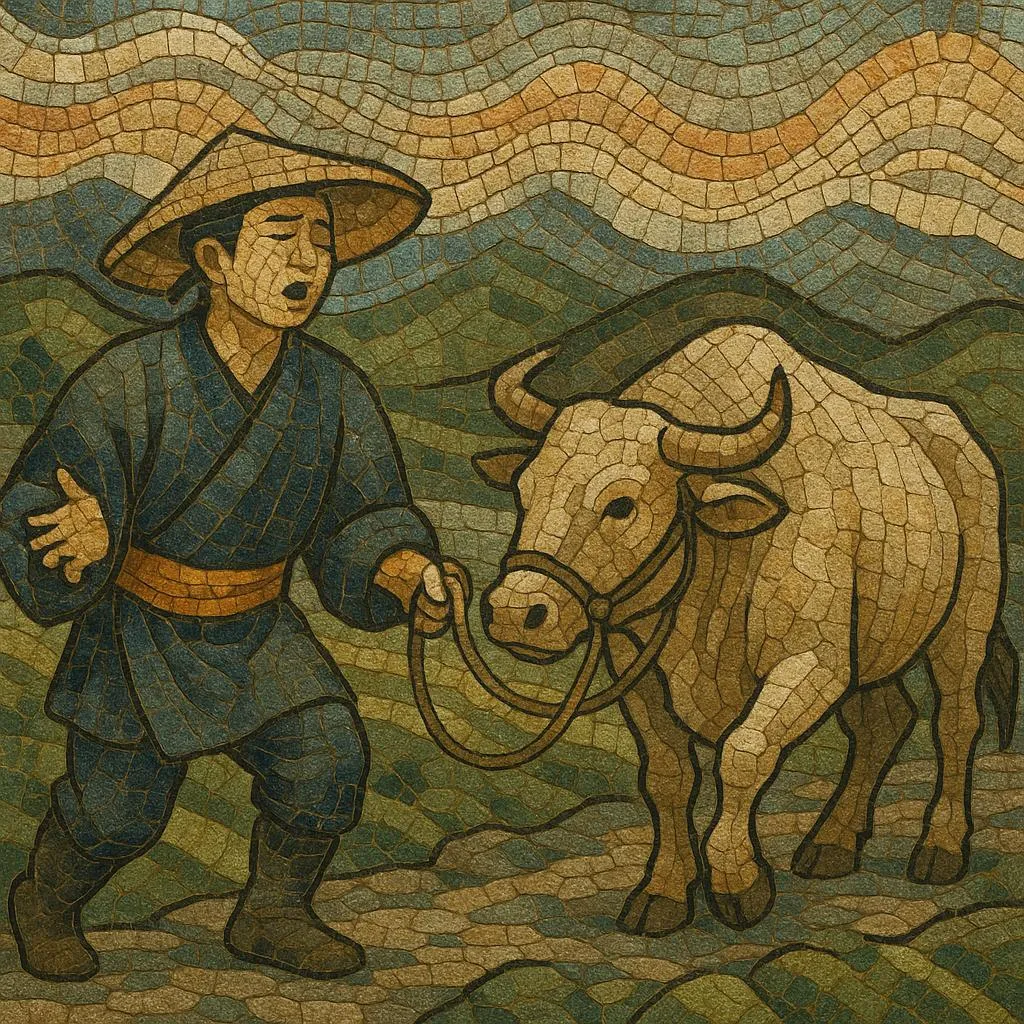
Nanbu Ushiouta (南部牛追唄), meaning 'Nanbu Cattle Chasing Song', is a traditional Japanese folk song (Min'yō) originating from the Nanbu region of Iwate Prefecture. It is a type of work song (rōdōka) specifically classified as a 'mago-uta' or packhorse driver's song.
Characterized by its high-pitched, melismatic vocal style, it was originally sung by cattle drivers to calm their oxen and pass the time during long, arduous journeys over mountain passes. The song is performed with a free rhythm, allowing the singer to express deep emotion and longing, often reflecting the solitude of the traveler.
History
The genre originated during the Edo period (1603–1867) along the 'Salt Road' (Ushi-kaido) in northeastern Japan. Cattle drivers (ushioi) played a crucial role in the local economy, transporting salt and marine products from the Sanriku coast inland to the castle town of Morioka, and returning with charcoal and iron.
Drivers would sing these songs during the multi-day journeys to soothe their oxen and alleviate their own boredom and loneliness. The melody is said to have developed naturally from the rhythm of the cattle's gait and the echoes in the mountain valleys.
As modernization replaced cattle transport with railways and trucks, the practical use of the song vanished. However, it was preserved as a cultural art form. Today, it is considered one of the representative folk songs of Iwate Prefecture. An annual 'Nanbu Ushiouta National Convention' is held in Iwaizumi Town to preserve the tradition, attracting singers from across the country.
Composing or performing Nanbu Ushiouta requires mastering the specific vocal techniques of Japanese Min'yō.
Traditionally performed a cappella (without accompaniment) on the road. In modern stage performances, it is often accompanied by a shakuhachi (bamboo flute) or sometimes a shamisen, though the flute is preferred to mimic the rustic, lonely atmosphere of the mountains.
The rhythm is 'free' (rubato), not adhering to a strict metronome beat, following the singer's breath and emotional expression. The melody uses a traditional Min'yō scale (often the Yo scale), characterized by wide intervals.
The most defining feature is 'Kobushi', a distinctive style of melisma or vocal ornamentation where a single syllable is sung over multiple notes with a wavering pitch. The vocal delivery should be high-pitched, powerful, yet filled with 'sabishisa' (loneliness/solitude).

