Your digging level
Description
Musica poblana refers to the contemporary tropical/grupera sound associated with the state of Puebla, Mexico. It blends Mexican cumbia (often in its sonidera form), romantic grupera balladry, and technocumbia keyboards with a distinctly local, dance‑hall oriented presentation.
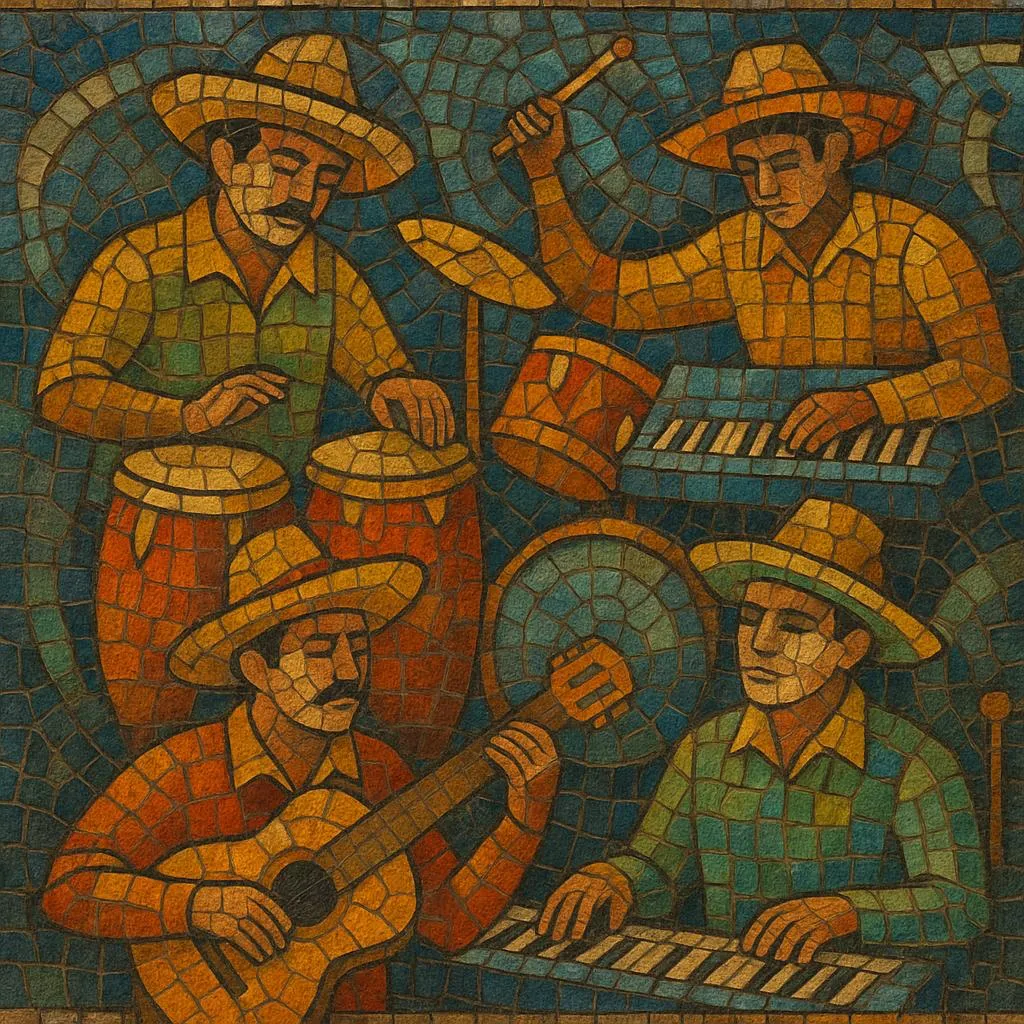
Arrangements typically revolve around bright synth‑brass hooks, melodic lead keyboards, electric bass playing a tumbao‑style pattern, and a percussion battery that combines drum kit backbeats with güiro, timbales, and congas. Vocals emphasize romantic narratives—yearning, heartbreak, reconciliation—delivered in catchy verse–chorus structures made for crowded bailes and sonidero parties.
While rooted in nationwide Mexican tropical trends, musica poblana is defined by Puebla’s dance culture: shout‑outs, MC interjections, extended intros for DJs/sonideros, and covers/adaptations of international hits into cumbia or grupera feels, all optimized for social dancing.
History
Puebla’s urban dance scene absorbed Mexico’s broader cumbia and grupera booms at the end of the 1980s. Traveling sonideros, mobile sound systems, and local bars/salones popularized Colombian and Mexican cumbias, while grupera groups brought romantic balladry with electric keyboards to neighborhood parties. By the early 1990s, local bands in Puebla were arranging cumbias with prominent synth‑brass and timbales, shaping what listeners began informally calling musica poblana.
Throughout the 2000s, Puebla’s baile circuit expanded with weekend sonidero events, radio support, and a steady flow of covers and originals tailored for dance floors. The characteristic elements—MC shout‑outs, DJ intros, and remixes—cemented the style’s identity. Many groups focused on romantic storytelling, alternating between upbeat cumbias and slow grupera numbers, often releasing home‑studio or small‑label productions that circulated widely via CDs and local radio.
Affordable DAWs and social media enabled quick single releases, live session videos, and scene‑specific remixes. Musica poblana continued to borrow from international pop, regional Mexican, and Latin tropical repertoires, translating them into Puebla’s keyboard‑driven cumbia/grupera framework. The sound remains a staple of community fiestas, ferias, and sonidero gatherings, and its aesthetics—especially synth hooks, dance‑ready BPMs, and romantic themes—feed into newer Mexican cumbia fusions and DJ‑driven reinterpretations.