Your digging level

For this genre
0/8
🏆
Sign in, then listen to this genre to level up

Description

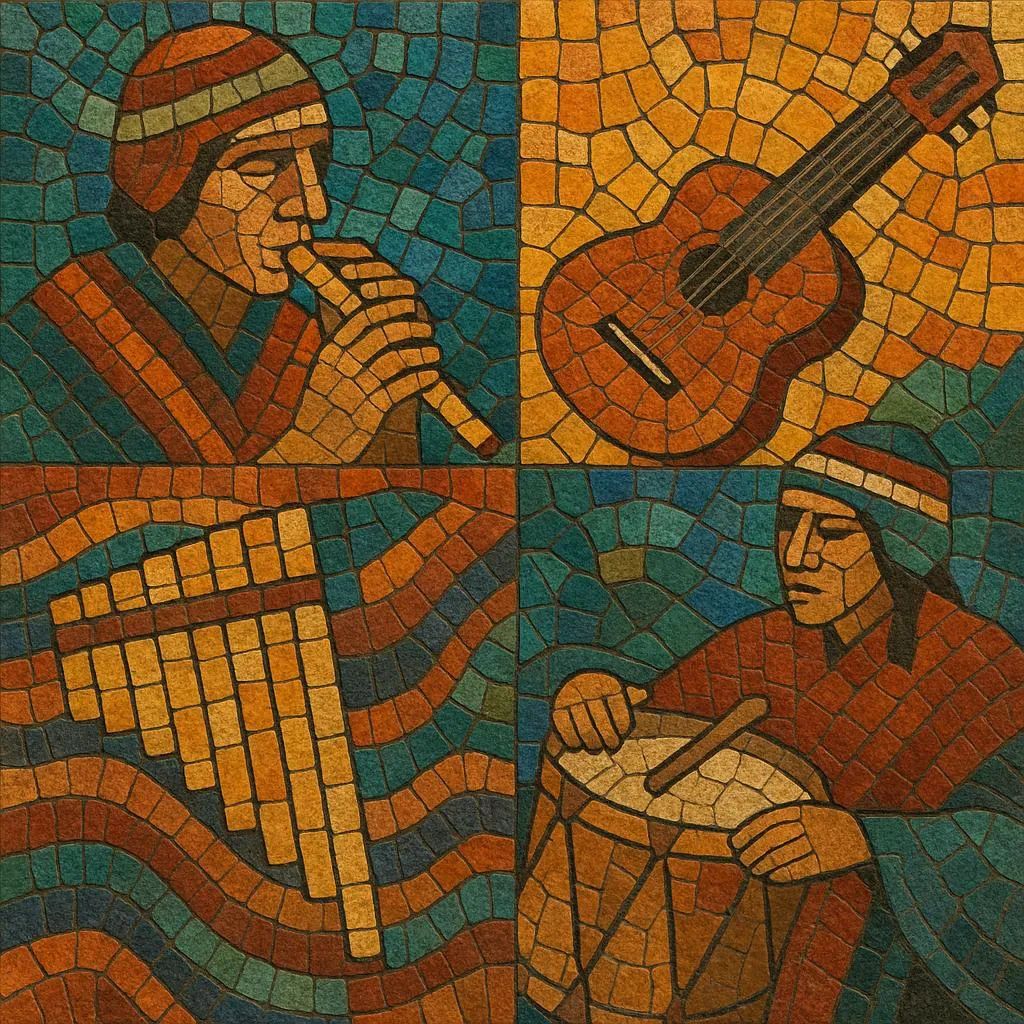
Musica andina chilena (Chilean Andean music) designates the Chilean cultivation of Andean highland styles and timbres—quena and zampoña/siku flutes, charango, guitar, bombo legüero/wankara—adapted to local repertoire and performance contexts.

In Chile it acquired clear cultural weight with the rise of the Nueva Canción movement: ensembles popularized huaynos, trotes, tinkus and other Altiplano rhythms alongside socially engaged song. Labels and peñas helped circulate this sound nationally; by the late 1970s it reached mass audiences through groups such as Illapu, making pan‑Andean instruments and grooves a familiar part of Chile’s musical landscape.


Sources: Spotify, Wikipedia, Discogs, RYM, MB, user feedback and other online sources

History

Early cultivation

Folklorists and performers in mid‑20th‑century Chile began introducing Altiplano instruments and dances (zampoña, quena, charango; huaynos, trotes, diabladas, tinkus) to local audiences, laying the groundwork for a Chilean Andean sound.

1960s–1973: Nueva Canción and consolidation

With the surge of Nueva Canción, Andean timbres and rhythms became emblematic of a broader continental identity in Chilean popular music. Groups such as Quilapayún, Inti‑Illimani and others integrated highland instrumentation into protest song aesthetics, establishing musica andina chilena as a recognizable current.

Late 1970s–1980s: Mass reception and diaspora

Record labels (e.g., Alerce) and touring ensembles amplified the style. Illapu’s repertoire helped catalyze a late‑1970s/early‑1980s boom, while exile networks projected the sound abroad, further hybridizing repertories and audiences.

1990s–present: Hybrids and legacy

Post‑dictatorship, leading bands recorded anew in Chile, sustaining Andean idioms while fusing with rock, jazz and global folk; Inti‑Illimani’s 1993 Andadas exemplifies this trans‑Andean palette reaching international charts. The style now coexists with folk‑rock and progressive currents, and its Andean color remains a lasting marker of Chilean identity.

How to make a track in this genre

Core instrumentation and texture
•   Lead with Andean timbres: quena (end‑blown flute), zampoña/siku (panpipes in interlocking parts), charango (10‑string lute), guitar, bombo legüero or wankara. Arrange sikus in complementary lines to create antiphonal “hocket” textures; double melodic lines on quena and charango for brightness.
Rhythm and groove
•   Draw from Altiplano dances: huayno (duple feel with sesquiáltera interplay between 6/8 and 3/4), trote (fast duple), tinku (driving 2/4), carnavalito (lively dotted duple). Use communal handclaps or bombo accents to articulate hemiolas and sectional lifts.
Melody, harmony, form
•   Favor pentatonic and natural minor/modal tunes, lyrical quena leads, parallel 3rds/6ths in voices, and simple strophic forms with instrumental interludes for siku ensembles.
Lyrics and delivery
•   Combine poetic imagery of land/altiplano with social and historical themes inherited from the Chilean song tradition; project clear, chorus‑friendly hooks suited to collective singing.
Production tips
•   Keep arrangements largely acoustic; if fusing, layer understated bass/keys without masking wind timbres. Record panpipes in stereo pairs and capture bombo resonance with room mics for a spacious, outdoor feel.

Top tracks

Locked
Share your favorite track to unlock other users’ top tracks

Upcoming concerts

in this genre
Influenced by
Has influenced

Download our mobile app

Get the Melodigging app and start digging for new genres on the go
© 2026 Melodigging
Melodding was created as a tribute to Every Noise at Once, which inspired us to help curious minds keep digging into music's ever-evolving genres.
Buy me a coffee for Melodigging