Your digging level
Description
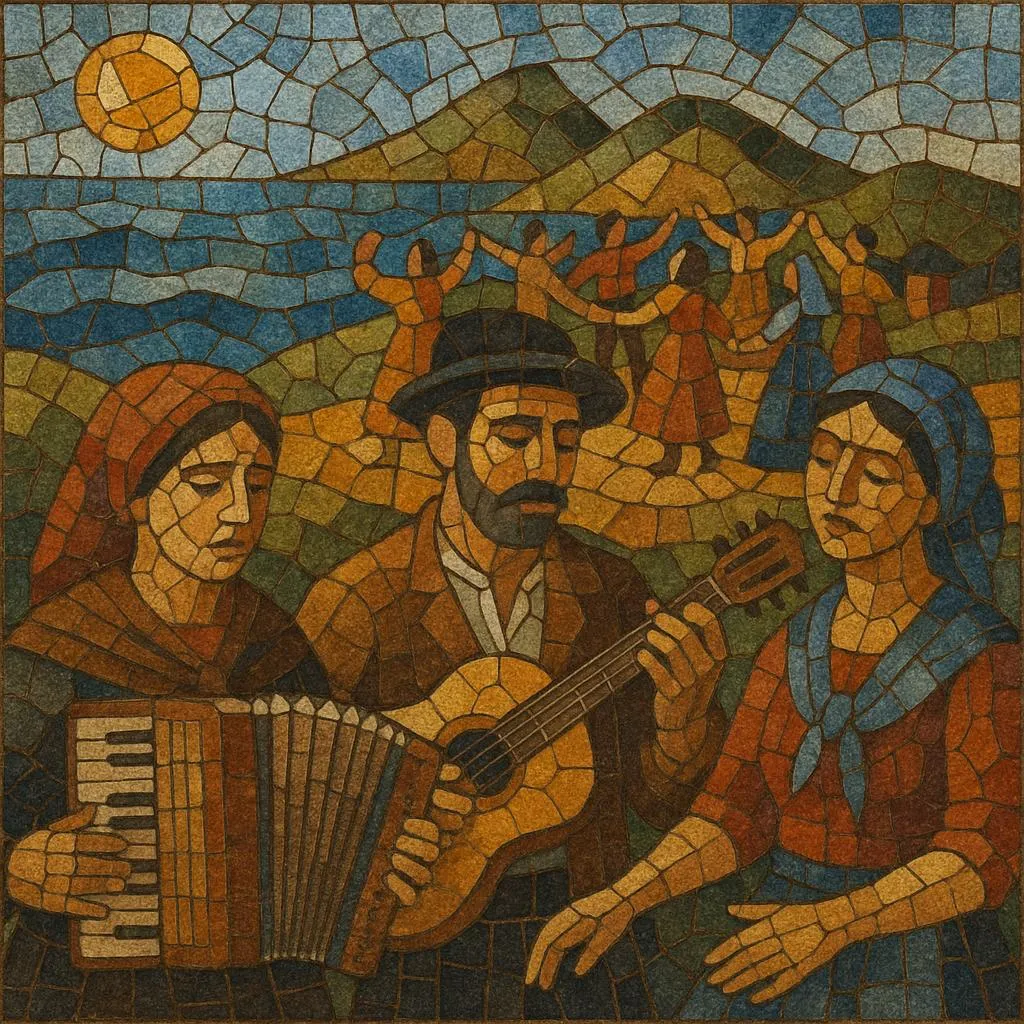
Música açoriana is the traditional and popular music of the Azores, the North Atlantic archipelago that is an autonomous region of Portugal. It blends mainland Portuguese folk song forms, local dance repertoires, Catholic devotional song, and the distinctive timbre of the Azorean viola da terra (a double‑coursed "viola" or small guitar), accordion, and village philharmonic bands (filarmónicas).
Core dance-airs such as the chamarrita, pezinho, and vira sit alongside improvised singing traditions (cantigas ao desafio) and processional hymns for Espírito Santo (Holy Ghost) festivities. In the 19th and 20th centuries, strong emigration networks to New England, California, Canada, and Brazil fed back influences (marches, polkas, and waltzes) into the island soundscape, while keeping Azorean genres alive in diaspora communities. The result is a warm, communal, dance‑forward music that also carries the island mood of saudade—longing for home and the sea.