

Your digging level

For this genre
0/8
🏆
Sign in, then listen to this genre to level up

Description

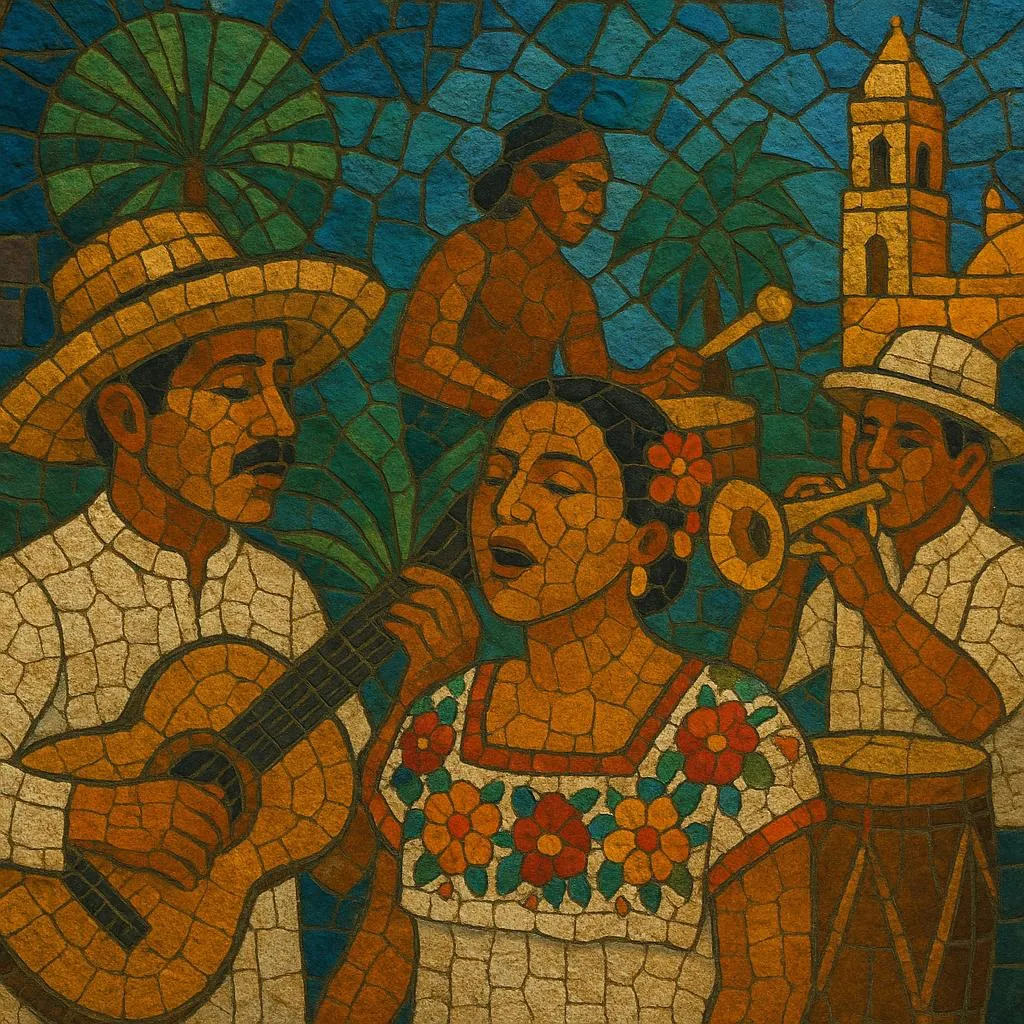
Music of Yucatán refers to the constellation of traditional, popular, and indigenous styles practiced on Mexico’s Yucatán Peninsula, especially around Mérida. It encompasses elegant salon-bred genres such as trova yucateca, social-dance forms like jarana yucateca, and living Maya ceremonial and festive practices that use native percussion and aerophones.

Because the Peninsula was a nineteenth–twentieth‑century cultural crossroads with strong links to Cuba and Spain, Yucatecan repertoires blend Iberian songcraft and European ballroom rhythms (waltz, polka) with Caribbean idioms (habanera, danzón, bolero). The result is a regional sound marked by lyrical romanticism, refined guitar accompaniment, and brassy, upbeat dance orchestras for community fiestas—alongside distinctly Maya sounds from log drums, rattles, and flutes used in ritual and social life.


Sources: Spotify, Wikipedia, Discogs, RYM, MB, user feedback and other online sources

History

Colonial roots and Maya continuity

Spanish colonial music making (sacred polyphony, villancicos, and courtly dances) arrived early and coexisted with enduring Maya musical practices that employ tunkul (log drum), flutes and ocarinas, rattles, and conch shells. Into the nineteenth century, community and church ensembles fostered a hybrid sound-world of Iberian melody and local instrumentation.

A Caribbean-linked salon culture (late 1800s–early 1900s)

Yucatán’s mercantile connections to Havana brought the habanera, danzón, and later the bolero. Urban salons and theaters in Mérida cultivated refined song traditions, out of which trova yucateca emerged: poetically wrought, guitar-led songs with habanera/bolero lilt and careful harmonic craft.

Trova yucateca and the romantic song age (1900s–mid‑1900s)

Composers such as Ricardo Palmerín and Guty Cárdenas helped define a Yucatecan canon—melodic, introspective songs that circulated nationally by radio and recording. The local ballad tradition later fed into broader Mexican and Latin American romantic pop through figures like Armando Manzanero.

Fiesta and social dance: Jarana yucateca

In parallel, the jarana yucateca flourished as a festive couple’s dance, performed by orquestas jaraneras (clarinets, brass, saxophones, snare and bass drum). Its bright 6/8 and 3/4 pulses and zapateado steps anchor community fiestas and regional identity.

Present day

Today, “music of Yucatán” names a living ecosystem: state ensembles preserve the salon and dance repertory; trios and trovadores sustain the song tradition; and Maya communities maintain ritual and social musics. Contemporary artists continue to refresh the repertoire while honoring its Spanish, Caribbean, and Maya lineages.


How to make a track in this genre

Core palettes and forms
•   Trova-style songs: write lyrical, Spanish-language poetry about love, memory, nature, and peninsular places. Set verses and refrains to flowing, singable melodies. •   Jarana dance pieces: compose upbeat, cyclical tunes that invite call-and-response and zapateado footwork. •   Maya-rooted pieces: center rhythm and timbre—log drums, rattles, clay flutes—organized around ostinati and antiphonal calls.
Rhythm and groove
•   Trova yucateca: use habanera-tinged 2/4 or bolero-influenced 4/4; gentle syncopation in the guitar bass line (e.g., dotted-eighth–sixteenth feel) supports a legato upper melody. •   Jarana yucateca: favor bright 6/8 or sesquiáltera interplay (alternating/hemiola between 6/8 and 3/4). Keep percussion crisp (snare rimshots, bass drum on strong beats) and propulsive.
Harmony and melody
•   Trova: tonal harmony with tasteful secondary dominants, diminished passing chords, and modal color (borrowed iv in major is common). Melodies arc gracefully, with cadences that breathe between lyrical lines. •   Jarana: simpler diatonic harmony (I–IV–V with occasional II°/V or V/V), strong phrase endings for dancers, and catchy motifs traded by clarinets/saxes and trumpets.
Instrumentation
•   Trova: nylon-string guitar(s), requinto for melodic fills, light hand percussion (maracas), and intimate trio vocals. •   Jarana: orquesta jaranera—clarinets, trumpets, trombone and/or saxophones, tuba or bass, snare and bass drum; optional guitar/banjo for rhythmic chug. •   Maya traditions: tunkul (log drum), rattles, ocarinas/flutes, conch shell; voice in responsorial patterns.
Arrangement and performance practice
•   Begin trova pieces with a short guitar prelude, enter voice on a pickup, and allow instrumental interludes (requinto/clarinet) between verses. •   For jarana, write 16–32‑bar strains that can repeat and modulate; spotlight footwork breaks with percussion-only tags. •   Keep dynamics conversational in trova; keep tempos buoyant and accents crisp in jarana. Prioritize clear diction and poetic delivery.

Top tracks

Locked
Share your favorite track to unlock other users’ top tracks

Upcoming concerts

in this genre

Download our mobile app

Get the Melodigging app and start digging for new genres on the go
© 2026 Melodigging
Melodding was created as a tribute to Every Noise at Once, which inspired us to help curious minds keep digging into music's ever-evolving genres.
Buy me a coffee for Melodigging