Your digging level
Description
Music of the Canary Islands is a family of traditional and popular styles that grew from the encounter between the Indigenous Guanche (of Amazigh/Berber origin) soundworld and incoming Iberian (especially Castilian/Andalusian) musics after the 15th‑century conquest.
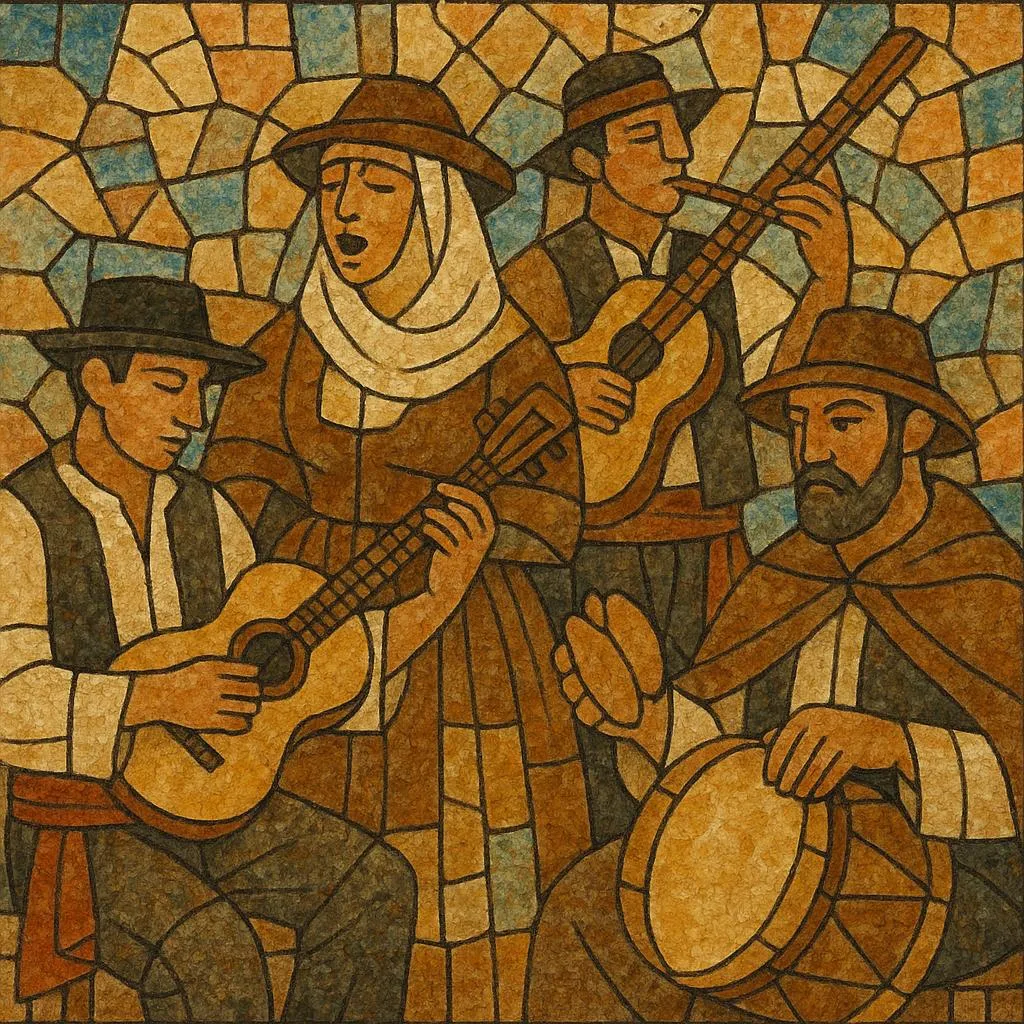
It is characterized by lively dance forms (isa, tajaraste) and lyrical song forms (folías, malagueñas), rich group singing, and distinctive local instruments such as the small five‑string timple, the wooden chácaras (large castanet-like clappers), the tambor gomero drum, and the pito herreño flute. Guitars, laúd, and bandurria provide harmonic support.
Because of centuries of circular migration and trade with the Caribbean—particularly Cuba, Venezuela, and Puerto Rico—Canarian repertories and performance practice share deep ties with Latin and Caribbean folk traditions, while retaining island‑specific timbres, dance steps, and poetic forms.
History
The archipelago’s first layers of music belonged to the Guanche peoples, culturally related to Amazigh/Berber groups of North Africa. Vocal practices, frame‑drum rhythms, and communal dances formed the core. After the late‑15th‑century Castilian conquest, Iberian courtly and popular genres (jota, folía/folías, fandango, romances) arrived and mingled with local practices, creating hybrid island variants.
By the early modern period, Canarians developed distinctive versions of peninsular forms—slow, expressive folías and malagueñas alongside festive isa—supported by strummed chords and parallel melodies on guitar family instruments. Local idiophones and membranophones (chácaras, tambor gomero) anchored dance music such as the tajaraste (notably in Tenerife and La Gomera). The timple emerged as a hallmark of island timbre.
Heavy emigration and two‑way traffic with Cuba, Venezuela, and Puerto Rico fostered a sound corridor. Canarian song‑dance types and decimista verse practice interfaced with Cuban punto and Puerto Rican seis; conversely, Caribbean idioms (habanera, bolero, son) colored island repertoires. Many iconic island songs thematize migration, seafaring, and saudade for the islands.
From the 1960s onward, ensembles such as Los Sabandeños and Los Gofiones professionalized and popularized Canarian folklore on large stages and recordings, while timple virtuosi (José Antonio Ramos, Benito Cabrera, Germán López, Domingo Rodríguez “El Colorao”) expanded technique and repertoire. Today, traditional parrandas (community music gatherings) coexist with staged folk orchestras and crossovers into folk‑rock and jazz, sustaining a living, island‑wide musical identity.
Work within classic island forms:
•Isa: upbeat, jota‑derived dance in compound or triple feel (often 3/4 or 6/8), suitable for choral refrains and partner dances.
•Folías and Malagueñas (Canarian variants): slower triple meters (3/4), lyrical and expressive; ideal for coplas with long vocal melismas.
•Tajaraste: binary, drum‑driven dance (2/4) using chácaras and tambor gomero; rhythmic call‑and‑response between voices and percussion.