

Your digging level
Description
The music of Catalonia is a broad regional tradition spanning sacred and secular repertoires, art music and folk, and modern popular styles. Centered on Barcelona and the wider Catalan-speaking lands, it is one of Europe’s oldest documented musical cultures and has evolved continuously for over two millennia.
Its identity weaves together medieval chant and polyphony, Renaissance and Baroque chapel and court music, 19th‑century Romanticism and Modernisme, and distinctive folk practices such as the sardana dance with its cobla ensemble, seaside havaneres (habaneras), and the sound of the gralla at casteller (human tower) festivals. In the 20th century Catalonia nurtured world‑class classical figures (Pau Casals, Albéniz, Granados, Mompou, Gerhard), a celebrated choral movement (Orfeó Català), globally known venues (Gran Teatre del Liceu; Palau de la Música Catalana), and influential popular currents including Nova Cançó (Catalan protest song), rumba catalana from Barcelona’s Romani communities, rock català, and contemporary indie, jazz, and electronic scenes.
Musically it reflects Mediterranean exchange—Occitan troubadour song, Iberian and Arabic legacies, Italian operatic culture—while preserving local instruments (tenora and tible oboes, flabiol i tamborí, fiscorn) and Catalan‑language song as enduring markers of place.
History
Catalonia’s documented musical life stretches back to late antiquity and the early Middle Ages in monastic and cathedral centers. Gregorian chant and local liturgical traditions flourished by the 9th–10th centuries, while the proximity to Occitania fostered troubadour culture and early polyphony.
By the 16th–17th centuries, chapel masters cultivated Franco‑Flemish‑inflected polyphony and Spanish/Italianate sacred styles. Courtly and civic music expanded, and instrumental practice (winds, strings, organ) took hold in urban centers.
The 19th century saw a powerful choral movement (e.g., Orfeó Català, founded 1891) and world‑renowned composers and virtuosi: Isaac Albéniz and Enric Granados brought a Catalan‑Spanish voice to the international piano repertoire; Pau Casals transformed cello performance. Concert life centered on the Liceu (opera) and, from 1908, the Modernista Palau de la Música Catalana.
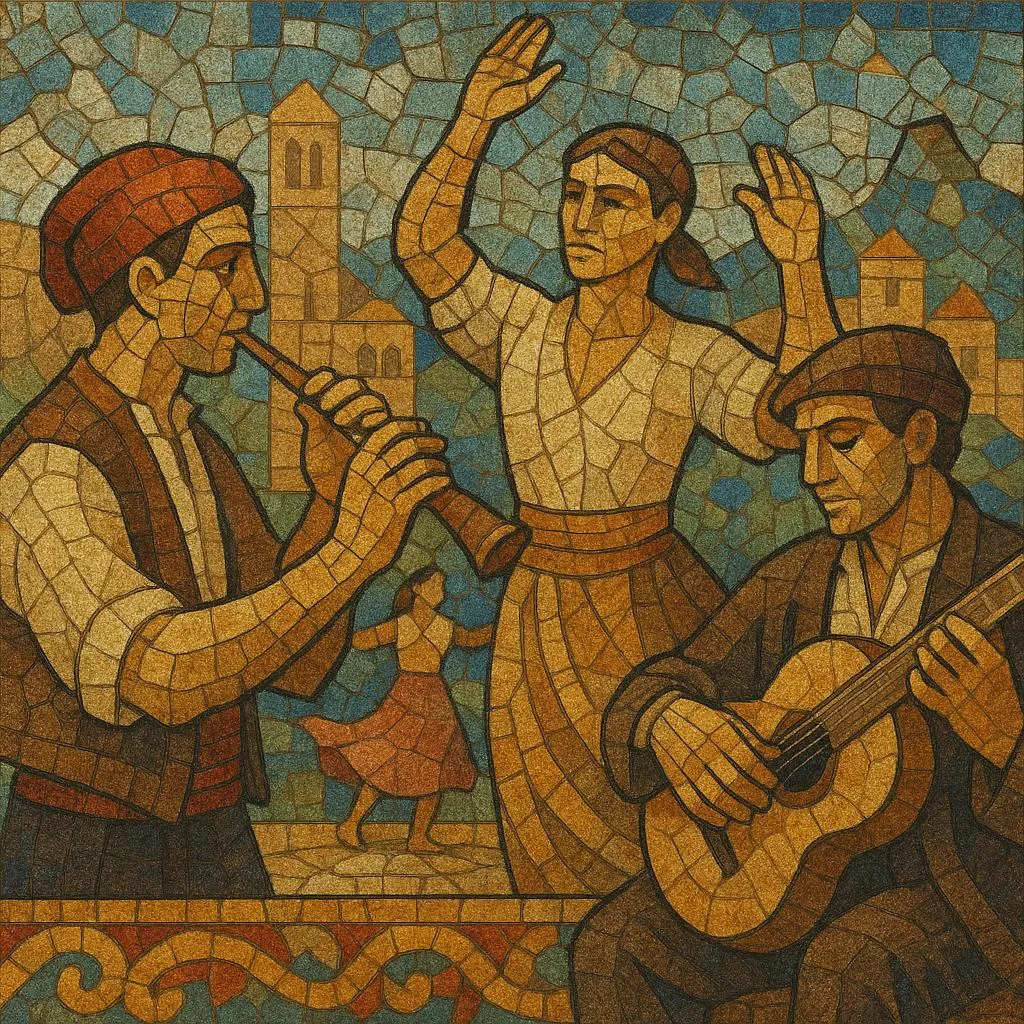
Parallel to art music, distinct folk idioms coalesced: the sardana (a circle dance) accompanied by the cobla ensemble (tenora, tible, flabiol i tamborí, fiscorns, trumpets, trombone, double bass); havaneres (habaneras) along the Costa Brava; festive gralla bands for castells and street rituals. These idioms became emblems of Catalan identity.
From the 1960s, Nova Cançó used Catalan‑language song for cultural and political expression (e.g., Lluís Llach), while Barcelona’s Romani musicians forged rumba catalana (Peret), blending flamenco, Cuban rhythm, and the signature ventilador (fan‑like) guitar strum.
Post‑1978 cultural autonomy supported Catalan‑language media, festivals (Sónar, Primavera Sound), and new scenes: jazz (Tete Montoliu), early‑music leadership (Jordi Savall), indie and rock català, and a vigorous classical ecosystem (Gerhard, Montsalvatge, Mompou’s legacy). Today, “music of Catalonia” denotes a living continuum—from cobla dances in town squares to cutting‑edge electronics in Barcelona’s clubs.

