Your digging level
Description
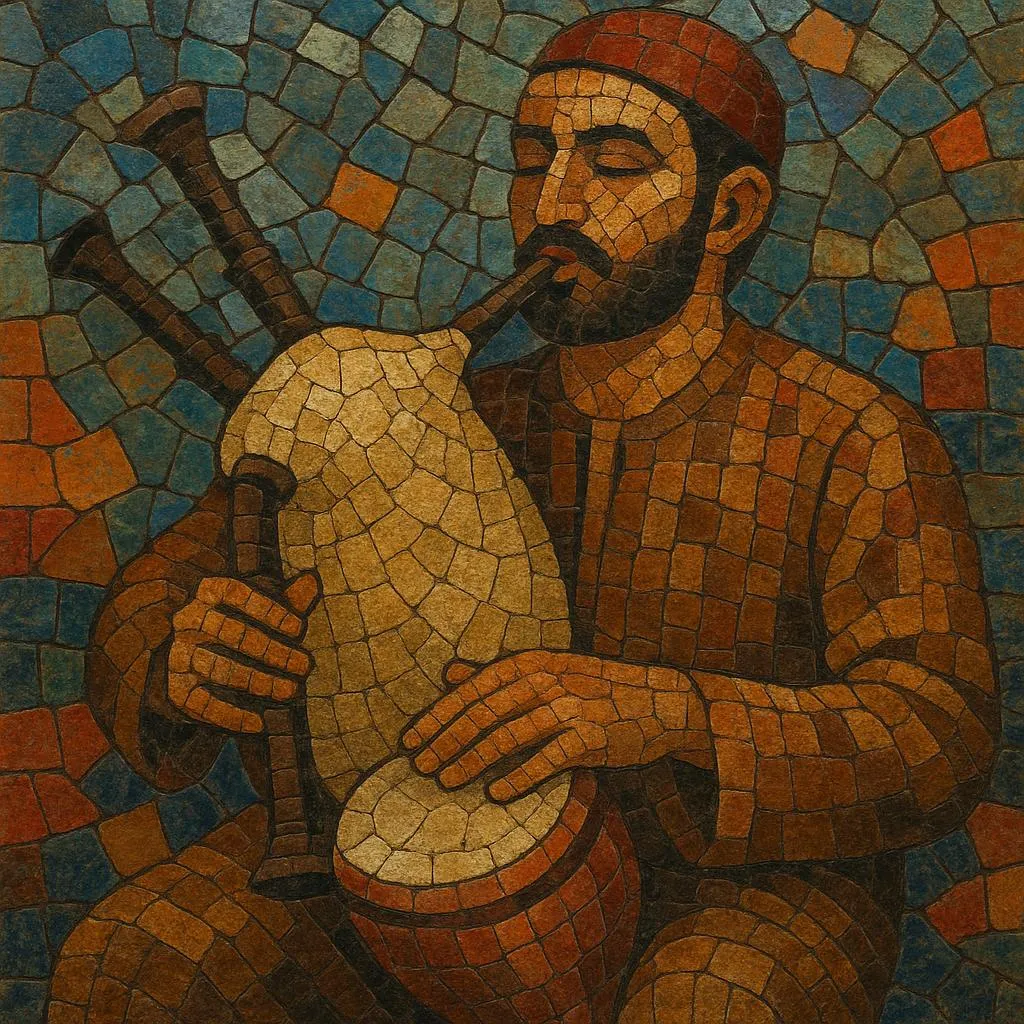
Mezwed (also spelled mezoued/mizwad) is a popular, working‑class wedding and party music from Tunisia that grew around local modal traditions and lively social occasions. It is centered on the mizwad (a North African bagpipe with a goatskin or ewe’s leather bag) and the darbouka/tabla (goblet drum), producing a raw, reedy timbre over insistent hand‑drummed rhythms.
The genre draws on Tunisian and wider Maghrebi scales that include microtones, and its vocal lines are typically delivered in Tunisian and Algerian Arabic varieties. Songs often use call‑and‑response refrains, short strophic verses, and communal clapping, making mezwed a high‑energy, dance‑forward style. Although rooted in rural and peri‑urban contexts, it became an emblem of popular culture in cities, especially for celebrations such as weddings and neighborhood festivities.
History
Mezwed’s instrumental core—the mizwad bagpipe and hand percussion—comes from older Tunisian folk practices, especially rural and working‑class party repertoires. In the mid‑20th century, as rural populations moved toward urban centers, wedding and neighborhood celebrations brought these sounds into the city.
By the 1960s, mezwed coalesced as a recognizable popular genre distinct from classical malouf and from pan‑Arab pop. Amplification, larger party ensembles, and cassette circulation helped standardize a high‑energy wedding format centered on mizwad riffs, darbouka patterns, and sing‑along refrains. The genre’s identity remained proudly local, with lyrics in Tunisian Arabic (and, in border regions, Algerian varieties) addressing love, humor, everyday struggles, and festive pride.
Cassettes, radio, and television boosted mezwed’s profile across Tunisia and into parts of Algeria and the Tunisian diaspora. While retaining the essential bagpipe‑and‑drum core, bands experimented with keyboards, electric bass, and drum machines for louder venues and larger audiences, without losing the genre’s earthy, participatory drive.
Today mezwed remains a staple of weddings and popular celebrations, and it also intersects with club contexts and hybrid projects (electro‑folk, pop fusions). Younger performers modernize sound palettes yet keep signature features: mizwad leads, propulsive darbuka grooves, call‑and‑response hooks, and microtonal vocal lines that invite crowd participation.