Description
Mexican pop is the broad field of pop music made in Mexico, rather than a single style with a uniform sound. Much of it is sung in Spanish, though some performers have also recorded in English or made bilingual releases. Its audiences have included teenagers and young adults, alongside listeners drawn to adult romantic ballads.
The scene ranges from vocal pop and dance-oriented groups to the romantic balada. Bolero has been an important point of reference for balladry, while some performers have brought mariachi arrangements or ranchera elements into pop songs. Radio, television and telenovelas have helped performers reach audiences in Mexico and across Latin America; some have also entered wider international markets.
Media comparisons have cast Thalía and Paulina Rubio as competitors for the title of Latin pop queen, a rivalry associated with their time in Timbiriche.
Sources: Wikipedia
History
Early pop and rock and roll
By the 1960s, pop made in Mexico included many Spanish-language versions of English-language rock-and-roll hits. Angélica María, Enrique Guzmán and Los Teen Tops were among the performers of cover versions. After Carlos Santana's success in the United States in the late 1960s, numerous bands emerged, many singing in both Spanish and English with foreign audiences in mind.
Ballads, television and youth groups
The romantic balada gained popularity in the 1970s and remained prominent in the 1980s. José José became known for his romantic ballads; his performance of “El Triste” at the Festival de la Canción Latina in 1970 brought him to fame. The television variety show Siempre en Domingo, launched in 1969 and hosted by Raúl Velasco, gave Mexican performers an important platform. Among those Velasco encouraged were Emmanuel, Gloria Trevi and Timbiriche.
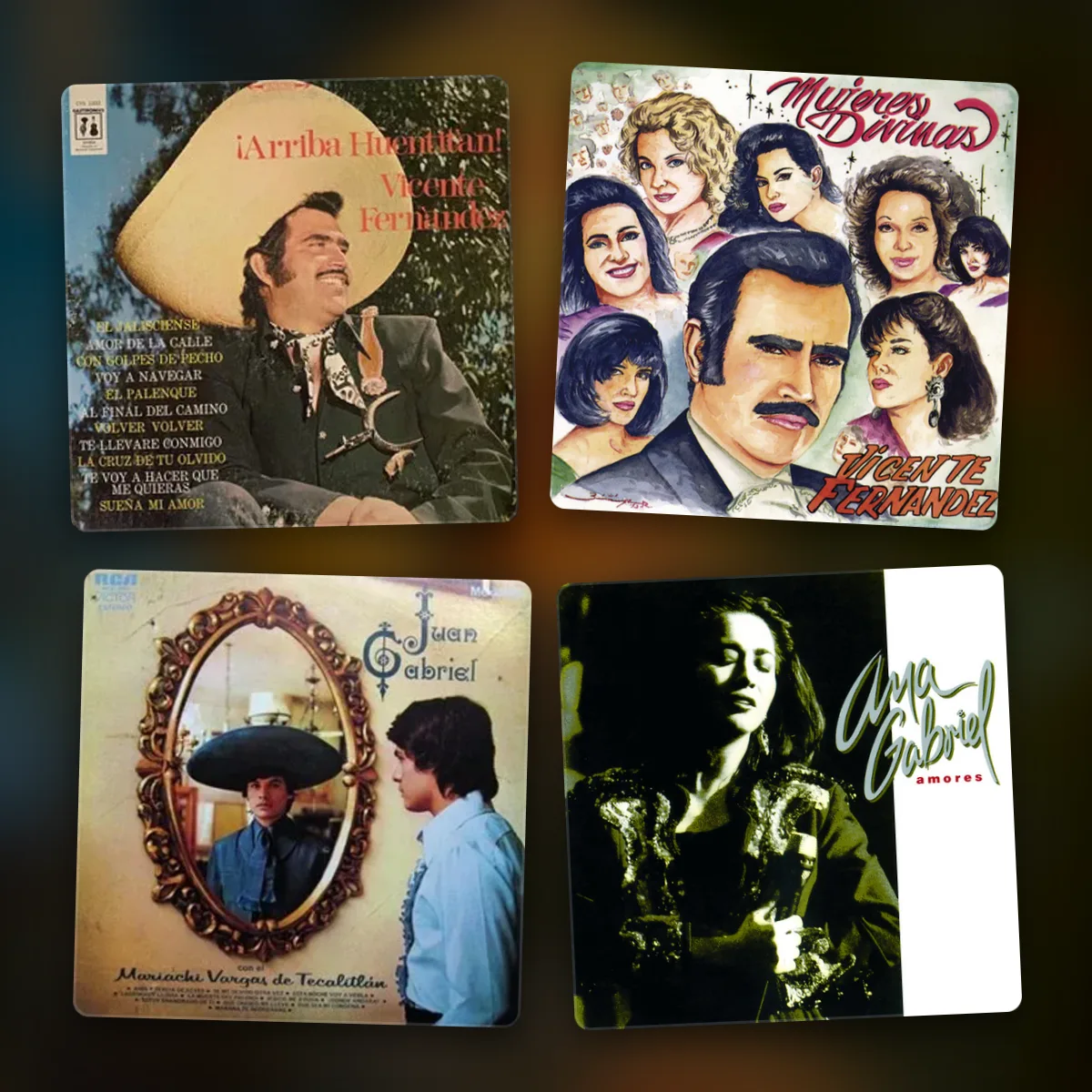
The 1980s also brought youth-oriented pop and dance acts, including Timbiriche and Flans. Mexican groups reached radio audiences at home and promoted their music elsewhere in Latin America. Ballads could draw on local traditions: Juan Gabriel and Rocío Dúrcal worked with Chuck Anderson on mariachi arrangements for their ballads.
Expansion in the 1990s
Boy bands and other vocal groups became prominent in the Mexican market. Magneto had hits early in the decade, while acts including Mercurio, Kabah and Onda Vaselina found success later on. Luis Miguel's 1991 album Romance, a collection of previously recorded boleros, helped renew interest in the bolero. Alejandro Fernández moved from traditional Mexican forms toward mainstream pop, combining pop with ranchera and mariachi music.
Television continued to connect acting and music careers: the reach of Televisa's telenovelas helped performers such as Lucía Méndez and Verónica Castro launch music careers abroad. Mexican pop also became more attractive to international markets toward the end of the decade.
Since 2000
New groups included RBD, Belanova and Playa Limbo, while Paulina Rubio and Thalía pursued English-language markets with releases containing English and Spanish songs. In 2010, Camila won the Latin Grammy Award for Record of the Year with “Mientes.”
Choose a direction
Treat the scene as a range of approaches rather than a fixed recipe. You could write a romantic Spanish-language ballad, make youth-oriented pop for a vocal group, or build a dance-oriented song. Consider whether you want an intimate solo vocal or a group sound.
Write and arrange
For a ballad, use a clear melody and give the singer room to communicate the lyric. Bolero is a useful point of reference for the romantic side of the scene. You could also explore mariachi-style arrangements or ranchera elements, as some Mexican pop performers have done, while keeping the song's pop structure accessible.
Build a pop production
A common approach in pop is to organize the song around a memorable chorus and contrast it with more restrained verses. For a dance-oriented track, establish a steady rhythmic pulse and use repeated hooks; for a vocal group, try alternating lead lines and adding harmonies. Spanish is a natural starting point, though bilingual or English-language songs are also possible.



Best playlists

Influenced by