Your digging level

For this genre
0/8
🏆
Sign in, then listen to this genre to level up

Description

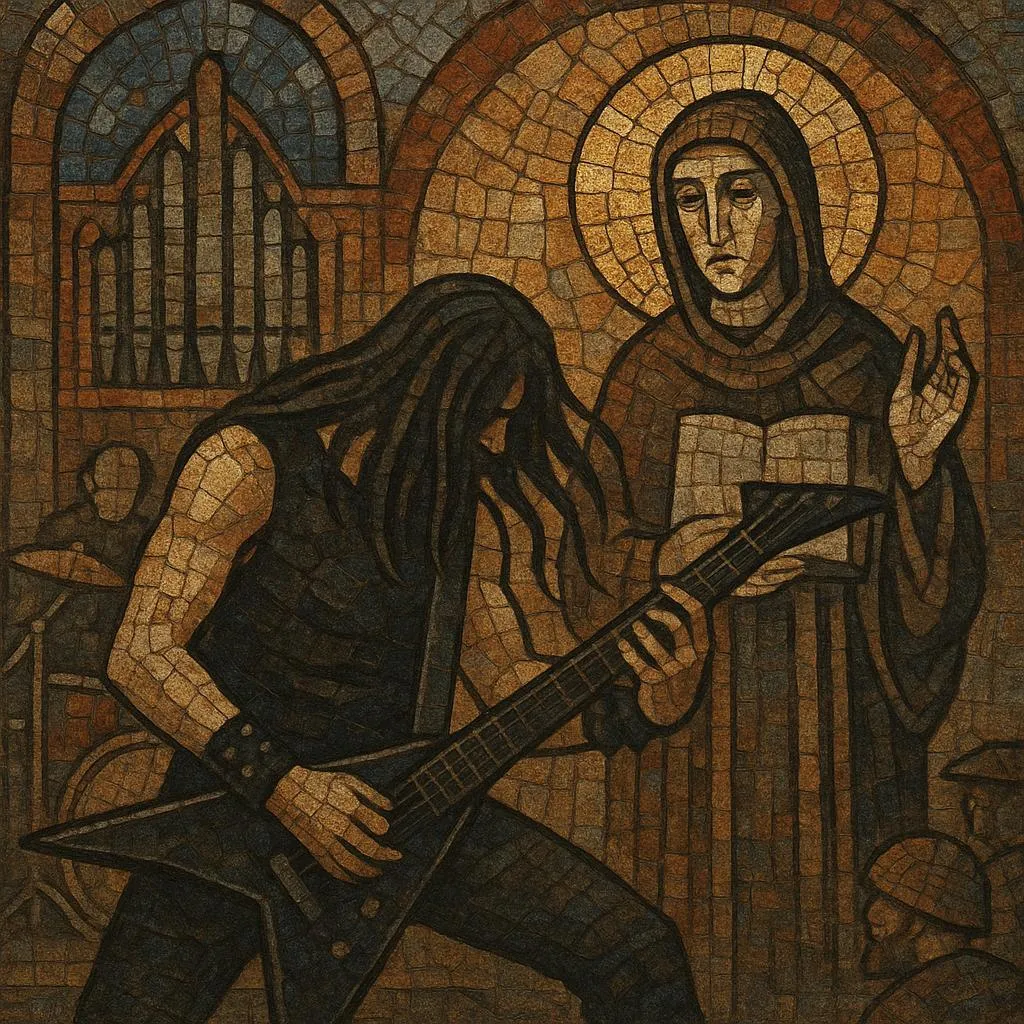
Metal Mass (Finnish: Metallimessu) is a Lutheran church service in which traditional hymns and parts of the liturgy are arranged and performed in the style of heavy metal. The service follows the established Order of Mass used in Lutheran churches (with sections such as the Kyrie, Gloria, Creed, Sanctus, and Agnus Dei), but replaces or augments conventional hymnody and accompaniment with distorted guitars, bass, drums, and, often, choir and organ.

First held in 2006, Metal Mass became a notable popular phenomenon in Finland, drawing large intergenerational congregations—particularly youth—into church for worship framed by a familiar local metal sound. Its studio recording, Metallimessu, reached the Finnish Top 40, peaking at number 12, and featured guest appearances by well-known Finnish metal musicians.

While rooted in Lutheran liturgy and congregational singing, Metal Mass is characterized by powerful riffing, anthem‑like hymn settings, and dynamic contrasts that move from contemplative passages to epic, high‑energy climaxes—seeking to preserve the theological content and communal function of the hymns while translating their musical language into the aesthetics of heavy metal.


Sources: Spotify, Wikipedia, Discogs, RYM, MB, user feedback and other online sources

History

Origins (2006)

Metal Mass originated in Finland in 2006 as a Lutheran service in which the ordinary and proper of the Mass, along with well‑known hymns, were set to heavy metal arrangements. The concept was not to create a concert in a church, but a genuine service of worship following the Lutheran Order of Mass, enabling congregational participation while using the sonic vocabulary of Finnish metal.

Popular Reception and Media Attention

The service quickly drew national and international media coverage (e.g., AFP and The Washington Times) for bringing hundreds of attendees—especially younger people—into church through a culturally resonant style. The approach preserved the liturgical structure and texts, emphasizing that the musical style served the theology and prayer of the liturgy rather than replacing it.

Recording and Collaboration

An associated recording, Metallimessu, entered the Finnish album charts and peaked at number 12, remaining in the Top 40 for several weeks. The project featured contributions from recognized Finnish metal musicians, underscoring the professional quality of the arrangements and performances while remaining anchored in liturgical function.

Diffusion and Ongoing Practice

Following its initial success, Metal Mass services were held in churches across Finland (and occasionally abroad), often with local church choirs and instrumentalists joined by guest metal musicians. The format inspired other liturgical crossover services, demonstrating that traditional hymnody can be credibly translated into contemporary idioms without abandoning congregational singing or confessional content.

How to make a track in this genre

Keep the Liturgy Intact
•   Structure the service according to the Lutheran Order of Mass (e.g., Kyrie → Gloria → Creed → Sermon/Prayers → Sanctus → Agnus Dei → Dismissal). •   Use authorized hymn texts and liturgical responses; ensure congregational parts remain singable.
Instrumentation and Texture
•   Core band: two distorted electric guitars (rhythm + lead), electric bass, drum kit, and vocals. •   Optional: pipe organ or synth layers to support sustained pads, church bells/samples for atmosphere, and a mixed choir to bolster congregational refrains. •   Guitar tunings: E standard or down‑tuned (D standard/Drop D) for weight; use palm‑muted riffs and open‑string pedal points beneath hymn melodies.
Rhythm and Groove
•   Favor mid‑tempo, march‑like or 6/8 hymn feels adapted to a metal backbeat. •   Employ double‑kick patterns for climactic sections (e.g., Gloria, final verses) but thin textures for prayerful parts (e.g., Kyrie, confession). •   Use clear subdivisions and simple phrase lengths so large congregations can join confidently.
Harmony and Melody
•   Preserve the original hymn melodies; support them with power‑chord progressions and diatonic harmony, adding modal mixture or suspended chords for color. •   Alternate minor-mode penitential sections (Kyrie) with major or Mixolydian triumphant sections (Gloria, Doxology) to mirror liturgical affect. •   Arrange antiphonal/response sections: cantor or lead vocal introduces the line; congregation/choir answers over sustained chords.
Vocals and Lyrics
•   Lead vocals should prioritize clarity of sacred text over extreme techniques; occasional grit is acceptable but intelligibility is paramount. •   Use choir/unison congregational refrains to anchor each hymn; consider call‑and‑response for litanies and acclamations.
Form and Dynamics
•   Shape movements with dynamic arcs: intro (atmospheric pads/organ) → verse (riff + vocal) → refrain (full band + choir) → instrumental interlude/meditation → final refrain (epic tutti). •   Insert moments of silence or clean‑guitar/organ interludes between movements to maintain prayerful pacing.
Production (for recordings)
•   Blend close‑miked drums and guitars with natural church reverberation (real or convolution IR) for a sacred yet modern sound. •   Master with moderate loudness to preserve congregational dynamics; avoid over‑compression during choral passages.

Top tracks

Locked
Share your favorite track to unlock other users’ top tracks

Upcoming concerts

in this genre
Influenced by
Has influenced
No genres found

Download our mobile app

Get the Melodigging app and start digging for new genres on the go
© 2026 Melodigging
Melodding was created as a tribute to Every Noise at Once, which inspired us to help curious minds keep digging into music's ever-evolving genres.
Buy me a coffee for Melodigging