Your digging level
Description
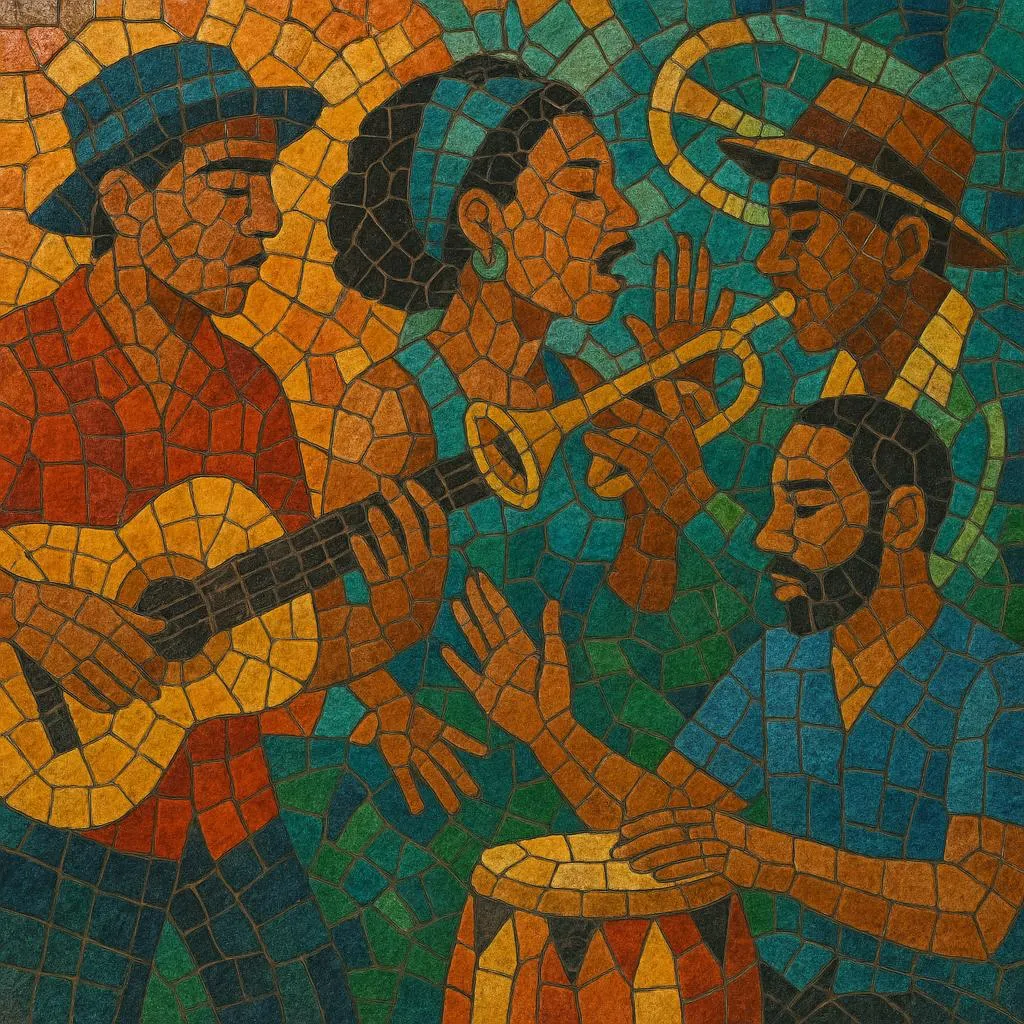
Mestissatge (Catalan for "mestizaje") is a Barcelona–centered, Pan–Catalan urban fusion that mixes rumba catalana guitar, ska/reggae off‑beats, Latin and Afro‑Caribbean percussion, rock energy, and hip‑hop vocals.
Born in multiethnic neighborhoods and DIY venues, it favors big brass hooks, dubby bass, rasgueado/“ventilador” strumming, and shout‑along choruses. Lyrics are often multilingual (Catalan, Spanish, French, Arabic, etc.) and balance festive street‑party vibes with social themes around migration, dignity, anti‑racism, and community.
The sound is dance‑forward and portable—from squares and okupas to large festivals—bridging the rumba catalana lineage with global ska/reggae/Latin grooves and contemporary urban pop.
![ALGORITMO Y MESTIZAJE - #MúsicaPorLaCiencia en el Estudio [Ep. 1] con Rolando González-José](https://i.ytimg.com/vi/RGgDhpEfWzM/hqdefault.jpg)
History
Barcelona’s late‑20th‑century migration waves and a dense grassroots venue/squat (okupa) ecosystem created a laboratory where Gypsy rumba catalana met Jamaican ska/reggae, Latin rock, and hip‑hop. The rumba’s percussive “ventilador” strum, street percussion, and call‑and‑response fit naturally with off‑beat skanks and dub bass. By the mid‑1990s, bands forming in the Raval and Gràcia districts, along with itinerant musicians from across the Mediterranean and the Americas, crystalized a recognizable, celebratory urban fusion.
Through the 2000s, Barcelona became a European reference point for urban mestizo sounds. Independent labels, neighborhood festivals (e.g., La Mercè/BAM’s alternative circuits), and a strong busking culture amplified the style. The approach spread through the broader Països Catalans (Catalonia, Valencia, Balearic Islands), catalyzing ensembles that blended rumba strums with ska‑punk brass lines, hip‑hop verses, and Afro‑Latin percussion. Concerts emphasized inclusivity, community choirs, and political/grassroots causes.
A new generation integrated electronics (dub effects, dancehall, hip‑hop production) and stadium‑sized hooks while retaining street‑band energy. The style’s multilingual, community‑minded ethos carried into large open‑air festivals and civic platforms, influencing Catalan reggae/ska scenes and feeding back into Spanish indie and flamenco‑urban hybrids. Today, mestissatge is less a strict genre than a living practice—an adaptable recipe for festive, socially conscious, multilingual dance music rooted in Catalonia but connected to global mestizo cultures.