Your digging level
Description
Manchu music refers to the traditional music of the Manchu people from Northeast China (historical Manchuria). It spans courtly repertories cultivated under the Qing dynasty and a rich layer of folk, ritual, and narrative genres maintained in Manchu communities.
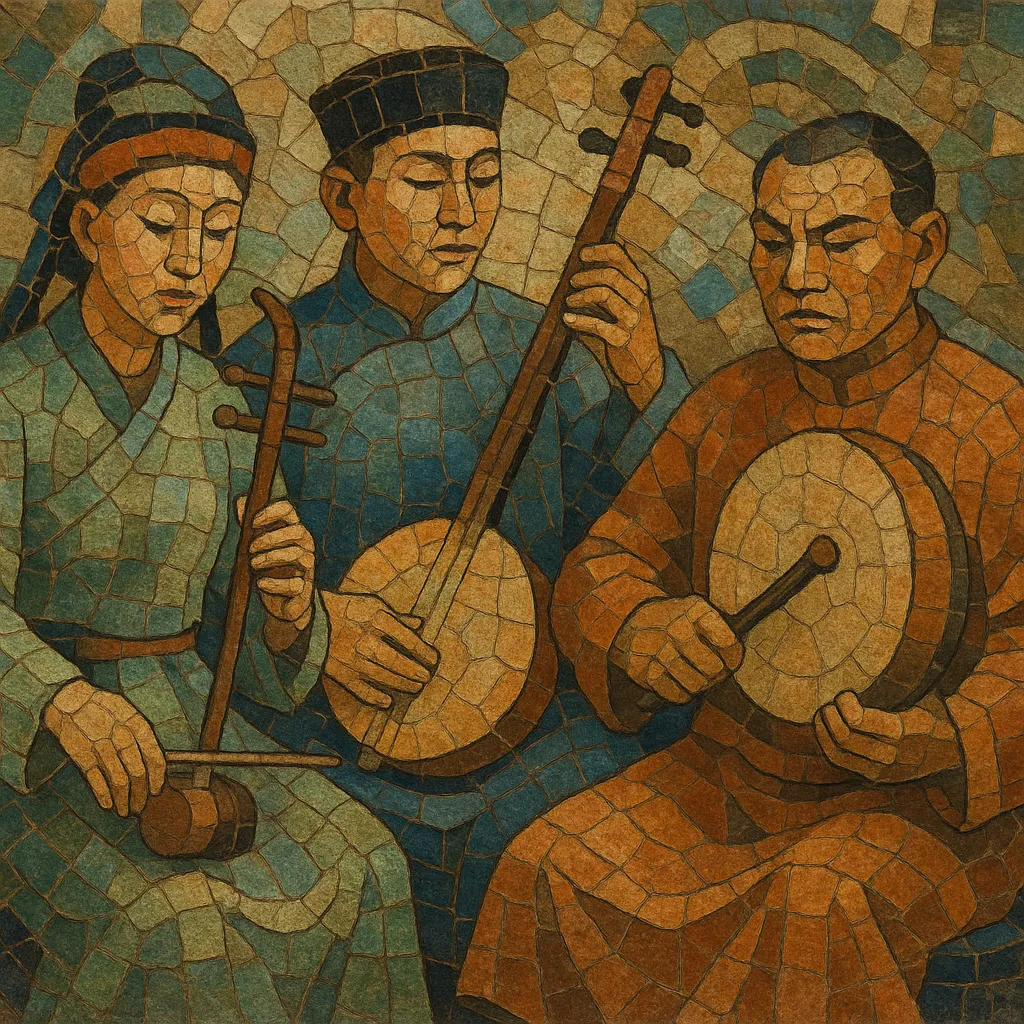
Musically, it favors pentatonic and related North China modal idioms, heterophonic textures, and flexible vocal delivery that can move from free-rhythm chant in ritual contexts to steady, strophic melodies in folk songs. Core timbres come from northern Chinese and steppe-linked instruments such as huqin-family fiddles (including sihu), sanxian (plucked lute), frame and barrel drums (including octagonal drum used for narrative song), small gongs and cymbals, and sometimes jaw harp (kouxian) in village practice. The tradition prominently includes shamanic chant and drumming for spirit-invitation rites, narrative ballads about hunting, border life, and clan history, and pieces preserved or adapted within the Qing court’s ceremonial soundscape.
Because of the Manchu role in imperial life, Manchu music both absorbed wider Sinitic, Mongolian, and Tibetan elements and, in turn, helped shape the mixed northern Chinese capital style that later fed into Beijing’s theatrical and narrative arts.
History
The musical roots of the Manchu reach back to Jurchen and Tungusic traditions in Northeast Asia. By the 1600s, as the Manchu consolidated power and founded the Qing dynasty, village ritual chant, hunting songs, and narrative singing coexisted with growing court ceremonial repertories. Pentatonic melodic language and shamanic drumming, central to pre-imperial practice, continued alongside newly formalized imperial sounds.
During the Qing era, Manchu elites patronized ceremonial and entertainment music in the capital. Court ensembles, ritual bell-and-drum traditions, and theatrical forms absorbed repertories and instruments from Han Chinese, Mongolian, and Tibetan sources. This two-way exchange helped shape northern Chinese urban taste and contributed to the environment from which Beijing opera and capital-based narrative genres later flourished.
In the early–mid 20th century, rapid urbanization, political upheavals, and changing cultural policies reduced the everyday visibility of Manchu-language song and ritual, though some village lineages kept shamanic chant and octagonal-drum balladry alive. From the late 20th century onward, documentation projects and intangible cultural heritage programs supported field recording, instrument reconstruction, and staged presentations by community ensembles.
Today, Manchu music survives through local ritual specialists, folk troupes, and conservatory-linked ensembles that teach octagonal-drum narrative singing, shamanic chant (performed in appropriate cultural settings), folk dances, and Manchu-language songs. Modern performers sometimes blend traditional melodies, sihu or sanxian accompaniment, and frame-drumming with contemporary staging, while researchers and community custodians continue to revitalize language and repertory.