Your digging level

For this genre
0/8
🏆
Sign in, then listen to this genre to level up

Description

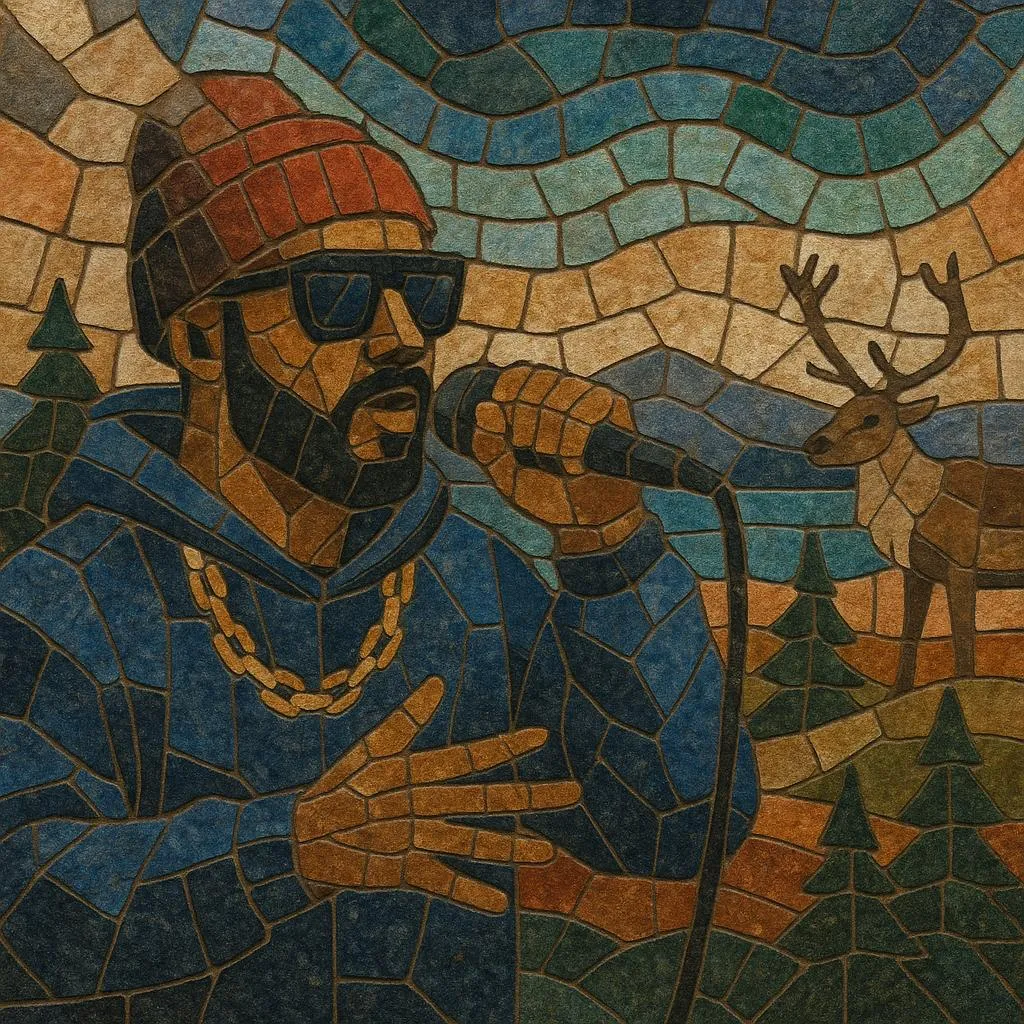
Lapland hip hop is a regional current of Nordic rap rooted in Sápmi (the transnational Sámi homeland) and Finland’s northern Lapland. It blends contemporary hip‑hop production with joik (traditional Sámi vocal music), and is performed in Northern Sámi, Inari Sámi, Finnish, Swedish, and Norwegian as well as English.

Artists often foreground cultural survival, language revitalization, land rights, and everyday Arctic life, folding local imagery and oral‑poetic devices into boom‑bap, trap, or atmospheric beats. The scene’s visibility grew in the mid‑2000s as performers like AMOC (who raps in the endangered Inari Sámi language) reached national media, and it continues to surface at northern festivals that center Sámi identity and youth culture.


Sources: Spotify, Wikipedia, Discogs, RYM, MB, user feedback and other online sources

History

Origins (early–mid 2000s)

Hip hop arrived in the far north via Finnish and broader European rap, but Lapland artists distinguished themselves by threading in joik timbres and Sámi languages. A watershed figure was AMOC (Mikkâl Antti Morottaja) from Inari, Finland, who began releasing horrorcore‑tinged rap in Inari Sámi and drew national attention by the mid‑2000s; his debut album Amok‑Kaččâm appeared in 2007. His work made a case for hip hop as a tool for language preservation and cultural self‑representation.

Consolidation and cross‑border Sápmi links (2010s)

Through the 2010s, artists from across Sápmi—Finland, Sweden, and Norway—built a loosely connected scene. Swedish‑Sámi performers such as Maxida Märak foregrounded activism around mining and Indigenous rights while combining joik and hip hop aesthetics, helping the style reach national stages and collaborations.

Community stages and new voices (late 2010s–2020s)

Local events north of the Arctic Circle have provided crucial platforms, with festivals explicitly centering Sámi identity, bilingual performance, and youth participation. In Utsjoki, for example, the Loktafeasta rap festival (founded by Mihkku Laiti, aka Yungmiqu) showcases Sámi‑ and Finnish‑language rap under the midnight sun, symbolizing the genre’s rootedness in place as well as its cosmopolitan hip‑hop vocabulary.


How to make a track in this genre

Core palette
•   Vocals: Alternate between rap verses and joik‑influenced hooks or backing textures. Joik can appear as sampled phrases, live refrains, or melismatic ad‑libs; keep its timbral grain and circular phrasing intact. •   Language: Weave Northern Sámi or Inari Sámi with Finnish/Swedish/Norwegian. Short code‑switching lines work well for emphatic punch lines and identity statements. •   Beats & tempo: 80–95 BPM boom‑bap for storytelling; 120–150 BPM for modern trap/club energy. Use sparse, cold‑air sound design (sub‑bass, dry snares, roomy reverbs) to evoke Arctic space.
Harmony & melody
•   Keep harmony minimal (i–VI, i–VII loops, or modal drones) so the vocal and joik color carry the piece. •   Layer pentatonic or Dorian/Aeolian motifs on keys, kantele‑like plucks, or sampled fiddle/accordion to nod at Nordic folk color without pastiche.
Rhythm & arrangement
•   Leave negative space for narrative verses; drop instrumentation for punch‑in lines naming places, clans, or landforms. •   Add call‑and‑response gang vocals on hook words (place names, rallying cries) to mirror communal joik practice.
Lyrical focus & stance
•   Center language pride, land/rights, reindeer herding lifeworlds, migration, and climate realities; balance documentary detail with metaphor drawn from tundra, rivers, aurora. •   Maintain hip‑hop fundamentals (braggadocio, wordplay) but avoid caricature—anchor boasts in local knowledge and activism.
Production tips
•   Sample ethically: if using archival joik, clear rights and credit elders/culture‑bearers. Better yet, record contemporary joikers and co‑credit. •   Field texture (wind, boots on snow) can sit low in the mix for atmosphere—sidechain lightly to the kick so it breathes.
Performance practice
•   Visuals can include gákti or contemporary streetwear; be intentional about context and consent when using traditional attire on stage. •   Engage audiences with brief translations of key lines to widen access without diluting Sámi language presence.

Top tracks

Locked
Share your favorite track to unlock other users’ top tracks

Upcoming concerts

in this genre
Influenced by
Has influenced
No genres found

Download our mobile app

Get the Melodigging app and start digging for new genres on the go
© 2026 Melodigging
Melodding was created as a tribute to Every Noise at Once, which inspired us to help curious minds keep digging into music's ever-evolving genres.
Buy me a coffee for Melodigging