Your digging level
Description
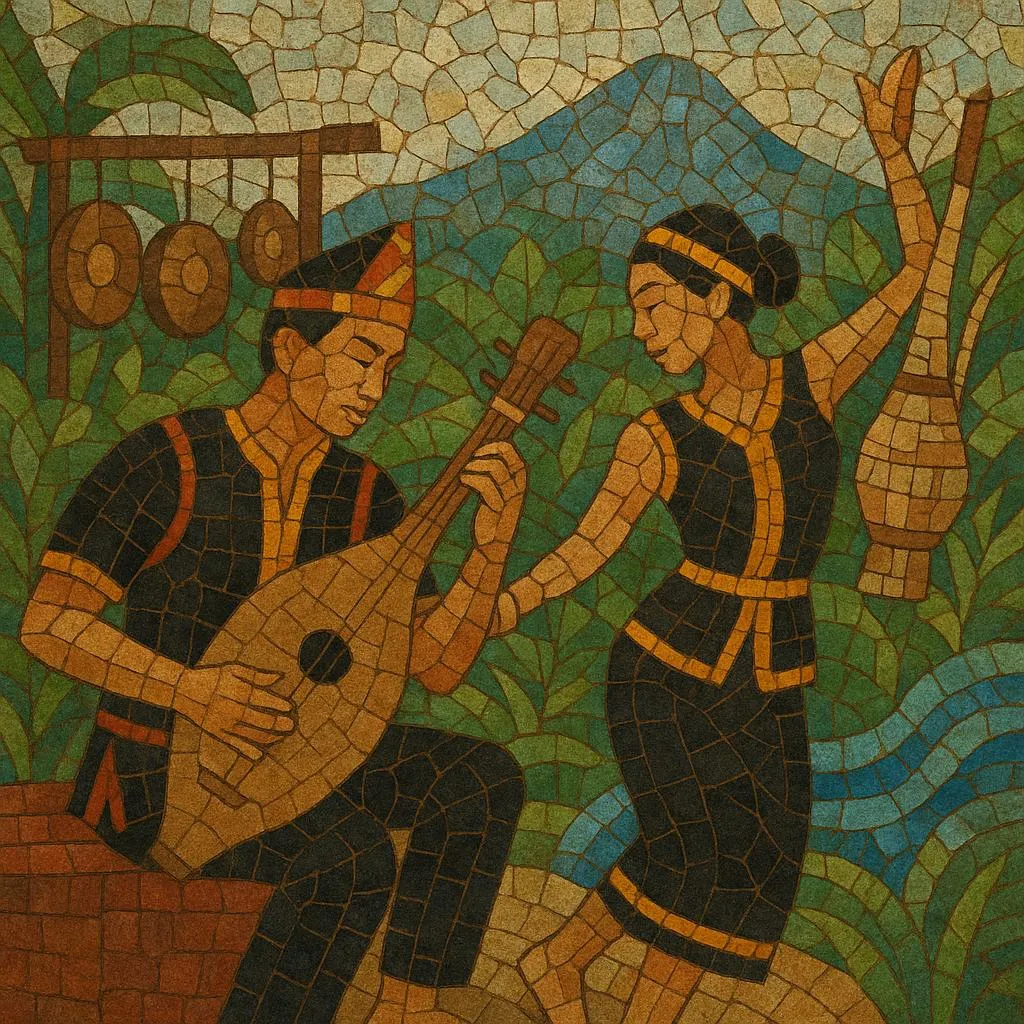
Lagu Sabahan refers to popular and traditional-informed songs from Sabah, Malaysian Borneo. It encompasses contemporary pop ballads, dance-oriented festival numbers, folk-pop fusions, and modern hip-hop or R&B tracks—all rooted in Sabahan languages and identity.
Lyrics are often written and sung in Kadazan-Dusun (and sub‑dialects such as Bundu-Liwan), Sabah Malay (a distinct regional colloquial Malay), as well as Bajau and Murut languages. Common themes include village life, courtship, family ties, harvest celebrations (especially Kaamatan), pride of place, and the natural beauty of Borneo.
Musically, Lagu Sabahan blends mainstream Malaysian/Indonesian pop idioms (radio-friendly chord cycles, polished vocals) with local rhythmic feels (e.g., sumazau grooves, gong ensembles) and timbres (gong rows, kulintangan/kulintangan-inspired patterns, sompoton and sundatang colors). In the 2010s–2020s, producers also integrated modern hip-hop, EDM, and R&B textures while retaining regional linguistic and cultural markers.
History
Radio and community stages in Kota Kinabalu, Penampang, and other Sabahan towns fostered local-language songwriting tied to social events and harvest celebrations. Early cassettes and VCDs documented Kadazan-Dusun, Bajau, and Murut songs, crystallizing a recognizably Sabahan pop sound that sat alongside peninsular Malaysian pop while emphasizing local languages and the sumazau dance feel.
As regional studios and labels grew, songwriters blended sleek Malay/Indonesian pop ballad writing with Sabah’s gong-based rhythmic accents and festival refrains. The rise of televised talent shows and national radio opened a path for Sabahan vocalists to gain mainstream Malaysian visibility, even as they continued to record in regional languages for local audiences.
YouTube, Facebook, and TikTok catalyzed a new wave of independent Sabahan artists. Producers added trap/hip‑hop beats, EDM synths, and R&B harmonies while keeping Sabahan linguistic identity front-and-center. Collaboration across Borneo (Sabah–Sarawak–Kalimantan) and with peninsular Malaysian writers widened the audience. Festival seasons (e.g., Kaamatan) remain focal release periods, sustaining the tradition of danceable community anthems alongside contemporary ballads.
Beyond entertainment, Lagu Sabahan functions as cultural preservation: it normalizes the use of Kadazan-Dusun and other Sabahan languages in pop, celebrates indigenous instruments and rhythms, and anchors community identity—both at home and across the Sabahan diaspora.

Top albums


Best playlists