Your digging level
Description
Lagu Aceh refers to contemporary popular songs in the Acehnese language that draw on the province’s deep well of traditional rhythms, chants, and devotional aesthetics. While “lagu Aceh” literally means “Acehnese songs,” the term in practice denotes a modern regional pop/folk scene centered in Aceh, Sumatra, Indonesia.
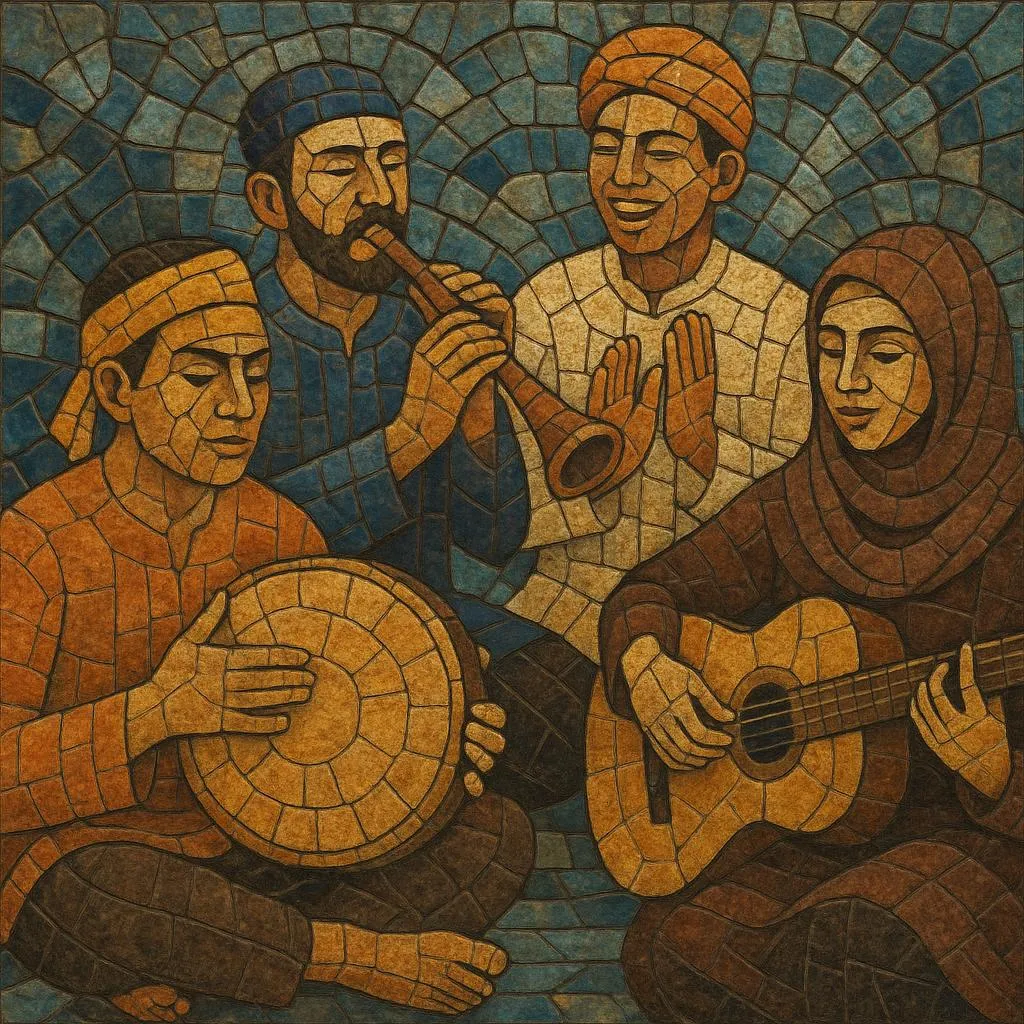
The sound typically blends frame‑drum grooves (rapa’i), clapping‑choir textures and call‑and‑response hooks inherited from Saman and Seudati traditions, with guitars, keyboards, and contemporary beat‑making. Vocals are often melismatic and ornamented, reflecting Islamic recitational aesthetics; lyrics revolve around love, faith, local identity, resilience, and everyday coastal and village life. In today’s productions, rapa’i and serune kalee (double‑reed shawm) timbres commonly sit beside 808s, electric bass, and polished pop arrangements.
History
Aceh’s musical identity long predates recording culture. Community forms such as Saman (fast choral/clapping), Seudati (dance‑song with percussive bodywork), Didong (poetic vocal percussion), rapa’i (frame‑drum) traditions, and the serune kalee–geundrang ensemble created a local palette of rhythms, textures, and vocal styles. Islamic devotional practice and Arabic‑influenced melisma shaped vocal delivery and poetic forms.
With the spread of cassettes and later VCDs, a distinct “lagu Aceh” pop idiom emerged. Artists and ensembles adapted traditional grooves and call‑and‑response into verse–chorus songcraft, adding guitars, synths, and light drum kits. During the conflict years and through social change, songs frequently carried messages of faith, longing for home, and cultural pride, keeping Acehnese language at the forefront.
After the 2004 Indian Ocean tsunami, cultural revitalization and community rebuilding placed renewed value on Acehnese arts. Independent producers and home studios multiplied; YouTube, social media, and regional festivals helped new singers reach both local and diaspora audiences. The sound broadened to include reggae touches, soft‑rock balladry, acoustic folk, and later hip‑hop cadences—all while retaining recognizably Acehnese rhythmic cells and vocal ornaments.
Lagu Aceh today spans acoustic singer‑songwriter tracks, pop ballads, EDM‑tinged beats, and rap verses over rapa’i loops. Collaborations between traditional troupes and pop producers are common, and community choirs continue to popularize anthemic refrains at cultural events. The genre remains a living bridge: preserving regional identity while dialoguing with Indonesia’s national pop and global digital production.