Your digging level
Description
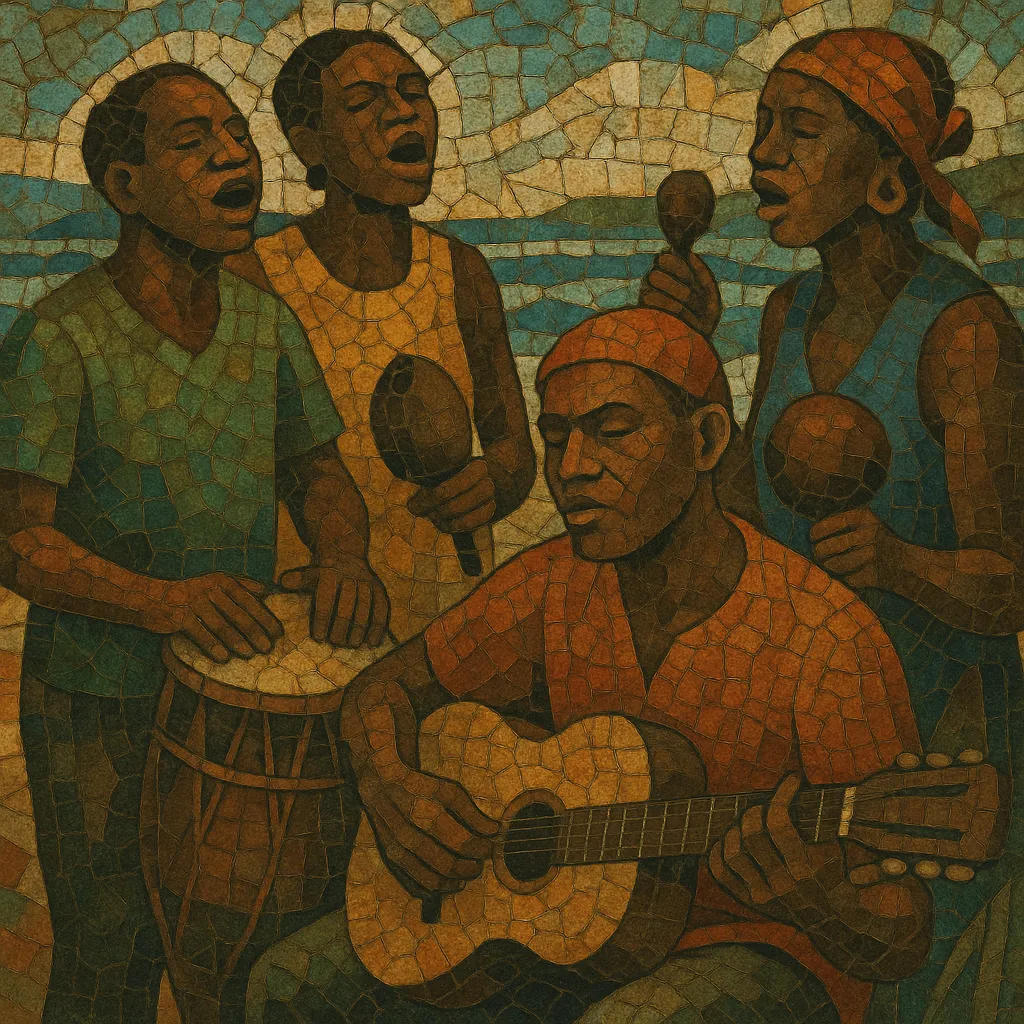
Kru music refers to the traditional and coastal popular music practices of the Kru peoples of present-day Liberia (and adjacent Côte d’Ivoire). At its core are communal vocal traditions, call-and-response singing, polyrhythmic percussion, and work songs historically linked to canoe and maritime labor.
In the early 20th century, Kru seafarers integrated imported guitars into local idioms while traveling West Africa’s coast and working on ships. This guitar-led coastal style—performed alongside rattles, bells, and hand drums—fed directly into the palm-wine and early guitar-band currents that later shaped highlife and other West African popular styles. The result is a spectrum that runs from ritual and community performance to lilting, fingerpicked guitar songs with buoyant 12/8 feels.
History
Kru music developed within the social, ritual, and work contexts of the Kru peoples along Liberia’s coast. Core features include call-and-response vocals, polyrhythmic drumming, and the use of idiophones such as calabash rattles and iron bells. Work songs coordinated communal labor (notably rowing and boat landing), while praise and storytelling songs preserved history, lineages, and moral instruction.
From the late 19th to early 20th century, Kru mariners were renowned sailors across West Africa. Their extensive travel exposed them to foreign instruments and repertoires aboard ships and in port cities. Adopting portable guitars, they blended local rhythmic logics and responsorial singing with fingerpicked patterns and simple I–IV–V harmonies. These coastal “Kru guitar” practices interacted with similar port repertories in Sierra Leone and Ghana, becoming a key tributary to the palm-wine and early guitar-band streams.
As recording industries grew in coastal West Africa, the relaxed, 12/8 guitar groove associated with Kru-influenced coastal styles fed into emerging highlife scenes (especially guitar-band highlife) and informed elements that would later surface in jùjú and related idioms. Meanwhile, at home, Kru ceremonial and community music continued to thrive, with cultural troupes helping codify repertoires for theater and stage.
Liberia’s civil conflicts disrupted cultural institutions, yet tradition-bearers and diasporic artists sustained Kru songs and dances in community gatherings and cultural troupes. Today, Kru music lives in both traditional contexts (festivals, rites, and storytelling) and in heritage presentations, while its historical guitar vocabulary remains audible in the DNA of highlife and other West African popular forms.