Your digging level
Description
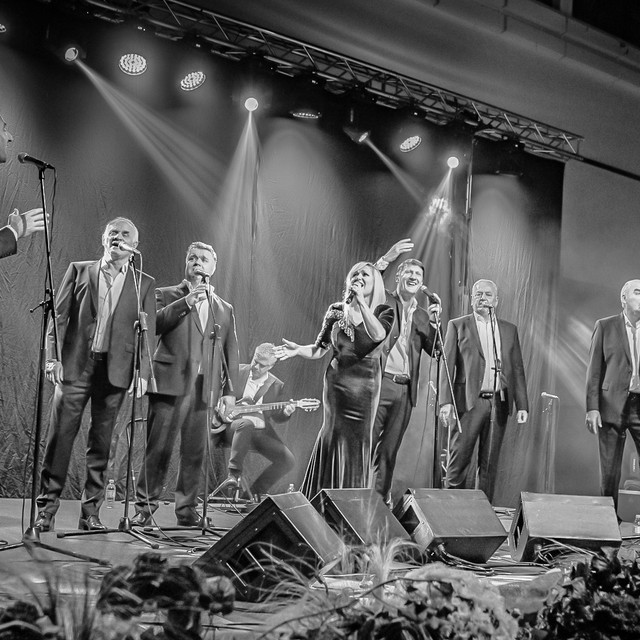
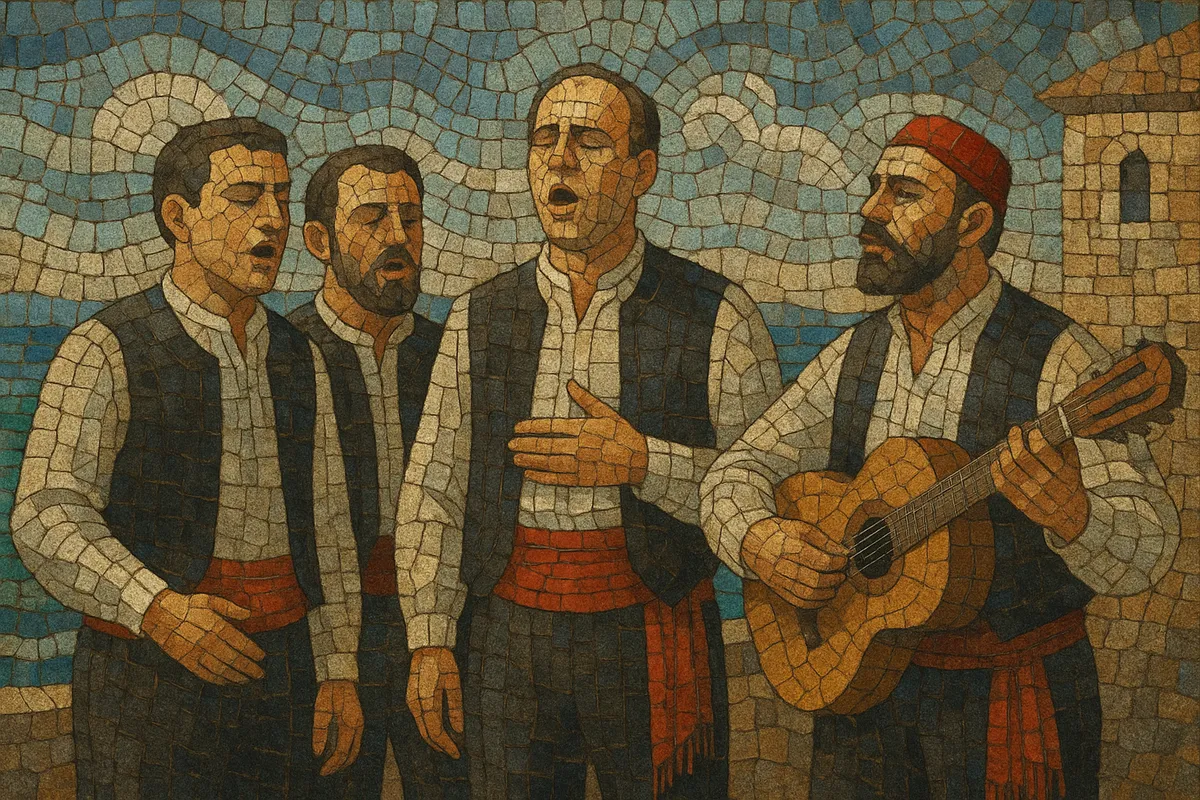
Klapa is a traditional multipart a cappella singing style from the Dalmatian coast of Croatia. Performed most commonly by small male ensembles (though mixed and female groups are now common), it features tight homophonic harmonies led by a first tenor over a sustained bass foundation.
Typical voicing is first tenor (lead), second tenor, baritone, and bass, with occasional doubling to create five to eight singers. The harmony language is largely diatonic, with frequent parallel thirds and sixths, drone-like pedal tones in the bass, and modal colorations (often Aeolian and Dorian). Rhythmic feel is flexible and rubato, supporting expressive text delivery about love, the sea, homeland, friendship, and wine.
Although traditionally strictly a cappella, some modern performances lightly color the texture with guitar or mandolin. The aesthetic emphasizes blend, pure intonation, restrained vibrato, and dynamic swells, creating an intimate yet sonorous choral sound.
History
Klapa singing crystallized in Dalmatia during the 19th century, drawing on older coastal folk part-singing and the liturgical and communal singing practices of Adriatic towns. The term “klapa” colloquially means a group of friends, reflecting the music’s social function: informal evening gatherings in town squares and by the sea.
Close cultural contact with Italian coastal cities across the Adriatic helped shape an ear for part-writing and blend, while local folk repertories and church singing provided melodies, modes, and performance manners. The resulting style coalesced into small, stable ensembles that prized purity of intonation and collective expression over solo virtuosity.
In the 20th century—especially after World War II—klapa groups began organizing more formally, developing distinctive repertoires and group identities. A pivotal moment was the founding of the Festival of Dalmatian Klapas in Omiš (1967), which standardized performance expectations, stimulated new compositions in the idiom, and helped disseminate klapa beyond Dalmatia.
From the 1980s onward, female and mixed klapa ensembles grew in prominence, and collaborations with popular musicians introduced the style to wider audiences, including the Croatian diaspora.
In 2012, “Klapa multipart singing of Dalmatia, southern Croatia” was inscribed by UNESCO on the Representative List of the Intangible Cultural Heritage of Humanity, affirming its cultural significance. Today, the scene is vibrant: professional and amateur ensembles perform traditional songs, newly composed klapa works, and tasteful arrangements of popular material, while maintaining the core aesthetics of a cappella blend, modal inflection, and expressive rubato.