Your digging level

For this genre
0/8
🏆
Sign in, then listen to this genre to level up

Description

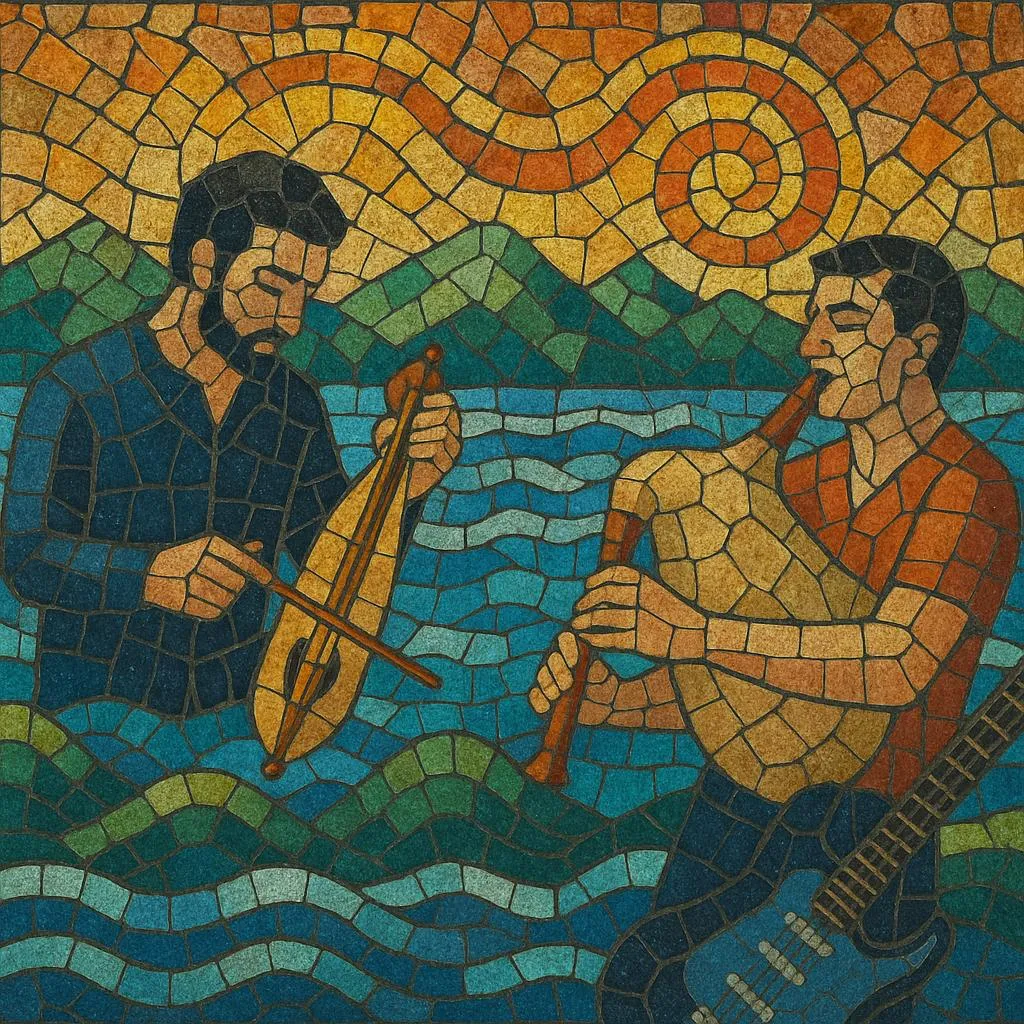
Karadeniz pop is a contemporary Turkish pop style rooted in the folk music of Turkey’s Black Sea (Karadeniz) region. It fuses regional instruments—especially the Black Sea kemençe (pear‑shaped bowed lyra) and tulum (Black Sea bagpipe)—with modern pop/rock rhythm sections, synthesizers, and studio production.

Typical grooves borrow from horon and kolbastı dances, yielding brisk, driving rhythms in asymmetrical meters (often 7/8 split 2+2+3, or 5/8 split 2+3) alongside straight 2/4 party feels. Melodies are ornamented, modal (makam‑inflected), and often sung with a bright, forward tone that reflects local vocal aesthetics. Lyrics celebrate sea life, mountains, migration, romance, teasing banter, and the Black Sea sense of humor and pride, sometimes using regional dialects and Laz/Hemşin influences.


Sources: Spotify, Wikipedia, Discogs, RYM, MB, user feedback and other online sources

History

Roots

Karadeniz pop grows out of the centuries‑old folk traditions of Turkey’s Black Sea coast—particularly the horon dance culture and song repertories accompanied by kemençe and tulum. Through the 20th century, these sounds were documented on regional broadcasts and folk anthologies, building a foundation for later popularization.

Emergence in the 1990s

With Istanbul’s rapidly professionalizing pop industry in the 1990s, producers and artists began to fuse Black Sea dance rhythms and timbres with mainstream arrangements. Regional stars and Istanbul‑based labels recognized the commercial appeal of high‑energy horon grooves presented with radio‑ready choruses, drum set, electric bass, and synths. The result was a wave of singles and albums that brought Black Sea identity to Turkish pop audiences nationwide.

2000s Crossover and National Visibility

In the 2000s, a new generation broadened the palette—marrying kemençe and tulum lines to rock backbeats, power ballads, and glossy TV performances. National festivals, TV variety shows, and film/series placements helped push the sound outside the region, while live shows retained the participatory, dance‑led character of horon circles.

2010s–Present: Digital Era and Hybrids

Streaming and social media accelerated regional‑to‑national traffic. Younger bands experimented with EDM textures, trap‑influenced percussion, and expanded pop structures while keeping signature ornaments and dance meters. Today, Karadeniz pop sits comfortably alongside mainstream Turkish pop, functioning both as a regional badge and a flexible toolkit (kemençe riffs, 7/8 hooks) that other Turkish genres occasionally borrow.


How to make a track in this genre

Core rhythm and groove
•   Start from horon/kolbastı dance feels. Common meters are 7/8 (2+2+3) or 5/8 (2+3), plus 2/4 for party‑style tracks. •   Drum kit or programmed drums: keep a relentless, light‑on‑its‑feet pulse. In 7/8, try kick on beat 1 and after beat 4 (1, 4+), snare/handclap on the last eighth, with hi‑hat subdivisions to underline 2+2+3. •   Bass lines are repetitive, pedal‑point driven, often outlining the tonic/dominant with approach tones to support dance energy.
Modes, melody, and ornaments
•   Use makam‑inflected scales commonly heard in Black Sea songs (e.g., Hüseyni/Uşşak colors, Hicaz for a poignant flavor). Keep phrases short, call‑and‑response, and highly melismatic at cadences. •   Ornament kemençe or vocal lines with slides, mordents, and quick turns; allow expressive micro‑bends that imitate regional bowing/embouchure nuances.
Harmony and form
•   Harmonies are simple: I–VII–VI (modal variants), or i–VII–VI in minor; pre‑chorus often raises tension with IV or bVII. •   Structure: intro (kemençe riff) → verse → pre‑chorus → big chorus → instrumental dance break (horon) → verse/chorus → extended outro that invites clapping and line dancing.
Instrumentation and sound design
•   Essentials: kemençe (lead riffs/doubles the vocal), tulum (drone and countermelody), acoustic/electric guitar (strums or light arpeggios), bağlama/cura for texture, electric bass, drum kit or punchy pop drums, and synth pads/strings. •   Layer kemençe with a bright EQ and light saturation; pan supporting instruments to leave center for vocal and lead.
Lyrics and delivery
•   Themes: sea, mountains, migration, hometown pride, playful courtship, and wistful nostalgia. •   Delivery is direct, lively, and communal—add interjections ("oy!") and antiphonal lines to simulate dance‑floor call‑and‑response.
Production tips
•   Keep tempos brisk (typically 115–145 BPM depending on meter and dance style). •   Use short reverbs/early reflections on percussion to retain clarity at speed; allow a more resonant space for kemençe/tulum to evoke outdoors communal dancing. •   Include a mid‑track instrumental horon section to energize live audiences and highlight regional identity.

Top tracks

Locked
Share your favorite track to unlock other users’ top tracks

Upcoming concerts

in this genre
Influenced by

Download our mobile app

Get the Melodigging app and start digging for new genres on the go
© 2026 Melodigging
Melodding was created as a tribute to Every Noise at Once, which inspired us to help curious minds keep digging into music's ever-evolving genres.
Buy me a coffee for Melodigging