Your digging level
Description
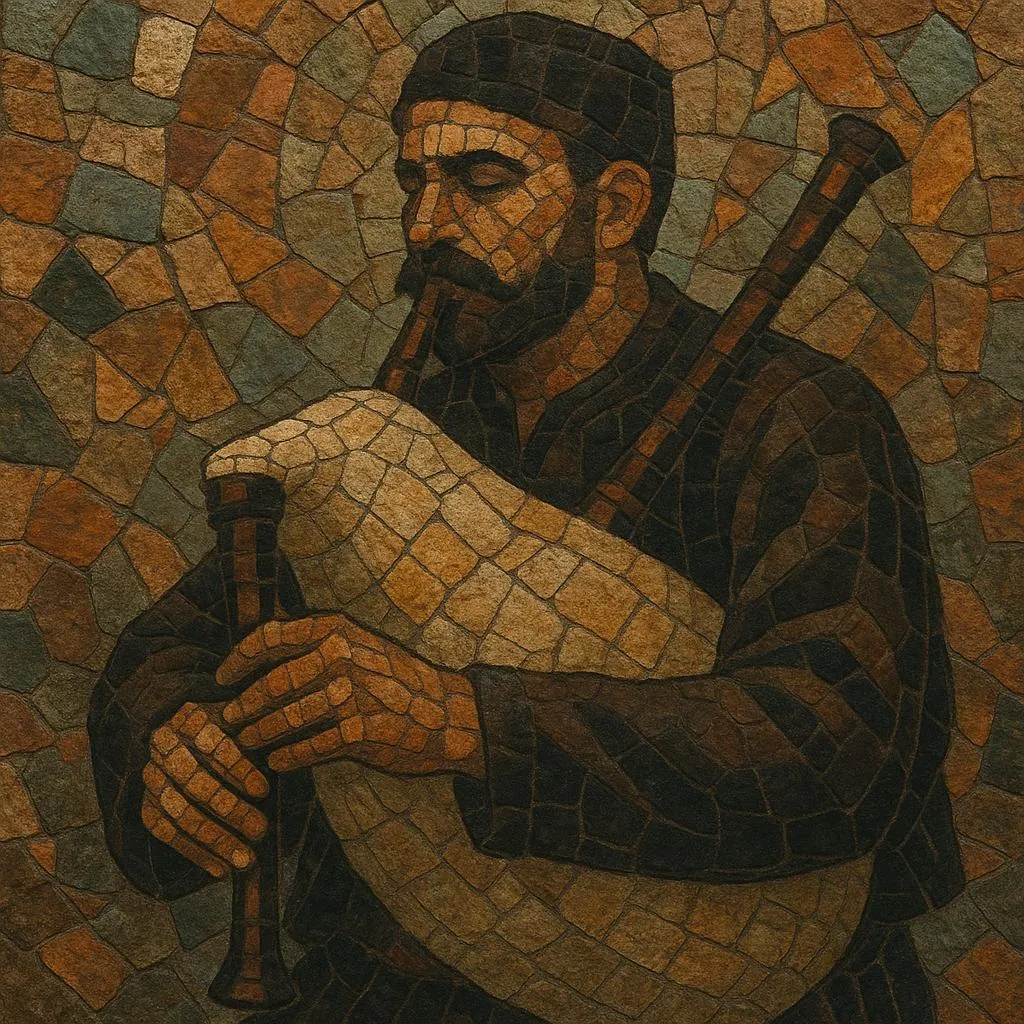
Kaba gaida is the low‑pitched Rhodopean form of the Bulgarian bagpipe. It is characterized by a large, wide‑bore chanter and a deep, resonant drone that create the unmistakably dark, velvety sonority associated with the Rhodope Mountains.
Played solo or in massed ensembles, the kaba gaida sustains a continuous tonic drone while the chanter renders long‑breathed, vocally inspired melodies rich in slides, grace‑notes, and micro‑inflections. Repertoires include slow, free‑rhythmic song melodies and dance tunes in both even and asymmetric meters. The instrument’s timbre and phrasing closely emulate the Rhodope singing style (“protiazhna pesen”), giving the music an expansive, melancholic and epic quality.
History
The kaba gaida emerged as the distinct low‑register bagpipe of Bulgaria’s Rhodope region, crystallizing its present form during the 19th century. While bagpipes have been documented across the Balkans for centuries, the Rhodope instrument evolved a larger chanter and deeper drone, suited to the area’s long, ornamented song tradition and mountainous outdoor settings.
In the early–mid 20th century, the kaba gaida moved from village ritual and pastoral contexts onto stages and radio. State and municipal folk ensembles, conservatory teaching, and regional festivals helped standardize technique, tuning practices, and repertoire. The creation of large Rhodopean bagpipe ensembles (famously “hundreds of kaba gaidi” on stage) became a sonic emblem of Bulgarian folk culture, projecting the instrument’s sonority in concert halls at home and abroad.
From the late 20th century onward, recordings, international folklore festivals, and educational workshops brought the kaba gaida to global audiences. Contemporary performers continue to pair the instrument with tŭpan (bass drum), choir, and modern arrangements, while builders refine reeds and bores for stable intonation and touring durability. Annual gatherings and festivals in the Rhodopes sustain intergenerational transmission and a living tradition that balances historical style with new collaborations.