Your digging level

For this genre
0/8
🏆
Sign in, then listen to this genre to level up

Description

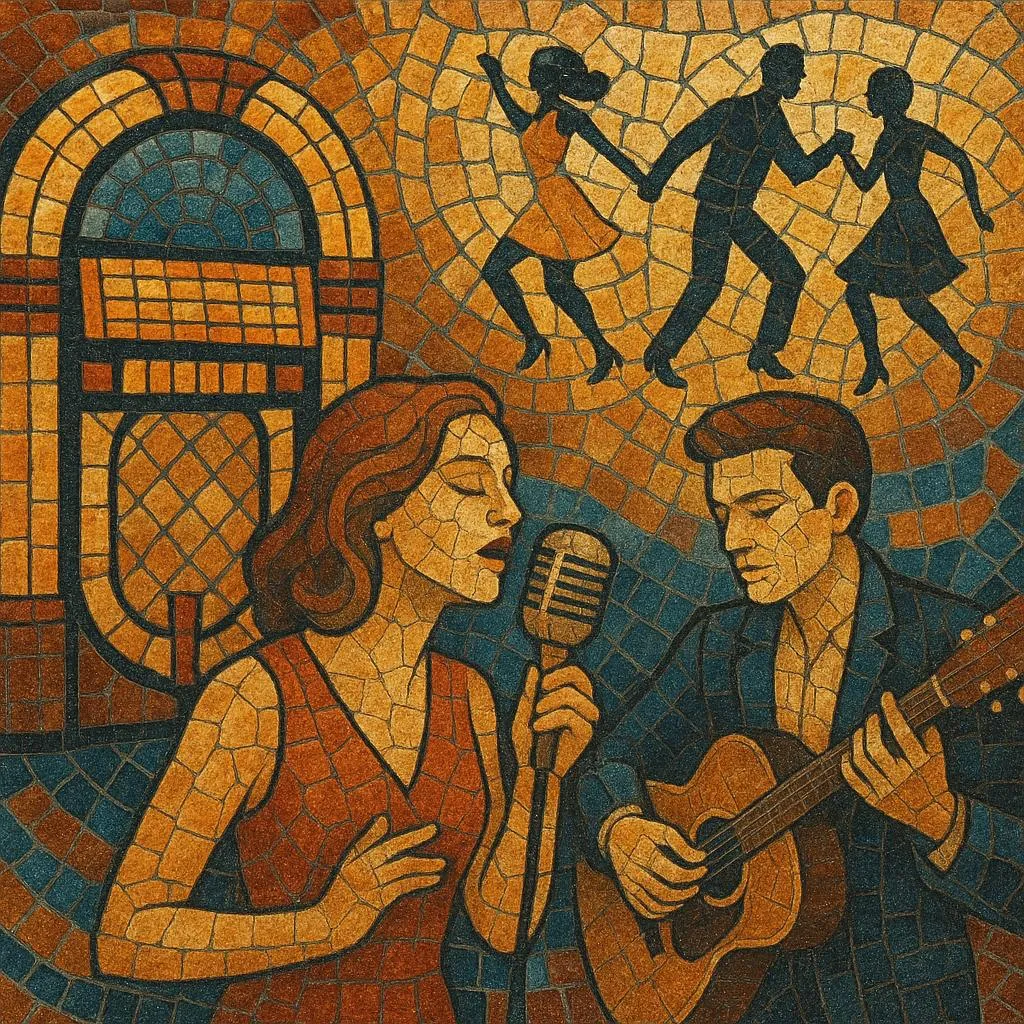
A jukebox musical is a stage or film musical in which most songs are well‑known, pre‑existing popular music rather than newly composed material.

Instead of writing an original score, creators curate a catalog (often from a single artist, era, or label) and build a book (script) that either tells the artist’s biography or uses the songs to drive a fictional plot. Numbers are typically rearranged, re‑orchestrated, and stitched together with narrative dialogue and dance in the tradition of Broadway/West End musical theatre.


Sources: Spotify, Wikipedia, Discogs, RYM, MB, user feedback and other online sources

History

Early roots (revues and catalog shows)

Revue traditions of the 1920s–1940s established the idea of structuring an evening around familiar songs. Mid‑century film and stage revues kept popular hits in theatrical circulation, foreshadowing the jukebox approach of using pre‑existing music rather than commissioning a new score.

1970s–1980s: Stage prototypes

By the late 1970s, Broadway began embracing catalog-driven shows such as Ain’t Misbehavin’ (1978, Fats Waller songs). In 1989, Return to the Forbidden Planet (UK) and Buddy – The Buddy Holly Story (UK) signaled a modern template: either a biographical arc (Buddy) or a narrative that deploys era hits as plot engines (Forbidden Planet).

1990s–2000s: Breakout and mainstreaming

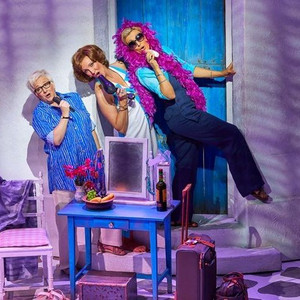
Beatlemania (1977, concert-style) and Movin’ Out (2002, Billy Joel) broadened the format, but the watershed was Mamma Mia! (1999, London; 2001, Broadway), which used ABBA’s catalog to power a new romantic comedy plot. The runaway success of Mamma Mia! normalized the jukebox musical on both sides of the Atlantic. Soon after came Jersey Boys (2005), We Will Rock You (2002), All Shook Up (2005), and Rock of Ages (2005/2009), spanning biographical, tribute, and pastiche styles.

2010s–present: Diversification and biopics on stage

The form diversified into artist-focused biographies with dramatic heft—Beautiful: The Carole King Musical (2013), Tina (2018), On Your Feet! (2015), and Ain’t Too Proud (2017)—as well as era anthologies and movie-to-stage adaptations. Jukebox techniques also permeated film musicals, reinforcing a global, touring ecosystem.

A durable commercial model

Because audiences already know the songs, jukebox musicals offer strong marketing advantages. Creatively, the challenge is to craft a compelling book, make arrangements that serve character and story, and clear rights across complex catalogs.

How to make a track in this genre

1) Choose the catalog and concept
•   Pick a coherent catalog (single artist, songwriting team, era, label, or genre). Ensure there are enough tempos, keys, and lyrical themes for variety. •   Decide format: biographical (artist’s life), semi‑bio (career chapter), or fictional plot that recontextualizes the songs.
2) Build the book (story)
•   Map a dramatic spine (clear stakes, protagonist goal, midpoint, low point, resolution). •   Assign songs to turning points; ensure lyrics plausibly reflect character intention. •   Edit/retitle reprises and medleys to advance the plot without stalling momentum.
3) Arrange and orchestrate
•   Reharmonize where needed so tonal centers flow between scenes; modulate keys to suit cast ranges. •   Create narrative intros/outros, underscoring, and dance breaks; design segues that hide scene changes. •   Orchestration depends on style: rhythm section (drums, bass, guitars/keys) for pop/rock; add horns/strings for period sheen; use click/click‑with‑tracks judiciously.
4) Lyrics and dialogue integration
•   Trim verses/bridges to fit scene length; craft dialogue buttons that launch or land songs. •   If a lyric conflicts with story facts, recontextualize staging (e.g., dream, memory, commentary) rather than change words when rights restrict edits.
5) Rhythm, feel, and choreography
•   Preserve signature grooves (e.g., Motown backbeat, disco four‑on‑the‑floor, rock shuffle) but vary textures show‑to‑show. •   Choreography should translate the original idiom (social dance, concert energy) into character-driven movement.
6) Rights and dramaturgy
•   Secure underlying rights (publishing, master if using originals) early. •   Work with a dramaturg to align song order, character arcs, and historical context.
7) Workshop and refine
•   Table reads and lab presentations expose pacing and tonal mismatches; adjust cuts, keys, and transitions accordingly.

Top tracks

Locked
Share your favorite track to unlock other users’ top tracks

Upcoming concerts

in this genre
Influenced by
Has influenced

Download our mobile app

Get the Melodigging app and start digging for new genres on the go
© 2026 Melodigging
Melodding was created as a tribute to Every Noise at Once, which inspired us to help curious minds keep digging into music's ever-evolving genres.
Buy me a coffee for Melodigging