Your digging level
Description
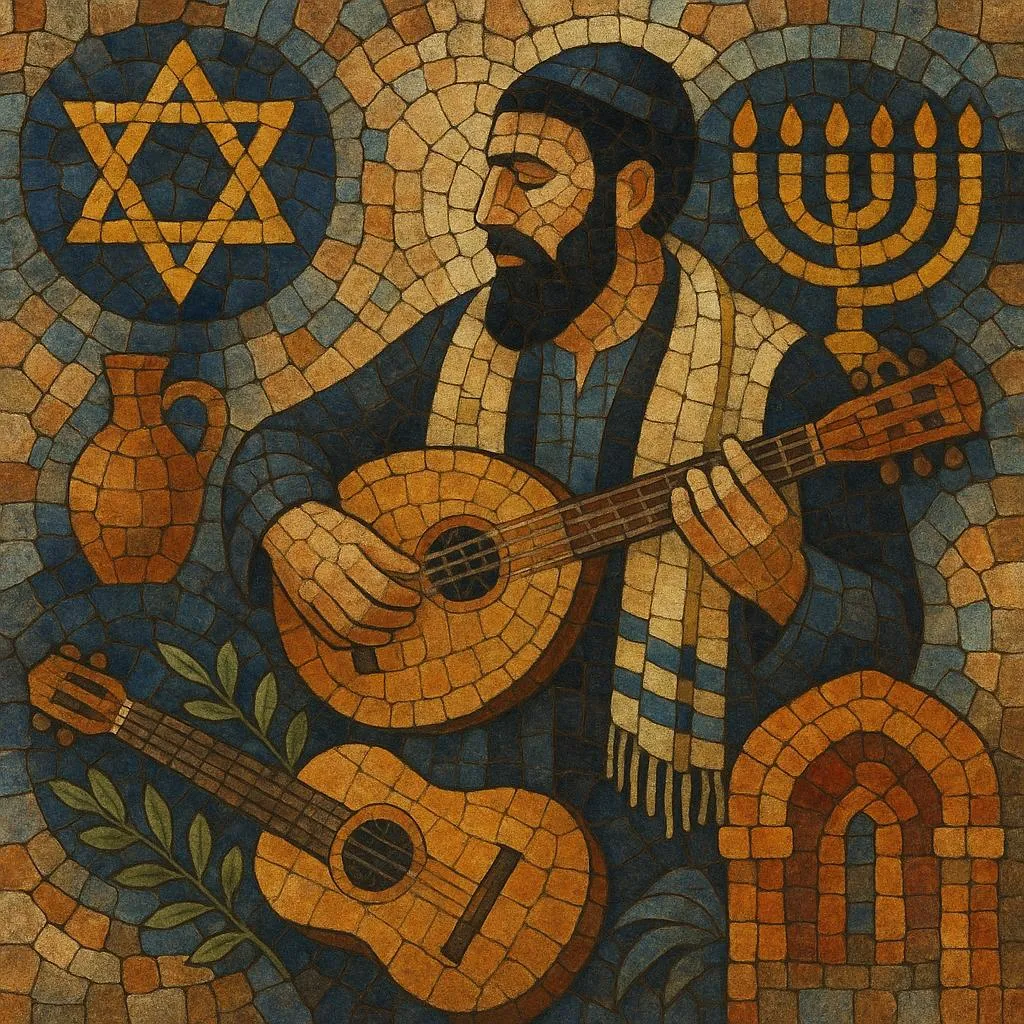
Judaica (as a music tag) refers to contemporary Jewish-themed music that blends synagogue and folk traditions with modern popular styles. It encompasses liturgical settings, devotional songs, community sing‑alongs, and Jewish cultural pieces in Hebrew, English, and other Jewish languages.
Stylistically it draws on Ashkenazi cantorial motifs, Sephardi/Mizraḥi maqam practices, nigunim (wordless melodies), Israeli songbook harmonies, and Anglo‑American folk/pop songwriting. Arrangements range from intimate acoustic guitar or piano to full pop‑rock bands, choirs, and a cappella groups.
Common themes include prayer texts, holidays and life‑cycle rituals, peace and justice, communal memory, and Jewish identity. The music is performed in synagogues, camps, schools, concerts, and at home, inviting audience participation through call‑and‑response refrains and easily learned choruses.
![Y-Studs - Evolution of Jewish Music [Official Video]](https://i.ytimg.com/vi/gbeArPQqsc8/hqdefault.jpg)


History
Jewish sacred song stretches back millennia through Biblical cantillation and piyyut traditions. Over centuries, Ashkenazi nusach (modal prayer motifs), Sephardi/Mizraḥi maqam systems, and local folk repertoires developed in parallel with communal singing and cantorial art in the synagogue.
The Jewish choral school and cantorial golden age (e.g., Sulzer, Lewandowski) formalized synagogue repertoire, while klezmer and Yiddish theatre popularized Jewish melody outside sacred space. In the Yishuv and early Israel, the “Shirei Eretz Yisrael” songbook and Zionist folk styles created a participatory, modern Hebrew repertoire that would later inform diaspora practice.
In North America, post‑folk‑revival singer‑songwriters began setting liturgy and Hebrew poetry to contemporary folk‑pop idioms, catalyzing a wave of accessible congregational repertoire. Camp movements, youth groups, and campus Hillel scenes helped spread new songs. Parallel streams drew from Hasidic nigunim and klezmer revival aesthetics, while community choirs and a cappella groups adapted Jewish melodies for modern audiences.
The palette widened to include pop‑rock, Americana, jazz, hip‑hop, and electronic production. Inclusive projects foregrounded women’s voices, LGBTQ+ artists, and new English/Hebrew liturgical language. Social media, YouTube, and streaming enabled viral holiday singles and educational songs, while prayer‑leading collectives and indie ensembles revitalized communal singing. Today, “Judaica” functions as an umbrella connecting synagogue music, Jewish cultural pop, and devotional world‑fusion across the diaspora and Israel.

Best playlists