Your digging level
Description
Jain Bhajan, traditionally known as 'Stavan', is a genre of devotional music within Jainism dedicated to the praise of Tirthankaras (spiritual teachers), Jain monks, and sacred pilgrimage sites.
These songs serve as a medium for laypeople to express devotion (Bhakti), internalize spiritual values like Ahimsa (non-violence) and renunciation, and seek spiritual purification.
Musically, they are highly eclectic, blending Indian classical Ragas with regional folk melodies from Gujarat and Rajasthan, and in the modern era, frequently adapting popular Bollywood film tunes with religious lyrics.
History
The roots of Jain devotional music lie in ancient Sanskrit and Prakrit Stotras (hymns of praise) and Sutras. However, the genre recognizable as 'Stavan' or 'Bhajan' began to take shape around the 11th and 12th centuries in Western India. Early texts in Apabhramsha and Old Gujarati show the emergence of the pada (verse) form, which became the standard structure for these hymns.
The genre flourished significantly during the medieval Bhakti movement. Jain poets and monk-scholars, such as Anandghan and Yashovijay, composed profound devotional poetry that bridged high philosophy with emotional surrender. This period saw the integration of Jain theology with the popular musical styles of Gujarat and Rajasthan, making the religion more accessible to the laity.
In the 20th and 21st centuries, Jain Bhajan evolved into a commercially recorded genre. The practice of setting religious lyrics to popular Bollywood film melodies (filmi tunes) became widespread to ensure mass appeal. Today, 'Jain Orchestras' and professional singers perform these bhajans at temples and festivals like Paryushan, blending traditional instruments with modern synthesizers.
Focus on the virtues of the 24 Tirthankaras (e.g., Adinath, Mahavir, Parshvanath, Neminath). Common themes include the transience of worldly life (Samsara), the value of non-violence (Ahimsa), and the longing for liberation (Moksha). Lyrics are predominantly in Gujarati, Hindi, or Marwari.
Form: Use the Pada structure, consisting of a refrain (Tek) followed by rhyming couplets (Antara).
•Melody: Compose simple, emotive melodies based on sweet, devotional Ragas like Bhairavi, Yaman, Kafi, or Darbari. Alternatively, adapt popular folk or film melodies.
•Rhythm: Utilize common 8-beat cycles (Keherwa) or 6-beat cycles (Dadra) for easy congregational singing.
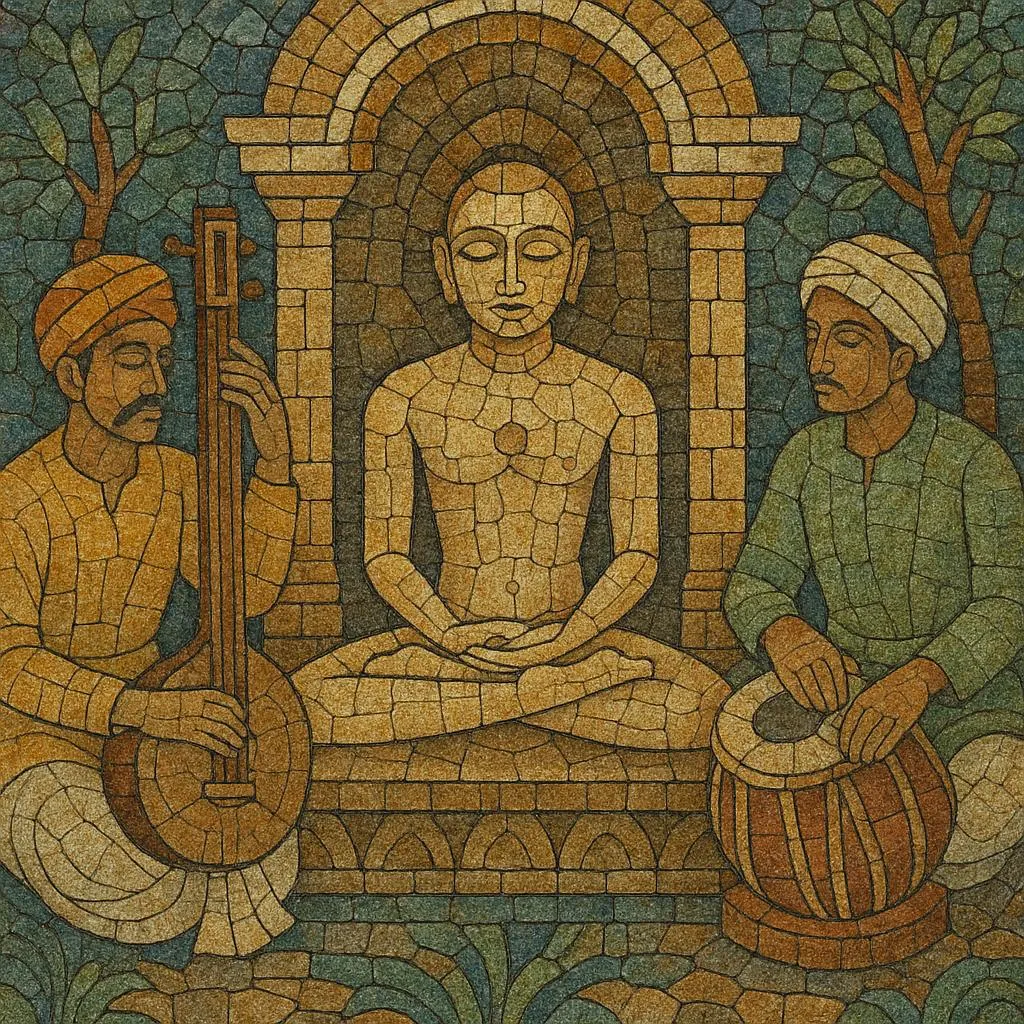
Traditional: Harmonium, Tabla, Manjira (hand cymbals), and Dholak.
•Modern: Synthesizers, Octopads, and Guitar are commonly used in 'Bhakti Sandhya' (evening devotional) performances.