Your digging level
Description
Ho Munda is the traditional music of the Ho people (a Munda-speaking Adivasi community) centered in the Kolhan region of present-day Jharkhand and adjoining parts of northern Odisha and West Bengal in eastern India.
It is community music bound to agricultural cycles and festivals such as Mage Parab, Karam, and Baa Parab. Songs are performed in the Ho language, often with antiphonal (call-and-response) refrains led by a song-leader and answered by a mixed chorus, and are accompanied by vigorous circle and line dances.
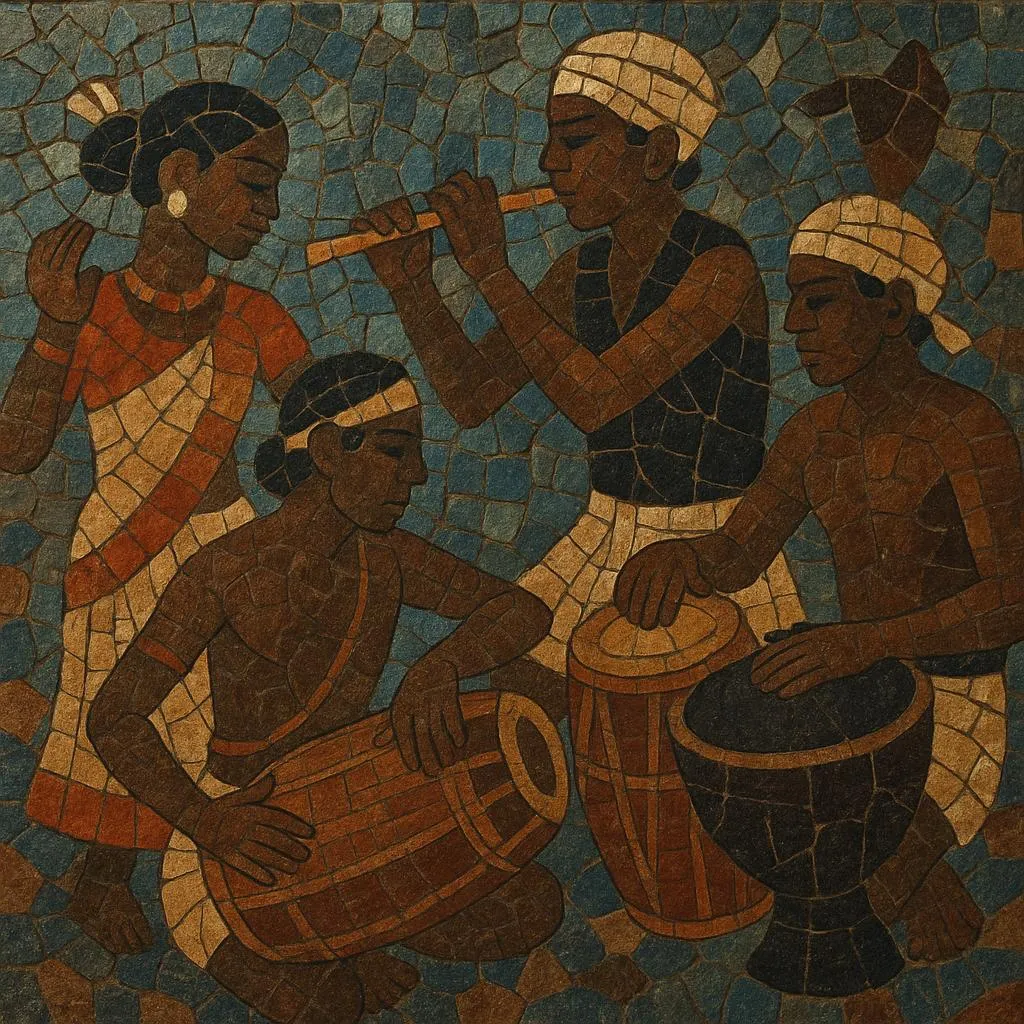
The sound world is drum-led—especially mandar and tamak (barrel and kettle drums)—reinforced by nagara, idiophones (clappers, rattles), and aerophones such as bamboo flutes and the reedy mahuri. Melodies are modal and pentatonic-leaning, lyrics are concise and image-rich, and the groove stresses propulsive, danceable ostinati that can shift with choreographic figures.
History
Ho Munda music long predates recording technology and is interwoven with communal labor, courtship, and seasonal festivals. Songs for Mage Parab (the great annual festival), Karam (harvest/fertility), hunting expeditions, and wedding rites articulate cosmology, social bonds, and landscape through refrain-based poetry and collective dance.
By the 19th century the core ensemble had coalesced around the mandar and tamak drums, with nagara, hand-claps, ankle-bells, bamboo flutes, and the double-reed mahuri adding color. Performance is typically outdoors in village akhras (dance grounds), with a song-leader cueing verses and dancers answering in tight rhythmic unison.
From the mid-20th century, anthropologists, folklorists, and All India Radio (Ranchi, Jamshedpur, Keonjhar) documented and broadcast Ho repertoire. Local cultural troupes formed for district festivals and state-run cultural exchanges, standardizing stage formats while preserving core rhythmic cells and choruses.
The 1980s–2000s cassette era enabled village troupes to circulate festival and wedding recordings regionally. In the 2010s–2020s, inexpensive studios and online platforms expanded access: traditional pieces sit alongside new "Ho-language folk-pop" that retains drum grooves and call-and-response but embraces verse-chorus formats, keyboards, and guitar while continuing to soundtrack community dances.