Your digging level

For this genre
0/8
🏆
Sign in, then listen to this genre to level up

Description

Grenada soca (often associated with the island’s Jab Jab and J’Ouvert traditions) is a hard‑hitting, percussion‑forward branch of soca from the Caribbean nation of Grenada.

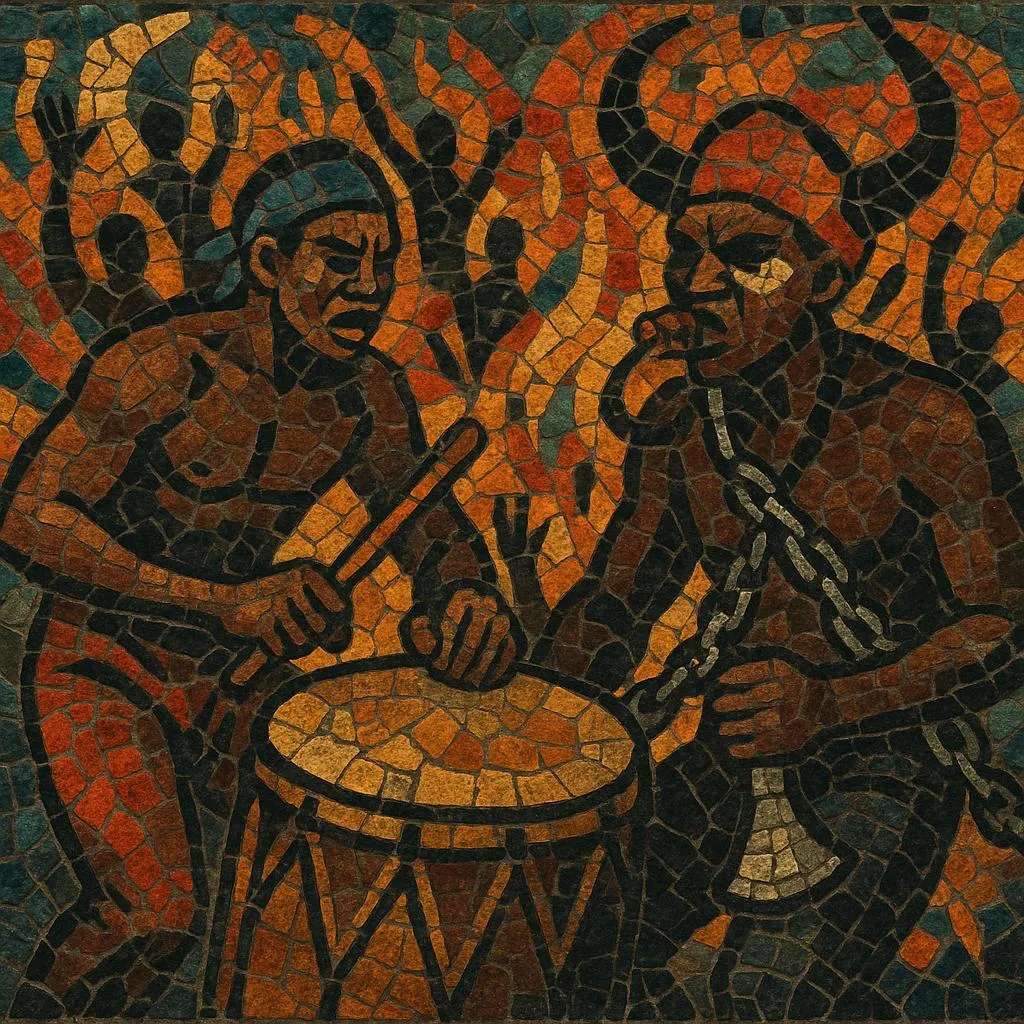
Compared with mainstream Trinidadian soca, it leans darker and rougher: booming bass drums, iron (brake‑drum) percussion, whistles, cowbells, conch‑shell calls, and chant‑like hooks drive the groove. Songs often use minor keys, sparse melodies, and call‑and‑response crowd parts that evoke the ritual intensity of Jab Jab—oil, mud, chains, and predawn mas.

Tempos range from groovy mid‑tempo wine rhythms (~115–125 BPM) to blistering power‑soca speeds (150–160 BPM). Lyrically it celebrates Spicemas (Grenada’s carnival), community bravado, revelry, resistance, and cathartic release, drawing on Grenadian Creole English and regional slang.


Sources: Spotify, Wikipedia, Discogs, RYM, MB, user feedback and other online sources

History

Preludes: Calypso, soca, and Grenadian masquerade

Grenada’s carnival (Spicemas) long featured calypso orchestras, drum brigades, and masquerade forms like Jab Jab and Shortknee. When soca—calypso’s electrified, dance‑floor offshoot—spread across the Caribbean in the late 1970s–1980s, Grenadian bands and sound systems absorbed it, fusing the island’s iron bands, goat‑skin drums, and conch‑shell calls with soca’s driving kick and synth bass.

1990s: A distinct Grenadian sound coalesces

By the 1990s, local producers and DJs hardened the aesthetic: more percussion on top of four‑on‑the‑floor kicks, raw chant hooks, and minor‑key horn/synth riffs. Street‑level J’Ouvert energy—oil, mud, and chains—shaped the feeling and imagery. Carnival stages and sound‑system clashes turned these grooves into a proudly Grenadian variant of soca.

2000s–2010s: Jab‑jab soca and international breakout

In the 2000s, Grenadian artists crystallized what many call “jab‑jab soca”—not a separate genre so much as the island’s signature flavor: ominous horn stabs, iron patterns, whistles, and mass‑chant refrains. As regional carnivals booked Grenadian acts, the style influenced power soca arrangements across the Eastern Caribbean, while maintaining its gritty, ritual character at home.

2020s: Global streaming and festival circuits

Streaming platforms, pan‑Caribbean collaborations, and diaspora fetes helped push Grenada soca beyond carnival seasons. Producers kept the percussion‑heavy core, but experimented with modern sound‑design, drops, and hybrid club tempos—without losing the crowd‑chant DNA that ties the music to J’Ouvert and Spicemas.


How to make a track in this genre

Rhythm and tempo
•   Choose a groove zone: 115–125 BPM for a groovy wine, or 150–160 BPM for power‑soca adrenaline. •   Start with a four‑on‑the‑floor kick, accented off‑beat hi‑hats, and a syncopated snare. Layer iron (brake‑drum) hits, cowbells, shakers, and whistle calls to evoke J’Ouvert road energy. •   Add conch‑shell samples or low horn swells as calls that the percussion answers.
Harmony, melody, and sound design
•   Favor minor keys and short, ominous horn/synth riffs (think pentatonic or Aeolian fragments). Keep harmony sparse—often a one‑ or two‑chord vamp—so the drums and chants dominate. •   Use brass stabs (real or sampled), gritty leads, and sub‑heavy bass. For power‑soca, side‑chain bass to the kick for relentless drive.
Vocals and hooks
•   Write crowd‑led, call‑and‑response chants with simple, repeatable phrasing. Build to a unison “shout” hook that the whole road can sing. •   Lyrical themes: Spicemas/J’Ouvert, Jab Jab persona (oil, mud, paint, chains), playful bravado, release, and communal hype—delivered in Grenadian Creole English.
Arrangement tips
•   Intro with percussion/whistles to grab the road, drop into the chant, then hit the full band with horn stabs and bass. •   Use breakdowns where percussion and chants carry the energy, then slam back with the full rhythm section. •   Prioritize punchy drum/bass in the mix; let iron and whistles cut through the mids; keep vocals upfront and anthemic.
Instruments and tools
•   Drum kit (acoustic or programmed), iron/brake‑drum samples, cowbells, shakers, whistles, conch/horn FX, brass (live or VST), deep sub bass, and modern soca drum packs.

Top tracks

Locked
Share your favorite track to unlock other users’ top tracks

Upcoming concerts

in this genre
Influenced by
No genres found
Has influenced

Download our mobile app

Get the Melodigging app and start digging for new genres on the go
© 2026 Melodigging
Melodding was created as a tribute to Every Noise at Once, which inspired us to help curious minds keep digging into music's ever-evolving genres.
Buy me a coffee for Melodigging