Your digging level

For this genre
0/8
🏆
Sign in, then listen to this genre to level up

Description

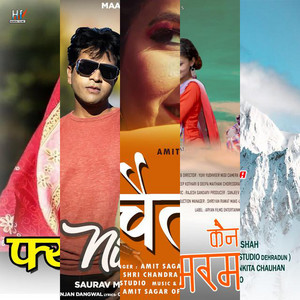
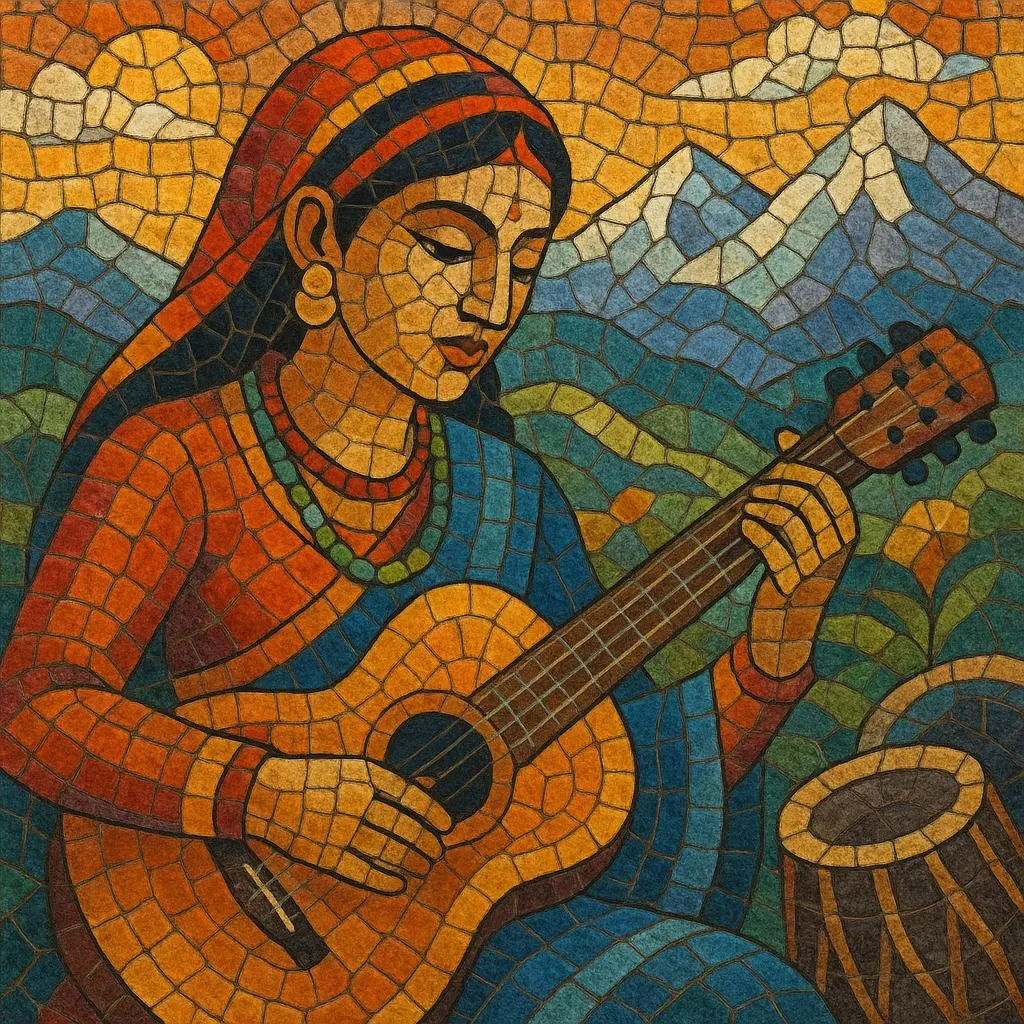
Garhwali pop is contemporary popular music sung in the Garhwali language of the Garhwal region of Uttarakhand, India. It blends local pahadi folk melodies, pentatonic turns, and dhol–damau grooves with modern pop arrangement, guitars, synthesizers, and programmed drums.

Songs often celebrate mountain life, migration and longing, seasonal cycles, festivals, and romance, while keeping the earthy, open-throated vocal timbre characteristic of the central Himalayas. From the cassette era to the present day, Garhwali pop has provided a lively, accessible vehicle for cultural identity and linguistic pride, reaching both hill communities and the large Uttarakhandi diaspora in Indian metros and abroad.


Sources: Spotify, Wikipedia, Discogs, RYM, MB, user feedback and other online sources

History

Roots and Radio (1970s)

Garhwali popular song grew from a deep folk base (jagar, mangal, chhopati-inspired duets, and work songs), carried by local singers on All India Radio and at village festivities. Early studio recordings were sparse but set the template: folk-derived melodies adapted to microphone technique and harmonium or guitar accompaniment.

Cassette Boom and Pop Emergence (1980s–1990s)

With India’s cassette revolution, regional labels and traders in Dehradun and other north Indian cities began issuing Garhwali cassettes. Singers such as Narendra Singh Negi and Meena Rana popularized a modern, hook-driven style that kept folk contours and dhol–damau rhythms while adding bass guitar, keyboards, and backbeat. The portability and affordability of cassettes helped the music travel with Garhwali migrants to Delhi, Mumbai, and beyond, solidifying a "pop" audience.

VCDs, Regional Films, and Diaspora Circulation (2000s)

Low-cost video (VCD/DVD) and regional film songs gave Garhwali pop a visual dimension—dance numbers, light narrative clips, and scenic Himalayan backdrops. Local studios professionalized production (multi-track recording, programmed drums, brighter mixing), and lyrics expanded to urban–rural contrasts, social satire, and love stories.

Streaming Era and Crossovers (2010s–present)

YouTube, short-video platforms, and social media enabled indie singers and producers to reach national and diaspora listeners directly. Contemporary tracks fuse EDM drops, trap-influenced percussion, and guitar-pop with pahadi scales, while collaborations with Hindi/Indie musicians broaden the sound. Despite modern polish, the genre continues to foreground Garhwali language and imagery, sustaining cultural transmission among younger audiences.

How to make a track in this genre

Melody and Scale Language
•   Start from pahadi-flavored contours: major or pentatonic frameworks with frequent use of the flattened 7th (Mixolydian color), gentle meend (slides), and folk-like ornamental turns. •   Draw on Hindustani-influenced phrasing without strict raga grammar; sing with an open, ringing timbre suited to outdoor dance and call-and-response.
Rhythm and Groove
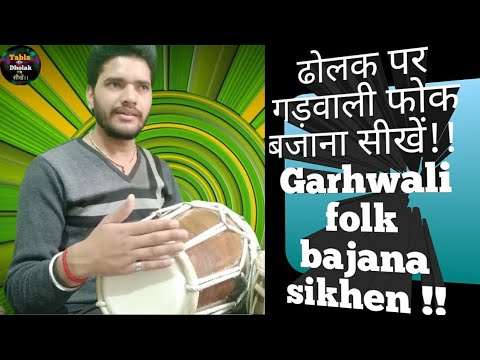
•   Base grooves on common north-Indian folk taals: Keherwa (8-beat) for upbeat dance numbers and Dadra (6-beat) for lilting love songs. •   Layer traditional dhol–damau patterns (or their samples) with drum-kit backbeats, clap loops, or light EDM kicks for contemporary punch.
Instrumentation and Texture
•   Core palette: vocals, dhol–damau (or percussive samples), harmonium or synth pads, acoustic/electric guitars, bass, and bansuri lines for melodic fills. •   Add color with regional horns (ransingha/turri) as accents, or use modern synth leads to mirror their calls in choruses. •   Keep arrangements hook-centric: short intro, verse–chorus form, a brief bridge or instrumental break, and a final lifted chorus.
Lyrics and Themes
•   Write in Garhwali, centering everyday mountain life: seasons, festivals (e.g., Harela, Phool Dei), devotion, migration and nostalgia (palayan), playful romance, and scenic metaphors (rivers, ridges, terraced fields). •   Use couplet-style refrains and conversational imagery; light social satire can work effectively in up-tempo tracks.
Production Tips
•   Blend acoustic roots with polished pop: tighten low end (kick/bass), give dhol–damau midrange presence, and leave space for expressive vocals. •   Double or group vocals on refrains to evoke communal singing; subtle reverb simulates open-air ambience. •   For modern crossover, incorporate soft EDM risers, subtle trap hats, or guitar arpeggios, but keep folk rhythm and language forward.

Top tracks

Locked
Share your favorite track to unlock other users’ top tracks

Upcoming concerts

in this genre
Influenced by
Has influenced
No genres found

Download our mobile app

Get the Melodigging app and start digging for new genres on the go
© 2026 Melodigging
Melodding was created as a tribute to Every Noise at Once, which inspired us to help curious minds keep digging into music's ever-evolving genres.
Buy me a coffee for Melodigging