Your digging level

For this genre
0/8
🏆
Sign in, then listen to this genre to level up

Description

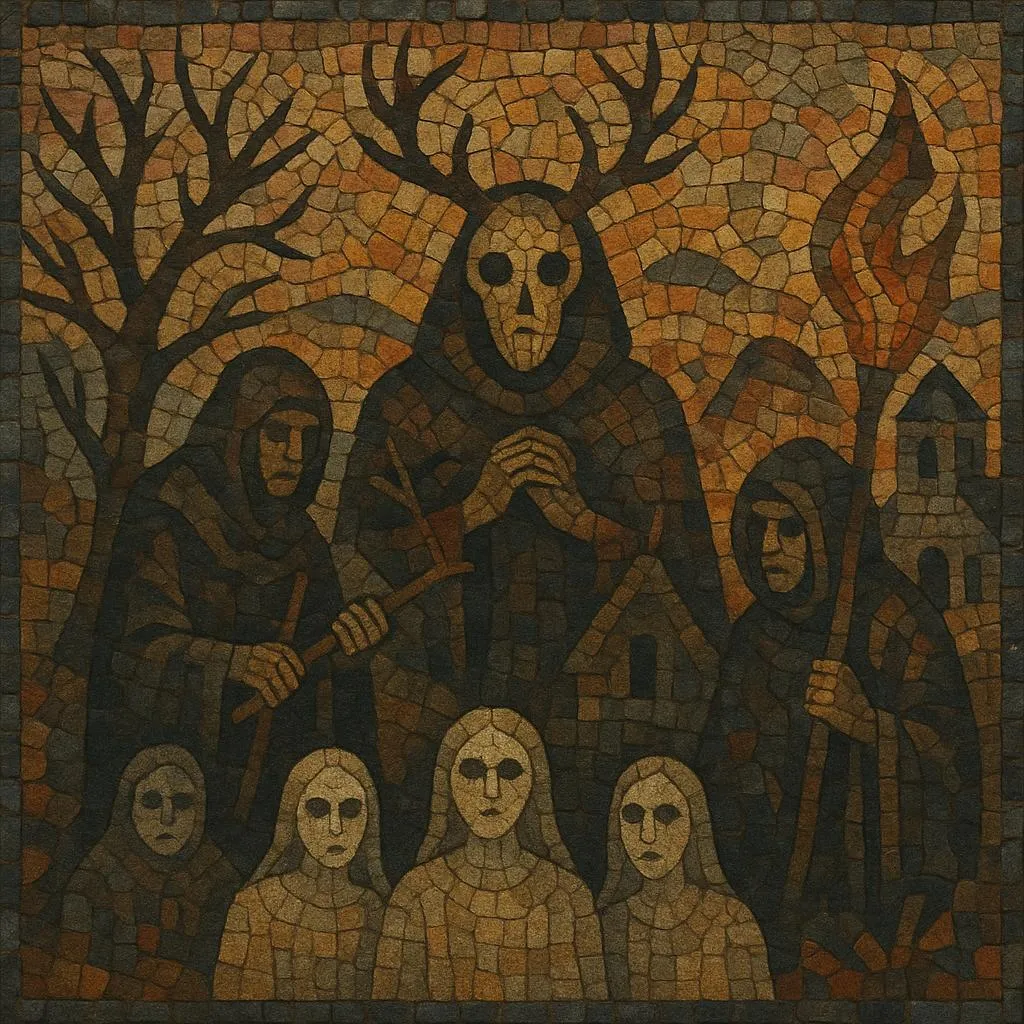
Folk horror (as a musical style) evokes the uncanny collision of pre‑Christian, pastoral folkways with the anxieties of a largely orthodox Christian society. It uses traditional folk timbres and modes to suggest the persistence of pagan ritual beneath the surface of rural life.

In practice, this means modal folk melodies, ritual drums and drones, eerie choral writing, and creaking acoustic textures, often juxtaposed with analog electronics and environmental sounds. The resulting sound world feels at once ancient and modern—romantic and ominous—capturing the fear of pagan folklore by a mostly orthodox Christian society.


Sources: Spotify, Wikipedia, Discogs, Rate Your Music, MusicBrainz, and other online sources

History

Origins (late 1960s–1970s)

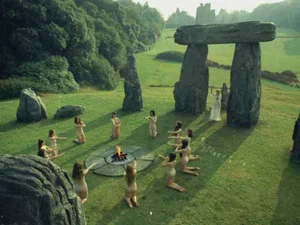
The musical grammar of folk horror coalesced alongside British cinema’s “unholy trinity” of rural occult films—Witchfinder General (1968), The Blood on Satan’s Claw (1971), and The Wicker Man (1973). Scores and needle‑drops blended English folk song, modal fiddling, hand percussion, drones, and rustic choirs with harpsichord, recorder, and early electronics. Paul Giovanni’s The Wicker Man (1973) is a template: folk dance forms and pastoral balladry made disquieting through ritual context and lyrical double meanings.

Cult afterlife and post‑industrial intersections (1980s–1990s)

Though folk horror ebbed on screen, its musical language lingered in the UK’s psych‑folk underground and in post‑industrial/apocalyptic folk scenes, which explored pagan imagery, drones, and ritual percussion. Library music and documentary scores of the period also carried the eerie pastoral aesthetic.

Hauntological revival (2000s)

A 2000s reappraisal of 1970s public‑information films, library cues, and occult TV fostered a “hauntology” current: labels like Ghost Box reanimated the uncanny pastoral through tape patina, analog synths, and folk modalities. Broadcast & The Focus Group’s Witch Cults of the Radio Age (2009) distilled the folklore‑meets‑media anxiety central to folk horror.

Mainstream crossover (2010s–2020s)

The resurgence of folk horror cinema—The Witch (2015), A Field in England (2013), Midsommar (2019), In the Earth (2021)—brought the sound back to wider audiences. Composers such as Mark Korven, Jim Williams, and Bobby Krlic (The Haxan Cloak) leaned on nyckelharpa, hurdy‑gurdy, voice choirs, and detuned analogs, cementing a contemporary palette: ritualistic pulse, modal laments, drones, and environmental sound design.

A living aesthetic

Today, folk horror signifies not just a film score style but a broader musical mood spanning psych‑folk, dark folk, hauntology, and experimental electronics: the pastoral rendered uncanny, where folk ritual and Christian modernity uneasily coexist.

How to make a track in this genre

Core palette
•   Instruments: acoustic guitar, fiddle, recorder/whistle, dulcimer, harp/harpsichord, hurdy‑gurdy or nyckelharpa for drones, frame drum/bodhrán, hand claps, small percussion (bones, bells). Augment with analog or modular synths for low drones and brittle arpeggios. •   Voices: small choir or layered solo voices singing in close, open, or parallel intervals; use wordless vowels, rounds, or psalm‑like hymn textures. •   Field sound: integrate wind, birdsong, church bells, creaking wood, footsteps—treated as rhythmic or textural elements.
Harmony, melody, and rhythm
•   Modes: lean on Dorian, Aeolian, Mixolydian, and pentatonic inflections; avoid functional V–I cadences to retain the old‑world feel. •   Motifs: simple, folk‑like tunes developed through repetition, ostinati, and drone pedals; ornament with grace notes and slides. •   Rhythm: ritual pulses (slow 3/4 or 6/8), processional ostinati, or uneasy asymmetries (5/4, 7/8). Sparse drum patterns, hand hits, and foot‑stomps can imply communal rites.
Texture and production
•   Layer sustained drones (hurdy‑gurdy, shruti box, bowed cymbals, sine/triangle synths) under intimate acoustic parts. •   Embrace tape saturation, spring reverb, and room mics. Let creaks, chair noises, and breath remain—a documentary, “found” presence. •   Contrast bright pastoral timbres (whistle, fiddle) with low, ominous beds; automate filter sweeps or subtle wow‑and‑flutter to suggest time‑worn media.
Thematic/lyrical cues
•   Ritual, agrarian cycles, harvests, solstices, village lore, witchcraft trials, saints vs. “old gods,” boundary places (hedgerows, standing stones, moors). •   Write narratives that set Christian hymnody or scripture‑like cadences against pagan imagery, preserving ambiguity rather than resolution.

Top tracks

Locked
Share your favorite track to unlock other users’ top tracks
Influenced by
Has influenced
Challenges
Digger Battle
Let's see who can find the best track in this genre

Download our mobile app

Get the Melodigging app and start digging for new genres on the go
© 2026 Melodigging
Melodding was created as a tribute to Every Noise at Once, which inspired us to help curious minds keep digging into music's ever-evolving genres.
Buy me a coffee for Melodigging