Your digging level
Description
Film gris is a postwar American variant of film noir defined by its even harsher cynicism, systemic social critique, and a relentless blurring of the moral line between good and bad. Where classic noir often pits a doomed individual against fate, film gris widens the frame to implicate institutions—business, law, media, and politics—suggesting that corruption is structural rather than accidental.
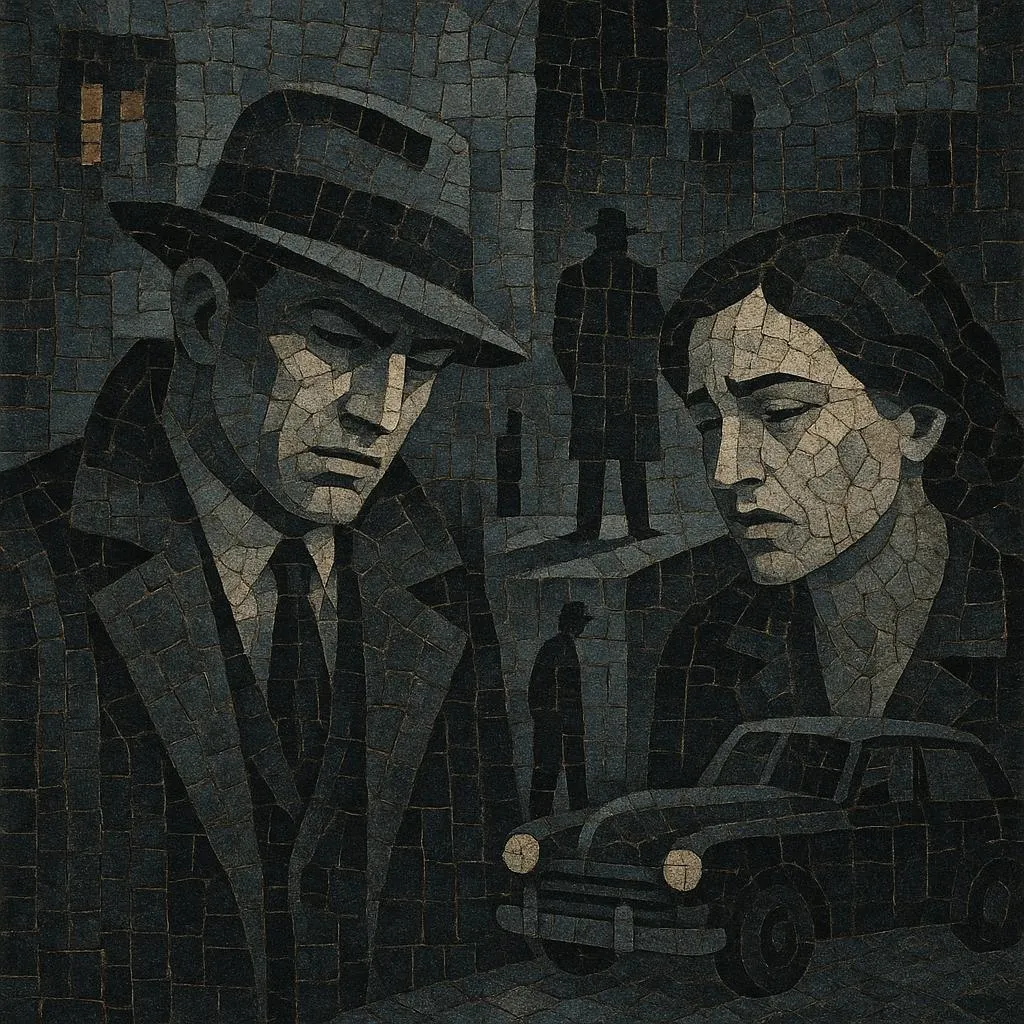
Stylistically, it keeps noir’s shadow-rich photography and fatalistic tone, but leans more into semi-documentary realism: greater use of location shooting, working‑class settings, and socially topical plots. Protagonists are morally compromised strivers (lawyers, truckers, sportsmen, cops, small-time crooks) ensnared in rigged systems. Endings tend to be bleak or inconclusive, emphasizing the costs of complicity and the difficulty of reform.
History
Film gris emerged in the United States in the late 1940s as a harder-edged, socially conscious current within film noir. Responding to postwar disillusionment—organized crime’s reach, labor strife, corruption scandals, and Cold War anxieties—filmmakers pushed noir’s fatalism toward explicit social critique. Many writers and directors associated with the cycle had left-leaning politics and, in some cases, would be investigated or blacklisted during the Red Scare, further sharpening the genre’s adversarial stance toward power.
The core period features dramas about rigged markets, predatory business, exploitation of labor, and civic rot. Typical subjects include price-fixing rackets, gambling syndicates, sensationalist media, and the collusion of police and politicians. While still steeped in noir chiaroscuro and hardboiled dialogue, these films favor semi-documentary textures—street locations, newsreel flavors, and profession-specific detail—creating a sense that the city itself is an accomplice.
Though relatively brief, film gris decisively shaped later crime storytelling. Its systemic critique and ethically ambiguous protagonists prefigure neo‑noir and international “noir” traditions. The cycle also left a stylistic imprint—low‑key lighting married to social realism—visible in later police procedurals, heist films, and tech‑noirs that fuse noir pessimism with modern settings.