Your digging level
Description
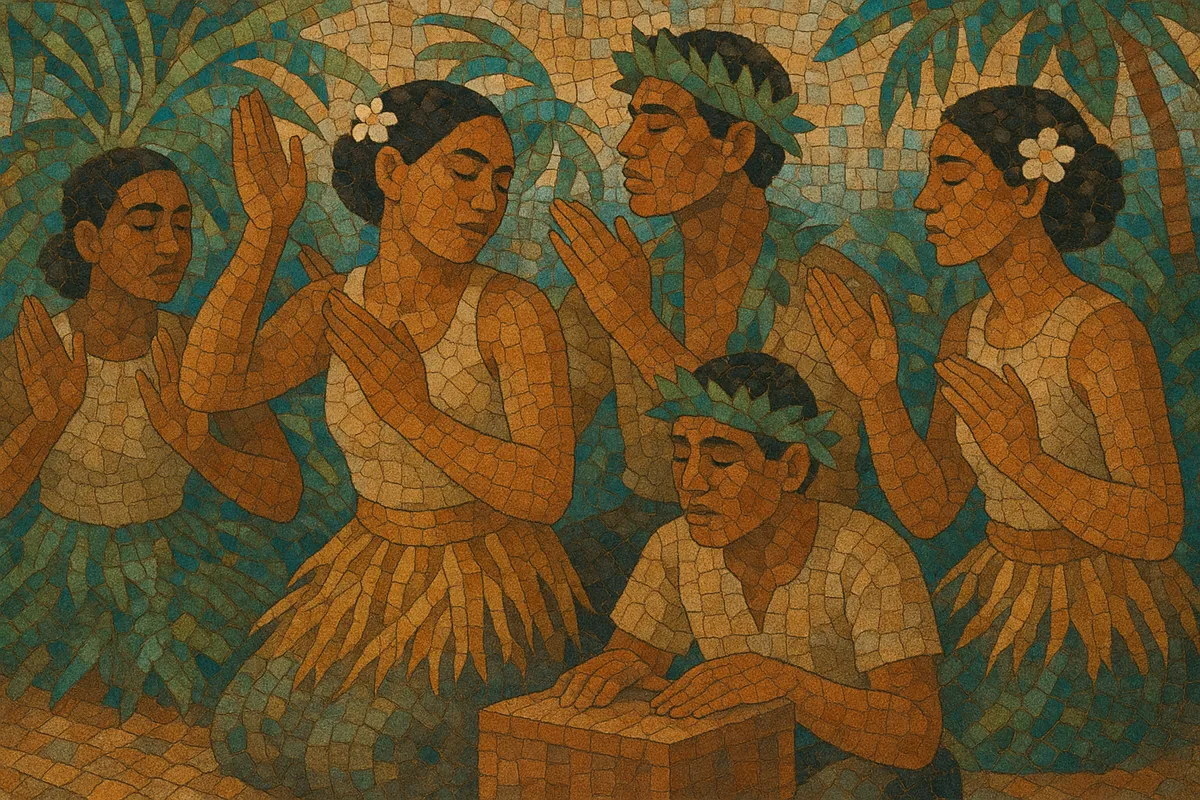
Fakaseasea is a traditional Tuvaluan song-dance genre characterized by graceful, unhurried movement and gently pulsing group vocals. It is typically performed at community gatherings, celebrations, and welcoming ceremonies, where dancers—often arranged in rows—use expressive hand and upper-body gestures to illustrate poetic or romantic lyrics.
Musically, fakaseasea favors call-and-response or leader-and-chorus structures, unison or lightly harmonized group singing, and steady duple meter. Rhythmic accompaniment commonly comes from handclaps and percussive striking of wooden boxes (pusa/papa), with occasional use of slit-drums (pātē) or softly strummed ukulele/guitar in modern contexts. The overall feel is intimate, tender, and communal rather than showy or virtuosic.
History
Fakaseasea arose in Tuvalu as a community entertainment and social dance-song, likely long before sustained European contact. Its core features—group singing, leader-and-chorus exchange, and expressive, understated choreography—reflect broader Polynesian performance aesthetics shaped by oral poetry, communal storytelling, and the island environment.
With the arrival of Christianity and missionary influence in the late 19th century, many dance and music practices were discouraged or reshaped. Fakaseasea persisted by emphasizing modesty, gentler gestures, and community cohesion. Elements of hymn-like phrasing and choral blend gradually colored vocal delivery while the genre retained its Tuvaluan language, imagery, and social function.
Through the 20th century, faster and more extroverted forms (such as modern fatele) often took center stage at large events, yet fakaseasea remained vital for moments calling for elegance, romance, or reflection. Local village troupes, women’s cultural groups, and community ensembles have kept the repertory alive, performing at island festivities, cultural days, and diaspora gatherings in places like Fiji and New Zealand. Today, fakaseasea is recognized as a living emblem of Tuvaluan identity, balancing tradition with gentle, incremental adaptation.