Your digging level
Description
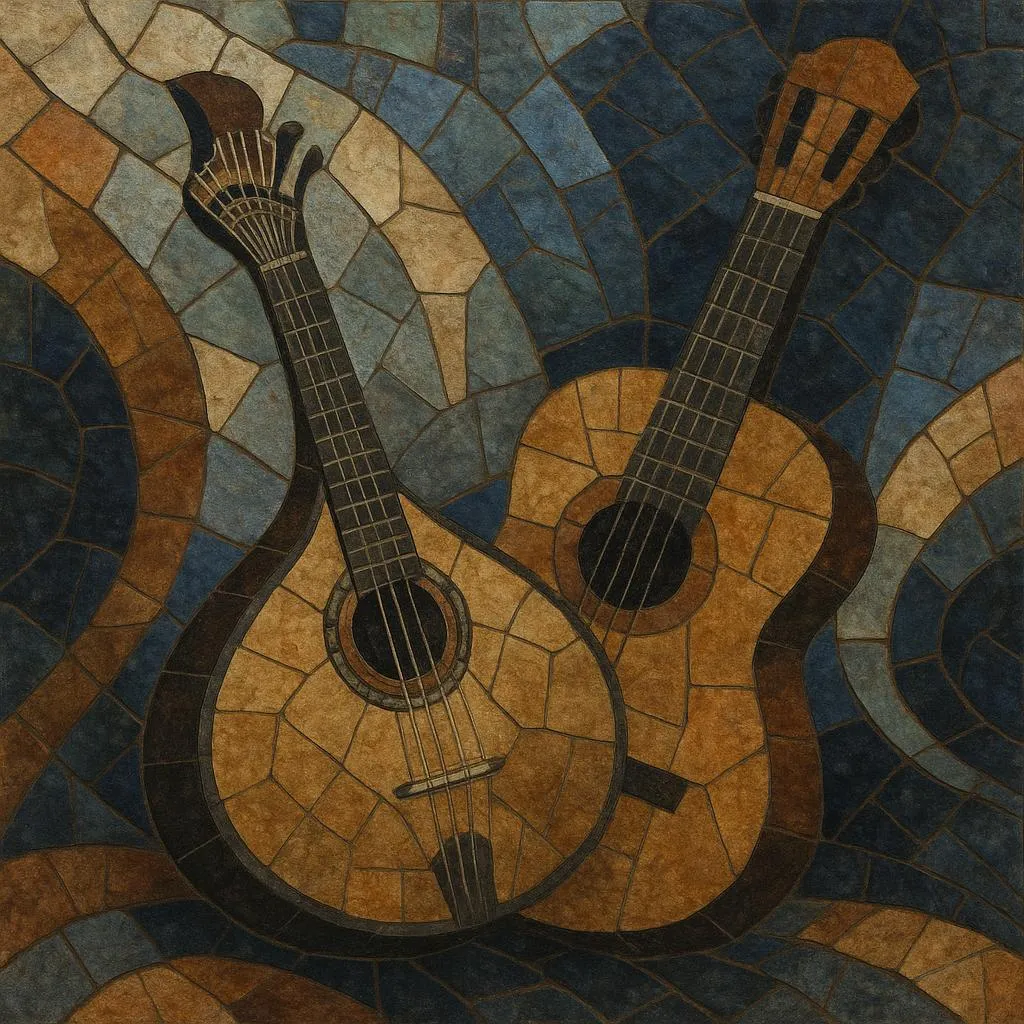
Fado instrumental is the wordless counterpart of fado in which the Portuguese guitar (guitarra portuguesa) assumes the vocal line and “sings” the melody, typically supported by a classical guitar (viola) and, at times, a bass or double bass.
Its expressive focus is still saudade—the bittersweet Portuguese sense of longing—conveyed through rubato phrasing, ornamental figuration (trills, mordents, slides), and dramatic dynamic shading rather than lyrics. Historically rooted in Lisbon’s early fado idiom and Coimbra’s guitar traditions, the style matured into a concert repertoire in the 20th century, proving that the Portuguese guitar possesses an extensive solo literature beyond accompaniment.
History
Instrumental approaches to fado coalesced in Lisbon’s casas de fado as guitarists began to elaborate preludes and variações on well‑known fado models. A pivotal figure was the guitarist Armandinho (Armando Freire, 1891–1946), whose early electric‑microphone recordings (from 1926 and 1928) document solo Portuguese‑guitar fados and set a new technical and aesthetic benchmark for instrumental fado.
Mid‑century, Carlos Paredes transformed fado instrumental into a modern concert art, expanding form, harmony, and right‑hand technique on the Portuguese guitar while keeping its idiomatic saudade. His soundtrack pieces (e.g., for Os Verdes Anos, 1963) and albums such as Movimento Perpétuo made the style internationally visible and firmly established a solo repertoire for the instrument.
Fado’s traditional ensemble—Portuguese guitar leading with viola (classical guitar) and, often, bass—remains the default setting for instrumental fado in both intimate venues and concert halls. The style retains the genre’s emotive core while accommodating composer‑performers who craft new variações, waltzes, marches, and free‑tempo laments that circulate alongside classic fado models.
-
•
Choose a classic fado model or compose a new theme in its mold.
•Write an introductory prelúdio on Portuguese guitar that outlines the key and mood.
•State the main melody (canto) once, then develop 2–3 variações that increase rhythmic density and range.
•Reprise the melody and craft a codetta with a clear cadential flourish on the Portuguese guitar.