


Your digging level
For this genre
0/8
🏆
Sign in, then listen to this genre to level up
Description
The early Norwegian black metal scene was a community of musicians and associates that coalesced in the early 1990s around the Oslo record shop Helvete, the label Deathlike Silence Productions and a fiercely underground outlook. It was a scene within black metal, not a separate musical style.
Its music drew on earlier black metal and, in some cases, developed out of death metal. A notable contribution to black metal guitar playing was the use of riffs built from full chords across the strings. Corpse paint, pseudonyms and an anti-Christian public image helped distinguish the community, whose core sought to define who was sufficiently committed to belong.
The scene was also associated with violence and church arsons. Its self-presentation was disputed: Euronymous portrayed the “Black Circle” as an organized militant Satanist group, whereas Faust later said the name simply referred to people who spent time at the shop.
History
Roots and formation
Mayhem’s 1987 EP Deathcrush helped lay the foundations for the scene. Drawing on the first wave of black metal and other music, Mayhem became central to the development of modern black metal. Mayhem’s Euronymous and Thorns’ Blackthorn developed full-chord guitar riffing that became important to later waves of the genre.
In 1991, Euronymous opened Helvete in Oslo. The shop became a meeting place for musicians including members of Mayhem and Emperor, Burzum’s Varg Vikernes and Thorns’ Blackthorn. His label, Deathlike Silence Productions, operated from the shop and released music by Mayhem and Burzum among others. Around this period, Darkthrone moved from death metal to black metal, while acts including Burzum, Emperor, Immortal and Enslaved formed.
Violence and fracture
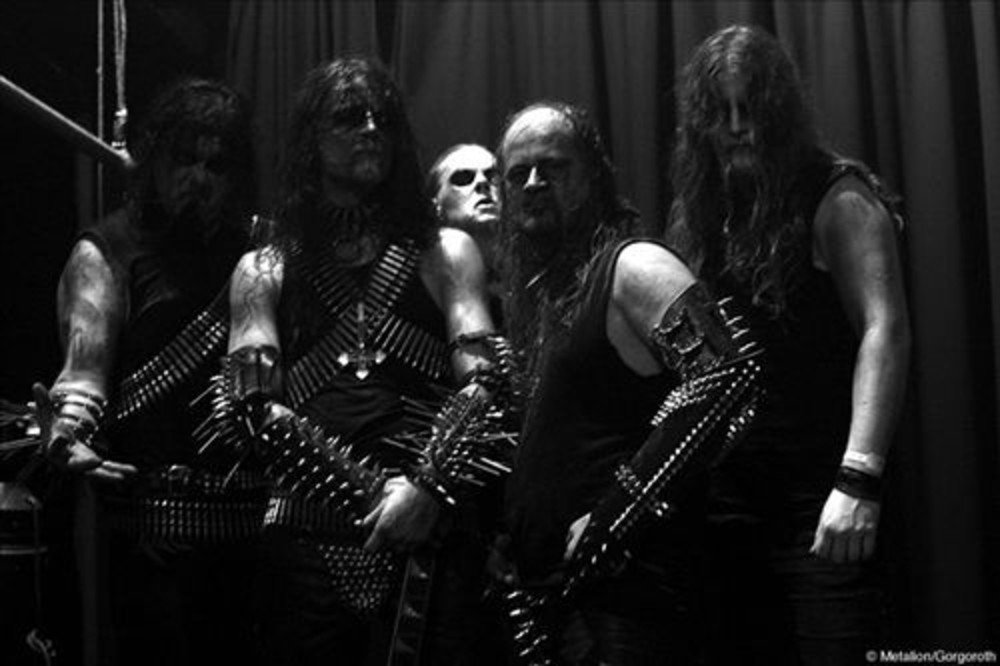
Members of the scene began a wave of church arsons in 1992. Those convicted described the burnings as retaliation against Christianity; later, musicians including Gorgoroth’s Infernus and Gaahl praised them, while Mayhem’s Necrobutcher and Kjetil Manheim and Immortal’s Abbath regarded them as futile.
Helvete closed in early 1993 amid police and media attention. That August, Vikernes killed Euronymous; Vikernes maintained that he acted in self-defense, an account Faust questioned. In 1994, Vikernes was sentenced for the murder and other crimes. Mayhem’s De Mysteriis Dom Sathanas, featuring both Euronymous and Vikernes, was released that same year.
Legacy
The early scene helped shape modern black metal and produced influential extreme-metal artists. Its music, imagery and violent history have continued to attract attention in books and documentaries.
Begin with the guitar
Write black metal riffs with full chords spread across the guitar strings, rather than relying exclusively on two- or three-string power chords. Try moving a chord shape through a short sequence, listening for the dense, abrasive interaction of the notes. Keep a strong central riff in view instead of making every part equally elaborate.
Build an austere arrangement
The scene valued an underground approach, and some musicians moved toward a primitive black metal sound. You could use a stripped-back ensemble and retain a raw edge in the recording rather than polishing away every irregularity. As a suggestion from black metal practice, experiment with rapidly repeated picking, forceful drums and harsh vocals, adjusting the arrangement so the guitar figure remains recognizable.
Shape the atmosphere
Use repetition, changes in texture and contrasting sections to sustain a dark, confrontational mood. Lyrics and presentation can be developed alongside the music, but focus on making the riffs and performance carry the atmosphere without depending on an elaborate production.
Best playlists



Users’ favorites
Tracks
Share your favorite track to see the other users’ ones
Artists
Share your favorite artist to see the other users’ ones
Albums
Share your favorite album to see the other users’ ones
Related labels





Upcoming concerts
in this genre
Influenced by


Has influenced
No genres found
