Your digging level
Description
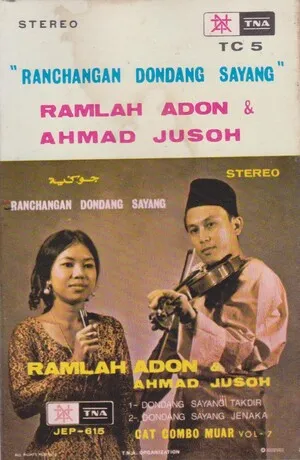
Dondang Sayang is a traditional Malaccan love-ballad genre rooted in the Peranakan (Baba-Nyonya) communities of the Straits of Malacca. It features extemporaneous exchanges of Malay pantun (poetry) sung by a pair of vocalists—often male and female—who carry on a playful, romantic musical dialogue.
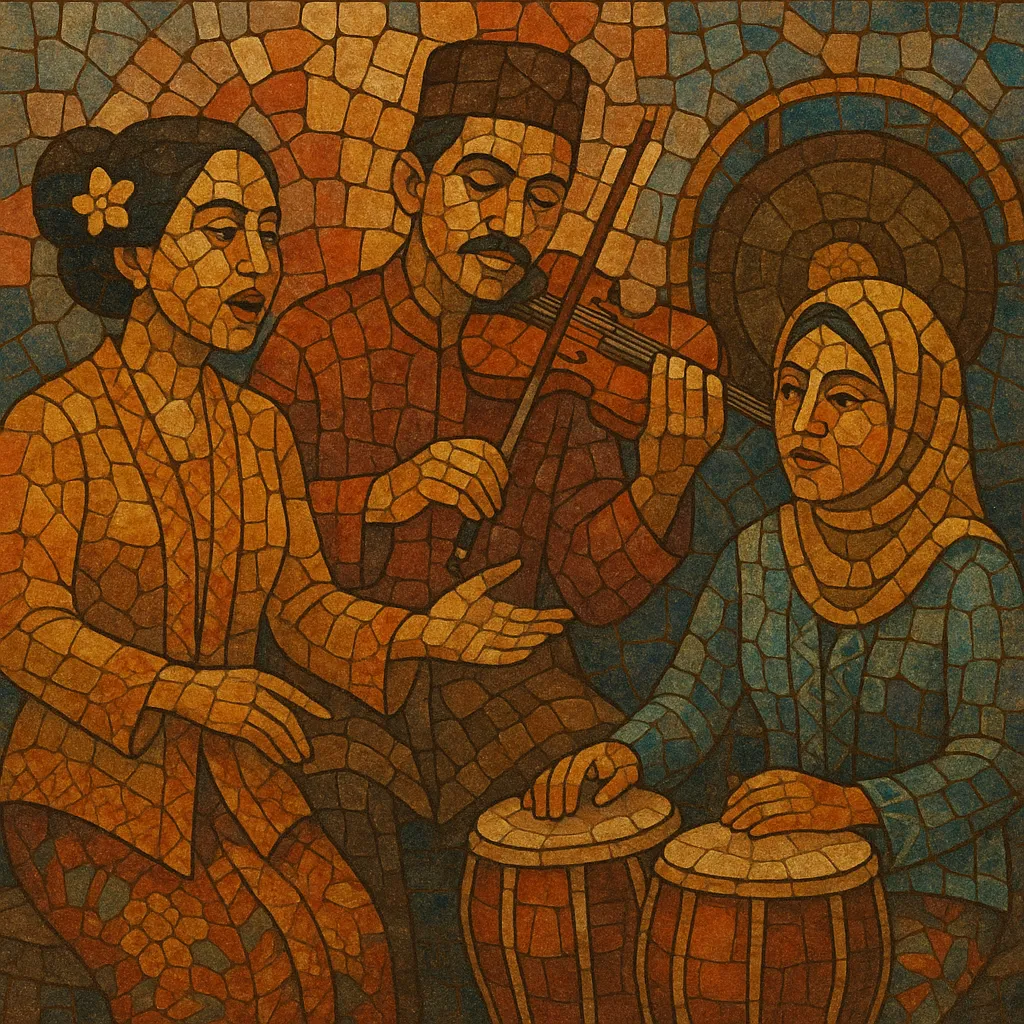
The ensemble is intimate and portable: a lead violin carries the melody over a steady frame-drum pulse from two Malay rebana, with the tetawak (gong) marking phrases. Depending on context, performers may add accordion, flute, or an extra violin. The overall mood is lighthearted, witty, and often humorous, even as the poetry explores themes of courtship, longing, and affection.
Musically, Dondang Sayang blends Malay sung-poetry practices with melodic and instrumental touches historically linked to Portuguese folk idioms introduced to Malacca. Its characteristic call-and-response, lilting violin lines, and pantun’s ABAB rhyme scheme give it a distinct expressive and communal character.
History
Dondang Sayang arose in Malacca in the 1400s, during the era of the Malacca Sultanate and early Portuguese contact. The genre’s core is the Malay pantun—short quatrains with an ABAB rhyme scheme—delivered as sung repartee by two vocalists. Portuguese presence contributed instrumental colors (notably the violin) and dance-song mannerisms that blended with Malay performance customs.
Rooted in Peranakan (Baba-Nyonya) culture, Dondang Sayang became a favored form of convivial entertainment at social gatherings, weddings, and community events. Its light, good-natured banter—often teasing and romantic—relies on quick-witted, improvised pantun and on audience participation. The ensemble typically features violin, two rebana (frame drums), and tetawak (gong), with optional additions such as accordion or flute.
With the growth of Straits Settlements culture (Malacca, Penang, Singapore), Dondang Sayang circulated widely in salons, guild halls, and community clubs. The rise of printed pantun, public concerts, and later radio helped standardize certain melodic turns and favored performance formats (male–female duets, call-and-response refrains), while retaining improvisation.
Today, Dondang Sayang remains a living heritage performed by community troupes and cultural associations in Malaysia and Singapore. Workshops, festivals, and staged productions maintain the improvised pantun tradition, while some ensembles incorporate additional instruments for concert settings. The style continues to symbolize Peranakan identity and the cosmopolitan, multi-ethnic heritage of the Straits region.