Description
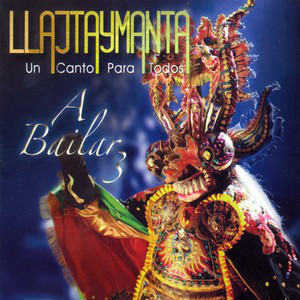
Diablada is a Bolivian folk dance tradition accompanied by music and staged through masked, costumed characters. Its imagery brings together Andean traditions and Christian elements: devils and other figures confront Saint Michael in a dramatic dance.
The accompaniment was originally played by a band of sikuris on the siku; an orchestra accompanies the dance in modern performances. The music is described in two parts, the March and the Devil’s Mecapaqueña, although some dance groups use only one melody.
History
Origins and early traditions
One account places the emergence of Diablada in 1789 among the miners of Oruro, Bolivia. Scholars have also connected the dance with older Andean rituals, including the Llama llama dance associated with the Uru god Tiw. Spanish and Christian elements became part of the tradition during the colonial period.
Organization and regional forms
An annual Diablada festival was established in Oruro by 1891. The Gran Tradicional y Auténtica Diablada Oruro, founded in 1904 by Pedro Pablo Corrales, was the first institutionalized Diablada dance group. Related regional forms developed in Peru and Chile; Ecuador also has a version called Diablada pillareña.
Disputed heritage
Some Bolivian historians maintain that Diablada originated in Bolivia, while some Chilean and Peruvian organizations argue that its roots in Andean cultures predate modern national borders and that the heritage belongs to all three countries. Some Peruvian historians accept a Bolivian origin for the dance while emphasizing earlier traditions shared across the Altiplano. In 2001, the Carnaval de Oruro, where Diablada is performed, was declared a Masterpiece of the Oral and Intangible Heritage of Humanity.
Plan the dance music
Begin with the tradition’s two-part design: a March followed by the Devil’s Mecapaqueña. You could give each section a distinct melody while making the transition clear to the dancers. A shorter arrangement could instead use one melody, as some dance groups do.
Choose an ensemble
For an approach recalling the earlier accompaniment, write for a group of siku players. For an approach closer to modern performances, arrange the music for an orchestra. In either case, shape the parts so that the ensemble supports coordinated movement rather than obscuring it.
Arrange for performance
Build the piece around the dance’s dramatic sequence of devils, angels and Saint Michael. You could use repetitions and clear changes of section to help performers follow the choreography, leaving room for continuous movement and the climactic confrontation.