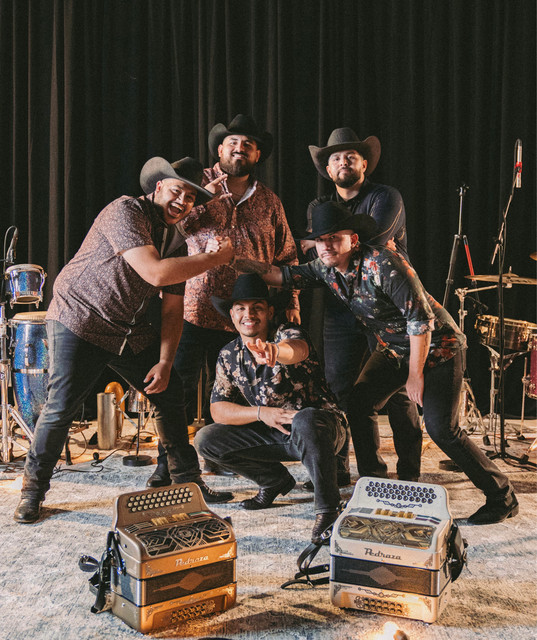
Description
Cumbia tejana adapts the dance rhythms of Colombian cumbia to the musical sensibilities of the Texas-Mexican community. It brings cumbia into the Tejano repertoire rather than treating it as a separate tradition.
Its defining feature is the meeting of a distinctive cumbia rhythmic feel with Tejano music. The style can be heard in the work of progressive conjunto and grupo tejano ensembles, whose broader repertoires drew on varied influences and instrumentation.
Based on: Rate Your Music
More on: MusicBrainz
History
Early development
Cumbia tejana grew from the adaptation of Colombian cumbia within the Texas-Mexican community. Valerio Longoria is reportedly the first Tejano musician to have incorporated cumbia rhythms into the Tejano repertoire, during the 1940s.
Recordings and wider popularity
The first recorded example of cumbia tejana is identified as Conjunto Bernal’s “Capullito de Rosa,” recorded in the early 1960s. From the 1960s through the 1990s, progressive conjunto and grupo tejano ensembles regularly included cumbias in their repertoires. Cumbia rhythms were prominent in enduring songs from the commercially successful 1990s Tejano scene, including work by Selena, La Mafia and Mazz; Kumbia Kings were particularly oriented toward cumbia.
Continuing repertoire
Cumbia remained a regular part of Tejano music after its mass-popularity boom. Later artists recording in the style include Elida Reyna, Stefani Montiel, Lucky Joe and Isabel Marie Sanchez.
Begin with the rhythmic identity
Build the piece around a recurring, danceable cumbia rhythm, then shape it within a Tejano musical setting. Keep the rhythmic pattern clear enough to carry the song throughout, rather than using it only as a brief introduction.
Arrange the ensemble
A practical approach drawn from cumbia and Tejano music is to establish the groove with percussion and bass, then add melodic and chordal parts around it. You could try an accordion or keyboard for a prominent melodic line, or use other ensemble instruments to create a fuller arrangement. The progressive conjunto and grupo tejano context also leaves room to experiment with instrumentation.
Develop the song
Write a memorable vocal melody or instrumental hook that sits comfortably against the repeating groove. Vary the texture between sections—for example, by briefly reducing the accompaniment before bringing the full ensemble back—while keeping the dance rhythm recognizable.