Your digging level

For this genre
0/8
🏆
Sign in, then listen to this genre to level up

Description

Cumbia ecuatoriana is Ecuador’s regional take on Colombian cumbia, fused with local Andean melodic sensibilities and coastal tropical band traditions.

It keeps cumbia’s steady 2/4 groove—güiro ostinato, syncopated percussion, and a dancing bass tumbao—while weaving in Andean pentatonic hooks on charango, quena, or synth leads. In coastal contexts, big brass and timbales give it a festive, “orquesta tropical” feel; in the Sierra, melodies often lean bittersweet and minor, reflecting Andean song aesthetics.

Since the 1990s, a flashier, synth-driven branch (often called tecnocumbia) amplified Ecuadorian cumbia’s presence on radio and dance floors, but the core DNA remains: romantic storylines, catchy call-and-response coros, and a rhythm built for social dancing.


Sources: Spotify, Wikipedia, Discogs, RYM, MB, user feedback and other online sources

History

Early arrival and local adaptation (1960s–1970s)

Colombian cumbia recordings spread across Ecuador in the 1960s via radio and touring bands. By the late 1960s and 1970s, Ecuadorian groups began arranging cumbia with local tastes in mind. In the Coast (Guayaquil, Manabí), orquestas tropicales favored brass, timbales, and show-band formats. In the Sierra (Quito, Imbabura), musicians folded in Andean motifs, charango/quenа colors, and minor-key, pentatonic-leaning melodies.

Consolidation and nationwide popularity (1980s)

Through the 1980s, cumbia ecuatoriana became a staple at fiestas, weddings, and popular venues. Studio productions balanced accordion or guitar rhythm parts with electric bass and congas, while bands experimented with synth lines that echoed Andean flutes. The style stabilized around medium dance tempos and romantic narratives.

The tecnocumbia era (1990s–2000s)

In the 1990s, affordable keyboards, drum machines, and FM radio helped catalyze a brighter, faster, and more theatrical branch often labeled tecnocumbia. Singers and ensembles brought flamboyant stagecraft and pop hooks, cementing Ecuadorian cumbia’s mainstream visibility while keeping the groove and call-and-response core.

Today

Ecuadorian cumbia remains ubiquitous at social events and continues evolving—Andean bands still cut cumbia versions with traditional timbres, coastal orquestas maintain a brassy tropical punch, and newer acts fold in modern production touches from pop urbano while preserving the dance-first feel.


How to make a track in this genre

Groove and tempo
•   Aim for 90–110 BPM with a steady 2/4 cumbia pulse. •   Set a güiro pattern of continuous eighths or light sixteenths; layer conga tumbao and occasional timbal fills. •   Bass plays a tumbao: strong on beat 1 with syncopated anticipations into chord tones.
Harmony and melody
•   Keep harmony simple: I–V–IV (or i–VII–VI) cycles in major or natural minor are common. •   For an Andean flavor, craft melodies using pentatonic shapes and minor/relative-major shifts; use parallel fourths or sixths for coros.
Instrumentation
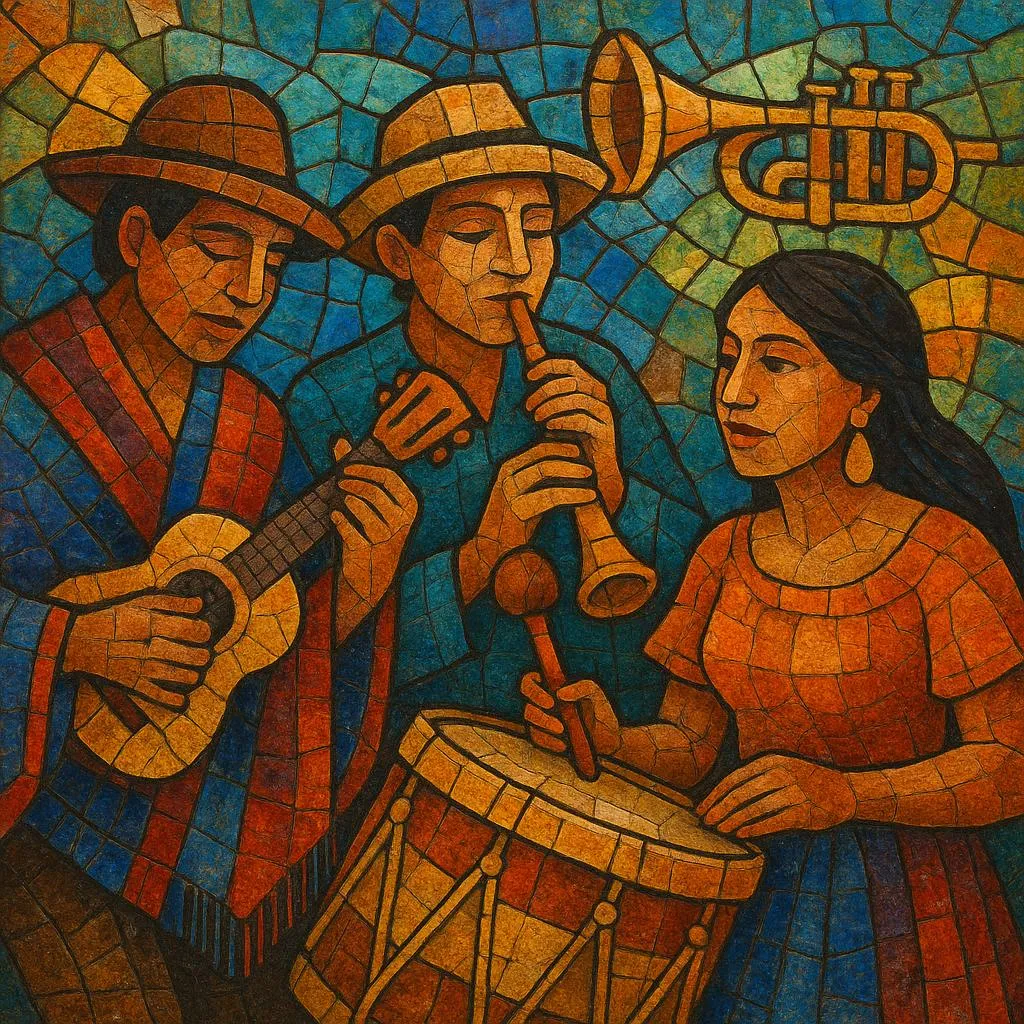
•   Core: güiro, congas, bongó/timbales, electric bass, rhythm guitar or accordion, and keys/synth for leads and pads. •   Sierra color: add charango, quena or zampoña (or synth patches emulating them). •   Costa color: emphasize brass (trumpets/trombones), cowbell patterns, and crisp timbal fills.
Arrangement and vocals
•   Intro with a memorable hook (brass riff or Andean-flute-like synth line), then verse–chorus with short instrumental interludes. •   Use call-and-response coros and a catchy, repeating hook for the chorus; keep verses narrative and direct.
Lyrics and production
•   Themes: love, jealousy, reunion, hometown pride, and party life. •   Production: tight low end (bass + congas), bright percussion, and upfront vocals; add tasteful synth leads doubling the vocal hook. For a more modern (tecnocumbia-tinged) touch, layer drum-machine kicks/snares under live percussion and use chorus/reverb on synth-brass or flutes.

Top tracks

Locked
Share your favorite track to unlock other users’ top tracks

Upcoming concerts

in this genre
Influenced by

Download our mobile app

Get the Melodigging app and start digging for new genres on the go
© 2026 Melodigging
Melodding was created as a tribute to Every Noise at Once, which inspired us to help curious minds keep digging into music's ever-evolving genres.
Buy me a coffee for Melodigging