Your digging level
Description
Classic Tollywood refers to the golden-era style of Telugu-language film music created for the Telugu film industry (popularly called Tollywood) in South India.
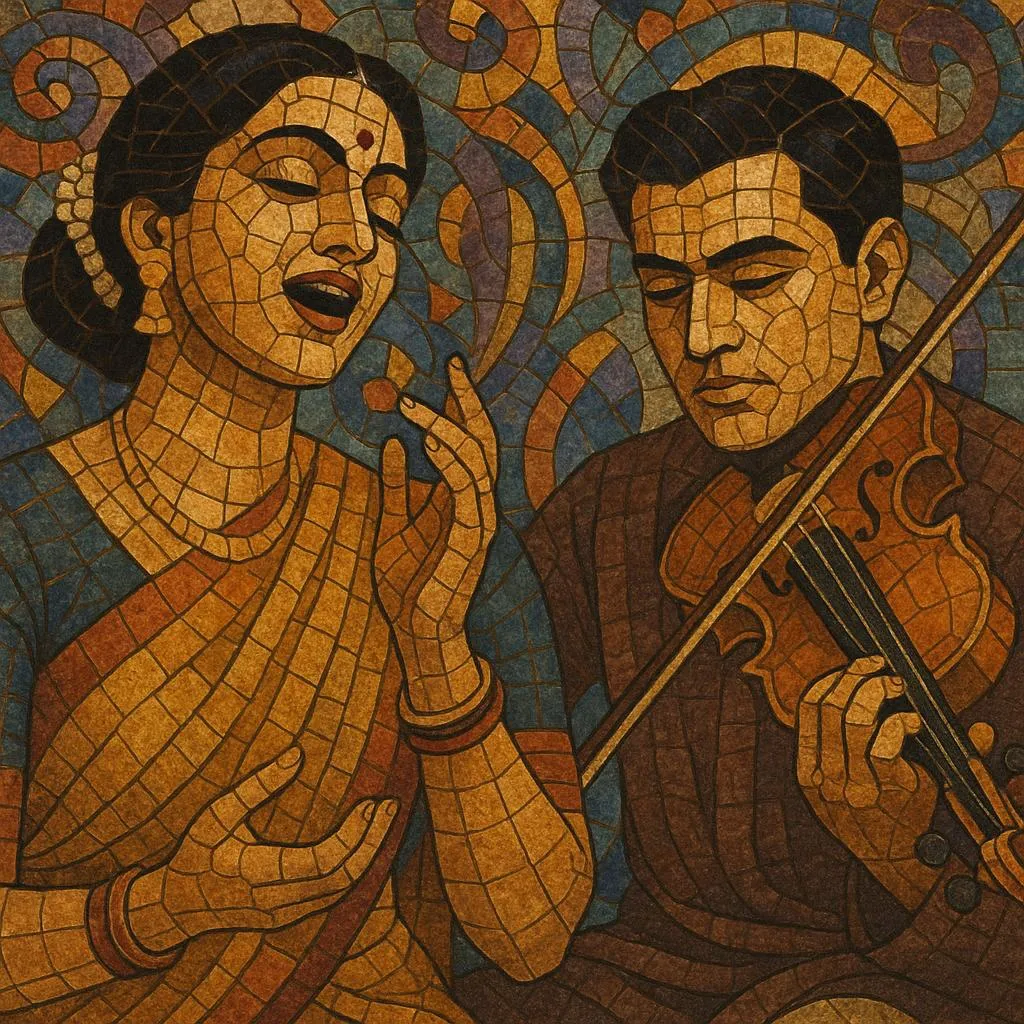
It blends raga-based melodies from Carnatic and Hindustani traditions with popular song forms, devotional idioms, and lush, often Western-influenced orchestration. Songs typically feature soaring playback vocals, memorable leitmotifs, and rich string and woodwind arrangements, while preserving Indian rhythmic cycles (talas) and raga grammar.
Lyric poetry in literary and colloquial Telugu—ranging from romantic to devotional and folk-inspired themes—was central, supported by graceful melodic contours and clearly sectional song structures tailored to cinematic narratives.
History
The first Telugu talkies in the early 1930s established a template for song-driven storytelling. Early film composers and music directors adapted devotional and theatrical music into cinema, relying on Carnatic ragas, traditional talas, and live studio ensembles. Playback singing soon became standard, allowing trained vocalists to interpret raga-based melodies tailored to screen actors.
This period is widely considered the classic age of Tollywood music. Composers and orchestras expanded the sound palette: strings, winds, and brass were combined with Indian instruments (veena, flute, mridangam, tabla) to create symphonic textures. Songs often followed the pallavi–anupallavi–charanam architecture, with raga-centric melodies (e.g., Mohanam, Kalyani, Shankarabharanam) and popular talas (Adi, Rupakam, Misra Chapu). Playback legends and lyricists elevated the genre’s expressive range—from romantic duets to philosophical, patriotic, and devotional pieces.
As recording technology improved, arrangements incorporated electric bass, drum kits, and keyboards alongside classical instrumentation. While raga grammar remained influential, composers experimented with modal shifts, modulations, and Western harmony, keeping songs cinematic yet accessible. Cross-pollination with other South Indian film industries and Hindi cinema further broadened the idiom.
Classic Tollywood’s melodies, orchestration styles, and lyrical poetics continue to inform contemporary Telugu film music. Its aesthetics underpin modern “retro” pastiches, devotional pop, and classical-crossover projects, and remain a key reference for composers seeking timeless, melody-forward songwriting in Telugu cinema.