

Your digging level
Description
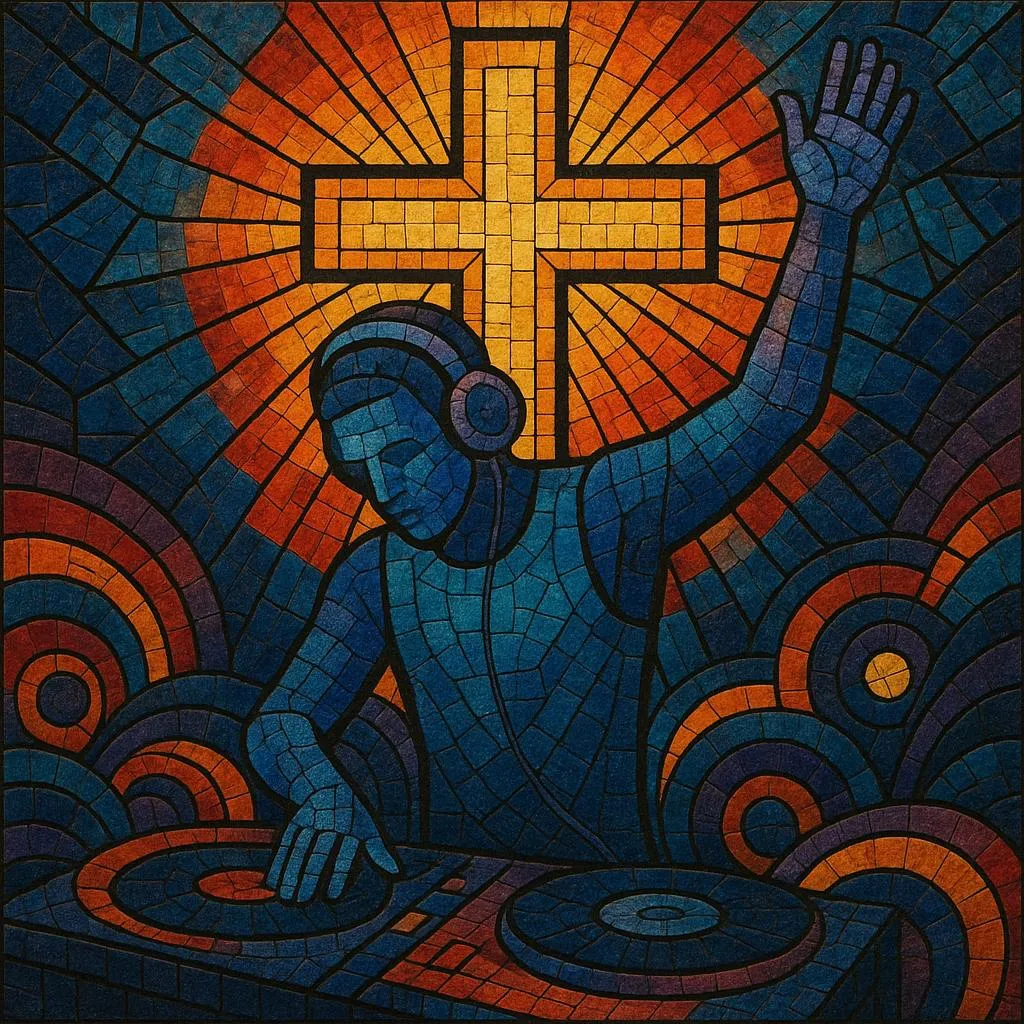
Christian electronic dance music (often abbreviated CEDM, Christian EDM, CDM, or Christian electronic music) blends the sonic palette and club-ready energy of mainstream EDM with explicitly Christian themes and values.
Musically, it mirrors non-religious EDM substyles—house, trance, big room, dubstep, future bass, and drum and bass—featuring four-on-the-floor grooves, drops, builds, and modern sound design. What distinguishes CEDM is its lyrical focus on worship, faith, encouragement, and testimony, alongside a culture that emphasizes sobriety, community, and a welcoming atmosphere. Performances often take place not only in clubs and festivals but also at church events and faith-centered gatherings, and CEDM is sometimes incorporated into contemporary worship services.
Sources: Spotify, Wikipedia, Discogs, Rate Your Music, MusicBrainz, and other online sources
History
Christian artists and DJs began experimenting with electronic dance sounds in the 1990s and early 2000s, paralleling the growth of global club culture. As EDM production tools became more accessible, Christian producers used the same techniques—sidechain compression, synthesizer leads, and club-tempo rhythms—while centering messages of faith and hope. Early releases and DJ ministry events laid the groundwork for a distinct scene.
The 2010s saw a clearer identity for Christian electronic dance music as artists adopted the full spectrum of EDM subgenres (big room, progressive house, dubstep, and future bass) and released faith-forward singles and remixes. Major Christian festivals (e.g., Creation Festival, LifeLight, Lumination) began hosting DJ sets and dance stages, and churches increasingly welcomed high-production CEDM nights. The community emphasized a drug-free, inclusive culture and positive, singable hooks—often suitable for youth and worship contexts.
As contemporary worship evolved, EDM elements (drops, builds, and four-on-the-floor pulses) entered youth worship and church events, with some bands releasing dance remixes of worship songs. Streaming platforms helped niche artists gain international followings, while remixes, collaborative singles, and festival circuits connecting Christian and mainstream EDM aesthetics continued to expand the genre’s visibility.
CEDM now encompasses both artist-centered releases (radio/streaming singles, DJ sets) and worship-facing adaptations (youth nights, conference anthems). Its defining traits—EDM sonics plus overtly Christian, uplifting messaging and a values-based live culture—continue to set it apart from secular counterparts.
