Your digging level
Description
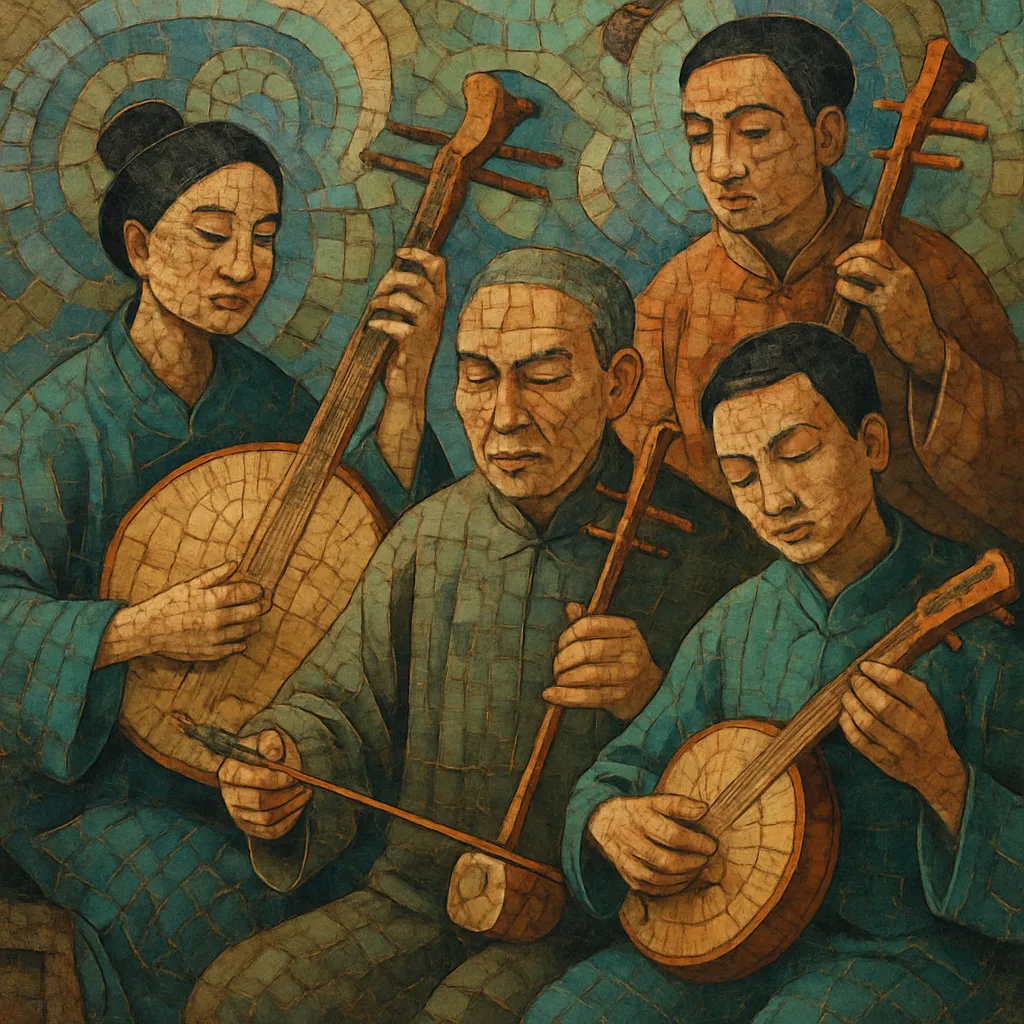
Chaozhou xianshi (Teochew string music) is a traditional instrumental ensemble genre from the Chaoshan (Teochew/Chaozhou–Shantou–Jieyang) region of northeastern Guangdong, China. Although classed within the broader Chinese sizhu ("silk-and-bamboo") family, it is typically a string‑only ensemble that features bowed and plucked lutes, hammered dulcimer, and zither, with little or no wind or percussion.
Historically performed in teahouses, private salons, and community gatherings, Chaozhou xianshi emphasizes elegant, ornamented melody in a heterophonic texture, where all instruments carry the same tune with regionalized turns, slides, and graces. Its repertoire includes suites and set-tune variations that move from free-rhythm preludes into regulated rhythmic sections, embodying refined literati aesthetics as well as local folk idioms.
Beyond Guangdong and parts of southern Fujian, the style is actively maintained by overseas Teochew communities in Malaysia, Singapore, Thailand, and the United States, where local associations and orchestras preserve and perform the tradition.
History
Chaozhou xianshi coalesced as an urban–regional chamber tradition in the 19th century in the Chaoshan region of northeastern Guangdong. While it inherits deep roots from older Chinese classical and folk practices, its modern ensemble profile and teahouse performance context reflect the late‑Qing literati salon culture and local guild/association life.
Placed under the umbrella of Chinese sizhu, Chaozhou xianshi stands apart by being largely string‑based. A small chamber group—led by a bowed fiddle (e.g., erxian or regional two‑string lutes), with pipa, sanxian, yangqin (hammered dulcimer), ruan/qinqin, and guzheng—renders a single melody in heterophony. Players decorate the line with Teochew‑style slides, mordents, appoggiaturas, and expressive micro‑intonation. Suites often begin with a free‑tempo prelude (sanban) followed by regulated cycles (ban‑shi) of increasing activity.
Xianshi repertoire comprises set tunes and variation cycles associated with temple fairs, community celebrations, and especially the social life of teahouses. Musicians historically belonged to amateur clubs and lineage/merchant associations that sustained the tradition across generations.
Large Teochew diaspora communities in Southeast Asia (Malaysia, Singapore, Thailand) and later North America kept xianshi active abroad. Clan associations and cultural groups formed ensembles, taught younger players, and programmed Chaozhou music in concerts and festivals, embedding it within multicultural city soundscapes.
In the 20th and 21st centuries, conservatories, municipal troupes, and recording projects documented and arranged xianshi for stage and, at times, for larger Chinese orchestras. While concert formats may expand instrumentation, the core chamber ideal—refined, ornamented heterophony—remains the style’s signature.

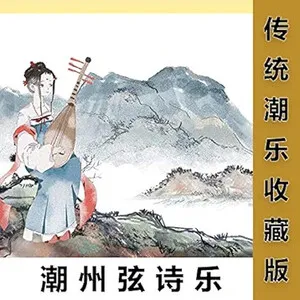
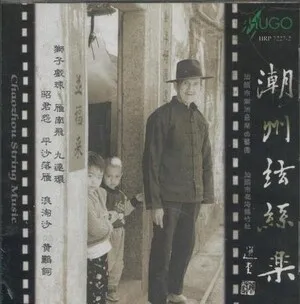
![潮州弦诗 [Chao Zhou Music]](https://e.snmc.io/i/300/w/2b2d41e0423341a811e33e3762f9088a/10632997/%E5%B9%BF%E4%B8%9C%E6%B1%95%E5%A4%B4%E5%B2%AD%E5%8D%97%E5%BC%A6%E8%AF%97%E7%A4%BE%20%5BShantou%20Guangdong%20Lingnan%20String%20Poetry%20Band%5D%20-%20%E6%BD%AE%E5%B7%9E%E5%BC%A6%E8%AF%97%20%5BChao%20Zhou%20Music%5D%2C%20Cover%20art.webp)