Your digging level
Description
The canzona (Italian; also "canzon") is a late Renaissance and early Baroque instrumental genre characterized by lively, sectional structures and clear, imitative counterpoint. It grew out of instrumental arrangements and intabulations of French chansons, adopting their distinctive long–short–short "canzona rhythm" and transforming it into idiomatic writing for ensembles and keyboards.
Typically in duple meter and organized into successive contrasting sections, canzonas alternate points of imitation and homophonic, fanfare-like passages. Venetian ensemble canzonas favored antiphonal writing for cornetts and sackbuts across spatially separated choirs, while keyboard canzonas distilled the style into compact, fugal-like movements that foreshadowed the Baroque sonata and fugue.
History
The canzona emerged in Italy in the later 1500s as instrumental reworkings of French chansons. Keyboard players and ensemble leaders intabulated popular chansons, abstracting their rhythmic snap—often the long–short–short pattern—into instrumental idioms. Very quickly, composers began supplying new, original subjects in the same vein, establishing the canzona as an independent instrumental form.
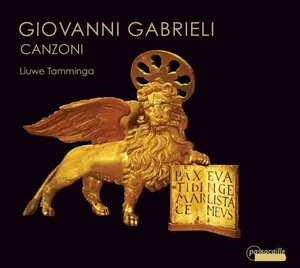
In Venice, the polychoral tradition and grand civic spaces encouraged antiphonal, multi-choir writing. Andrea and Giovanni Gabrieli wrote influential ensemble canzonas for cornetts and sackbuts, exploiting spatial separation, echo effects, and brilliant, fanfare-like motives. These pieces typically comprise several contrasting sections, each introduced by a fresh subject treated imitatively before cadencing and moving on.
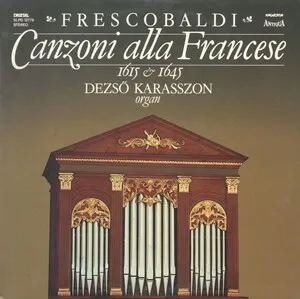
Concurrently, keyboard composers such as Claudio Merulo, Jan Pieterszoon Sweelinck, and later Girolamo Frescobaldi cultivated the keyboard canzona. These works condensed the sectional, imitative plan into compact, fugal-like movements, sharpening contrapuntal technique and motivic economy. German organists (e.g., Scheidt, Scheidemann) adopted and adapted the genre, helping transmit its contrapuntal habits northward.
By the early 17th century, the canzona’s sectional, thematic succession evolved seamlessly into the sonata da chiesa and related instrumental sonatas. Its imitative techniques and sharply profiled subjects fed directly into Baroque fugal practice. By mid-century, the term "canzona" gradually yielded to "sonata," but its DNA lived on in the Baroque sonata, concerto, and the mature fugue.