Your digging level
Description
Bleep techno (often called "bleep & bass") is a sparse, bass‑heavy strain of early UK techno that emerged in northern England at the turn of the 1990s.
It is defined by ultra‑deep sub‑bass inspired by dub reggae sound systems, clean and punchy 808/909 drum programming, and distinctive short "bleep" motifs made from simple waveforms (sine or square). Tempos typically sit around 120–125 BPM, with plenty of negative space, precise quantization, and minimal harmonic content.
The style fuses Detroit techno’s futurism with British soundsystem culture, yielding a cool, minimal, machine‑funk aesthetic designed to move large rooms with physical low‑end rather than dense arrangements.

History
Bleep techno crystallized in Yorkshire, UK—especially Sheffield, Leeds, and Bradford—during the late 1980s. Local producers absorbed Detroit techno and Chicago/acid house but emphasized the sub‑bass culture of UK reggae/dub sound systems. Early experiments by Unique 3 (e.g., “The Theme,” 1988) and the Forgemasters’ “Track With No Name” (1989), the first release on Warp Records, introduced a stark, spacious sound built for big rigs.
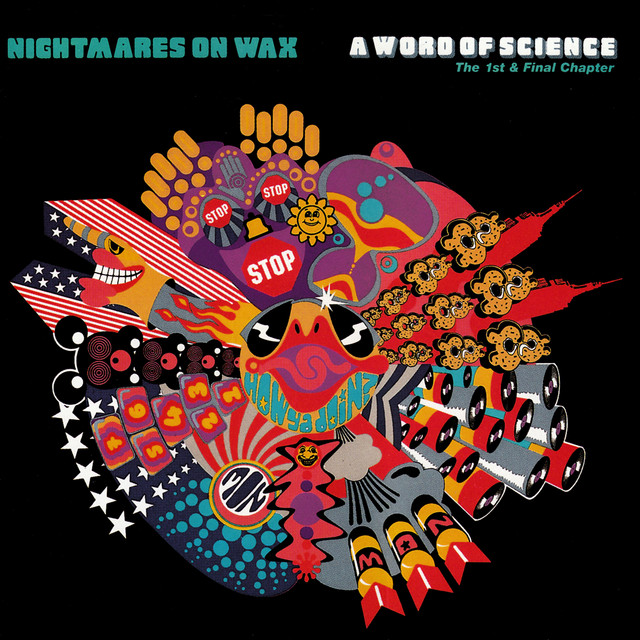
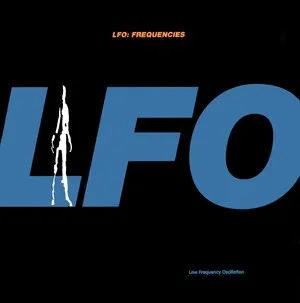
Warp Records (founded 1989 in Sheffield) and labels like Network and Outer Rhythm became hubs for the sound. Nightmares on Wax (“Dextrous,” 1989; “Aftermath,” 1990), LFO (“LFO,” 1990), and Sweet Exorcist (Richard H. Kirk & Parrot; “Testone,” 1990) delivered defining singles: hard 4/4 kicks, clipped percussion, and pure tone bleeps over dub‑scale sub‑bass. The music crossed from northern clubs into UK charts while retaining a minimal, machine‑tooled identity.
As UK rave accelerated into breakbeat hardcore and later jungle, bleep’s four‑to‑the‑floor pulse coexisted with emerging breakbeats, then ceded ground as tempos and break edits intensified. Warp pivoted toward more experimental, album‑oriented techno (its Artificial Intelligence era), carrying bleep’s restraint into what became known as IDM. Meanwhile, the Yorkshire fixation on heavy sub‑bass echoed through speed garage and, later, bassline house.
Bleep techno is widely cited as a foundation for UK electronic lineages privileging sub‑bass, minimalism, and sound‑system dynamics. Its DNA runs through IDM, minimal techno, breakbeat hardcore’s early palette, and—by extension—jungle, drum and bass, UK garage, grime, and dubstep. The style also experiences periodic revivals, with contemporary producers reinterpreting its cool bleeps and cavernous low end.



![Orbital [Green Album]](https://e.snmc.io/i/300/w/72a326e367f4d428cf14a8fb24de2589/6738391/Orbital%20-%20Orbital%20%5BGreen%20Album%5D%2C%20Cover%20art.webp)