Your digging level

For this genre
0/8
🏆
Sign in, then listen to this genre to level up

Description

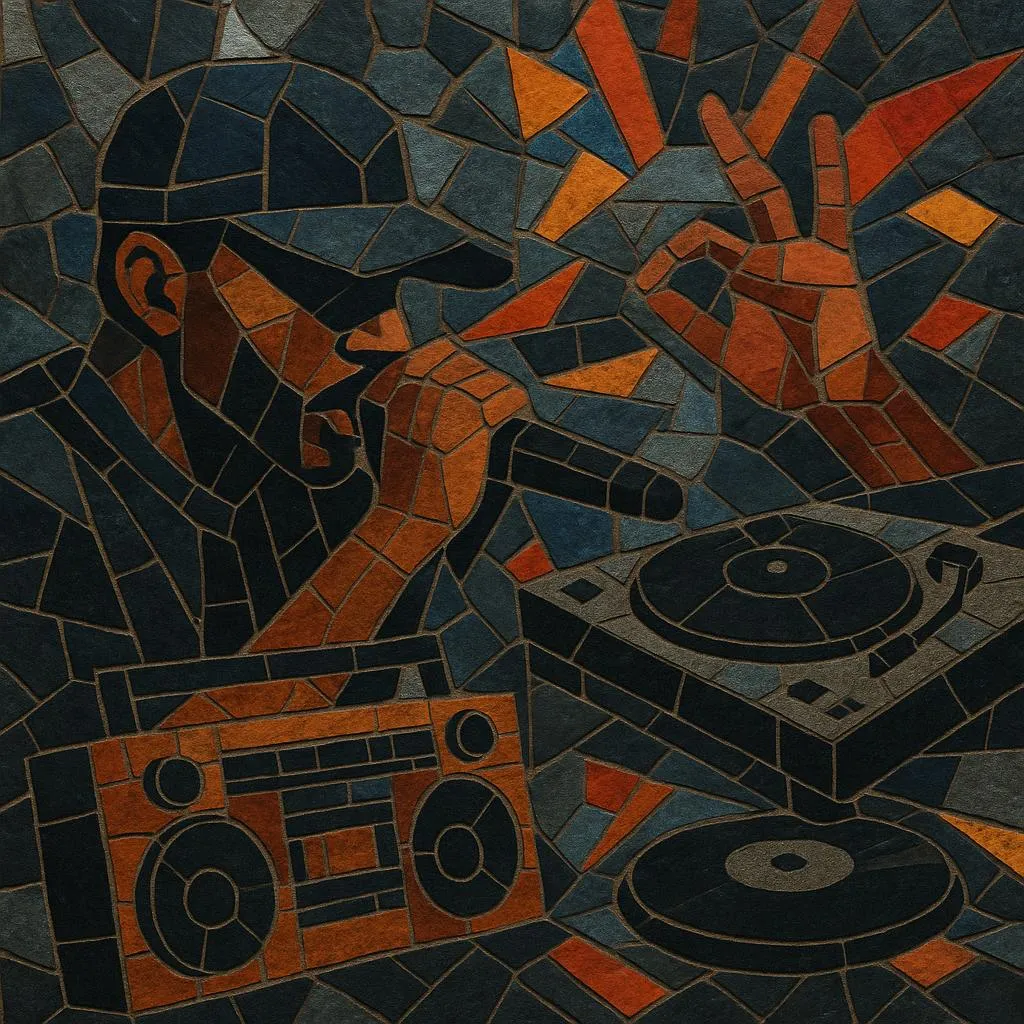
Bases de freestyle are Spanish-language hip-hop instrumentals created specifically for live rap improvisation and battle circuits. Designed to loop cleanly and leave space for an MC, they emphasize strong, steady grooves, clear drum transients, and arrangement cues that help rappers change flows, land punchlines, and trade verses.

Musically, these beats draw from classic boom bap (swinging drums, sample chops) and modern trap/drill (808 bass, double‑time hats, cinematic pads), often sitting between gritty underground textures and arena‑ready impact. Producers tailor intros, switch‑ups, and breakdowns to the energy of a cypher or stage battle while avoiding intrusive melodies or vocals that could distract from the freestyle.


Sources: Spotify, Wikipedia, Discogs, RYM, MB, user feedback and other online sources

History

Early 2000s: From Spanish rap battles to purpose-built beats
•   The Spanish term “bases” (backing tracks) became common in the 2000s with the growth of Spanish- and Latin‑American freestyle scenes, as local DJs and beatmakers adapted hip‑hop instrumentals for cyphers and competitions. Producers began crafting loops with extended intros and minimal, rapper‑friendly motifs rather than full “song” arrangements.
Mid–late 2000s: Competitive circuits formalize the sound
•   As large-scale battles spread across Spain and Latin America, demand rose for standardized, high‑impact instrumentals that could fill venues, cue round changes, and remain neutral enough for varied flows. Boom bap dominated early on: dusty snares on 2 and 4, chopped samples, and 8/16‑bar loop logic.
2010s: Trap/drill aesthetics and the YouTube era
•   With trap 808s, double‑time hi‑hats, and cinematic pads entering mainstream hip‑hop, battle beats incorporated modern low‑end and halftime switch‑ups. A huge ecosystem of Spanish‑language producers emerged on YouTube and streaming platforms offering “base de freestyle” packs, type beats, and event‑ready stems, accelerating the style’s codification.
Late 2010s–2020s: Stadium‑scale battles and hybridization
•   Professional battle leagues and arena shows pushed louder, more polished mixes, bigger drops, and clearer arrangement cues (filters, risers, hard mutes). Producers now blend boom bap grit with trap/drill momentum, occasional dembow‑adjacent rhythms for regional flavor, and subtle melodic hooks—always keeping space for the MC as the focal point.

How to make a track in this genre

Core tempo, meter, and groove
•   

Meter: 4/4.

•   

Tempos commonly split into two families:

•   

Boom bap range: 85–96 BPM with swung hats and a laid‑back pocket.

•   

Trap/drill range: 135–150 BPM (or 68–75 BPM halftime) with crisp double‑time hats and rolling 808s.

•   

Keep the groove assertive but not cluttered—the MC must be the lead instrument.

Drum design and bass
•   Drums: punchy kicks, snappy snares (often on 2 & 4), tight closed hats. Use hat variations (triplets, stutters) to suggest double‑time or flow changes. •   808/bass: tune the 808 to the key; write simple, memorable patterns that anchor the pocket. Leave rests for breath and punchlines.
Harmony, melody, and texture
•   Keys: minor modes are common (A, D, E minor). Limit harmonic movement to 1–3 chords or a modal vamp. •   Melodic content: short motifs (pads, keys, guitar or sample chops). Avoid busy lead lines; low‑pass/side‑chain to clear room for vocals. •   Sound palette: blend dusty samples (boom bap feel) with modern textures (cinematic pads, drones) for scale.
Arrangement for battles
•   Structure: 8‑bar intro → 16‑bar loop core → periodic 4–8‑bar switch‑ups (filter drops, hat pattern flips, bass mutes). •   Provide obvious cues: risers before round starts, stop‑downs for punchlines, and halftime/double‑time moments to invite flow changes. •   Keep versions ready: clean loop, with/without bass, alt fills, and a “final round” drop for maximum hype.
Mixing and performance tips
•   Prioritize vocal space: subtractive EQ around 1–4 kHz on instruments, keep transients sharp but controlled. •   Mono‑compatibility for drums/bass; use stereo width on pads and FX only. •   For live use: map mutes and filter sweeps to pads/knobs so the DJ/beatmaker can react to the MC in real time.

Top tracks

Locked
Share your favorite track to unlock other users’ top tracks

Upcoming concerts

in this genre
Influenced by
Has influenced
No genres found

Download our mobile app

Get the Melodigging app and start digging for new genres on the go
© 2026 Melodigging
Melodding was created as a tribute to Every Noise at Once, which inspired us to help curious minds keep digging into music's ever-evolving genres.
Buy me a coffee for Melodigging